
Glen Oaks occupies the far northeastern corner of Queens, close enough to Nassau County that you can walk from a cooperative garden apartment on Glen Oaks Boulevard to the county line without crossing a single car road. The neighborhood has two distinct geographies layered on the same zip code. There is Glen Oaks Village, 135 acres of postwar garden apartment buildings arranged around pedestrian courtyards, tenant-owned since 1981, a planned community that Metropolitan Life Insurance built at the same moment they were finishing Stuyvesant Town in Manhattan. And then there is the surrounding neighborhood of Cape Cods and Colonials that fills in the grid around the cooperative, the same postwar single-family fabric you find throughout eastern Queens. The two coexist at different scales, governed by different rules, populated now by a South Asian community that has transformed the area over the last four decades into something entirely its own.
What connects both geographies is a quietness that defines life here. The cooperative’s pedestrian paths are genuinely car-free. The surrounding residential streets are wide and unhurried. You are in New York City, technically, but the city barely asserts itself.

The garden apartment cooperative that MetLife built and tenants took over in 1981
Metropolitan Life Insurance Company built three planned residential communities in New York City in the postwar decade. Parkchester came first in the Bronx in 1942, 12,000 units on 129 acres. Stuyvesant Town followed in Manhattan in 1947, 11,250 apartments between 14th and 23rd Streets. The third was Glen Oaks Village in Queens, completed in 1950 on 135 acres of flat farmland in the northeastern corner of the borough. Of the three MetLife projects, Glen Oaks is the least famous and the most livable, which tells you something about the relationship between fame and quality in New York real estate.
The design philosophy at Glen Oaks was the Radburn plan, a planning concept developed in the 1920s by architects Clarence Stein and Henry Wright. The core idea was to invert the normal relationship between buildings and streets. Instead of fronting houses toward roads and pushing pedestrians to compete with cars for the same pavement, the Radburn plan organized buildings around interior pedestrian paths and courtyards, with parking relegated to the perimeter. The result at Glen Oaks is that a resident can walk from one end of the cooperative’s 135 acres to the other entirely on foot paths, crossing no car road, moving through maintained lawns and mature trees the whole way. In a city that runs on concrete and traffic, this is genuinely unusual.
The 134 two-story brick buildings that make up Glen Oaks Village are architecturally modest. No ornament, no flourish, the standard mid-century institutional brick vocabulary applied with care rather than ambition. The beauty of Glen Oaks Village is not in any individual building but in the organization of buildings in space, the relationship between structures and the grounds around them, the sense that someone in 1947 thought carefully about where people would walk and what they would see when they looked out their windows.
Like Parkchester and Stuyvesant Town, Glen Oaks Village was racially segregated at its founding. Metropolitan Life reserved all 2,904 units for white tenants. This policy was well documented and challenged by civil rights advocates through the 1950s and 1960s. Gradual desegregation through the following decades brought the demographic diversity that defines the cooperative today.
In 1981, the tenant community exercised its right to purchase and converted Glen Oaks Village from a MetLife rental property to a tenant-owned cooperative, one of the largest such conversions in New York City history. Shareholders receive proprietary leases rather than deeds. A board elected by shareholders governs the property, sets maintenance fees, approves share transfers, and allocates the capital improvement budget that has kept the 75-year-old building stock in genuinely good condition. Monthly maintenance fees cover property taxes, heat, hot water, and a portion of the cooperative’s operating costs. The total cost of ownership in Glen Oaks Village is significantly below market for comparable space anywhere else in Queens, which explains the waiting lists.
The surrounding terrain that MetLife purchased in the 1940s was flat truck-farming country before that, supplying New York City markets from fields in the far corner of the borough. The name the company chose for the development followed the mid-century residential naming tradition of combining pastoral landscape terms to suggest a sheltered, tree-canopied refuge. Glen, from the Old English for a narrow valley between hills. Oaks, for the native trees associated with stability and permanence in American horticultural culture. The name suggested a bucolic sanctuary. The designers then built one, or close enough that 75 years of residents have agreed not to notice the difference.
What 134 two-story brick garden apartment buildings from 1950 actually need cleaned
The cleaning situation in a Glen Oaks Village cooperative unit is different from a Manhattan apartment and different from the surrounding single-family houses in specific and predictable ways.
The buildings are solid, well-maintained postwar construction. Two stories of brick, no elevators, exterior corridors in some clusters, interior courtyard-facing entrances in others. The units range from roughly 700 square feet for a one-bedroom to around 1,200 square feet for a three-bedroom, with defined room layouts rather than the open configurations of newer construction. Wood floors from the late 1940s and 1950s, plaster walls in older units, kitchen and bathroom fixtures that have been updated in most units but remain original in some.
The cooperative employs groundskeepers who maintain the lawns, trim the plantings, and keep the pedestrian paths clear. What they do not do is the interior. Inside each unit, the cleaning situation looks the way it looks in any apartment occupied by a family for years: the kitchen range hood building up residue from daily cooking, the bathroom grout that has absorbed whatever product has been used on it for decades, the hardwood floors that carry the finish and the history of every tenant who lived there before you.
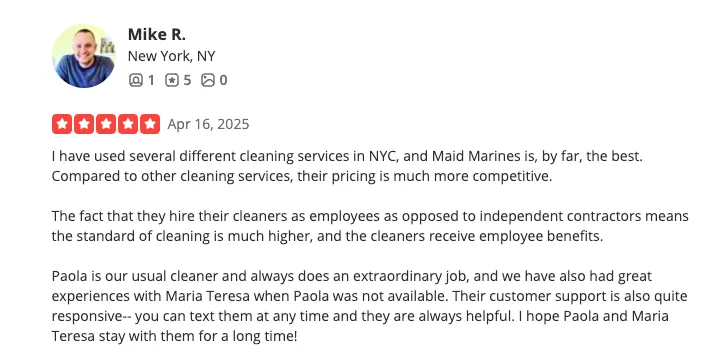
The challenge specific to a cooperative unit, as opposed to a rental apartment, is that residents are shareholders. They have a financial stake in the property. They take maintenance seriously in a way that renters often do not, and they notice when work is careless. A cooperative community is a community in the full sense: neighbors who know each other, governance meetings where people speak frankly, a social culture where word about a bad experience moves quickly. Our apartment cleaning teams work in Glen Oaks Village knowing that the standard the cooperative sets for its own maintenance is the standard its residents expect from outside vendors as well.

The Cape Cods and Colonials in the surrounding neighborhood carry four decades of family life
Beyond the cooperative’s 135 acres, the broader Glen Oaks neighborhood is standard northeastern Queens residential fabric. Cape Cods and Colonial Revivals built between the 1940s and the 1960s, brick facades with aluminum storm windows, driveways wide enough for two cars, front yards that are small but present and maintained. The two-family homes that sit on many blocks represent the outer borough ownership model that has worked for generations: live below, rent above, let the rental income reduce your carrying costs.
These are houses that have been owned, in many cases, by successive South Asian families for decades. A Cape Cod in Glen Oaks might have original hardwood floors on its main level, tile from three different renovation periods in its bathrooms, a basement finished in the 1980s that now serves as a playroom or home office, and an attic converted to a bedroom sometime in the 1990s. The cleaning job at that house is a vertical project, moving across four distinct levels with surfaces that each have their own history and their own requirements.
South Asian families make up the majority of the surrounding neighborhood now, and they have been here long enough that the transformation is fully settled rather than ongoing. The commercial strips on Union Turnpike and along the cooperative’s shopping center reflect this completely. South Asian grocery stores, restaurants serving biriyani and karahi and full mithai counters, gold jewelry stores, and the older Greek diners that have been on these blocks since before the demographic shift and have simply continued alongside everything new. This is the eastern Queens model, and it works.
What South Asian settlement patterns mean for household cleaning is worth saying directly. Extended family arrangements are common. A house that carries grandparents, parents, and children under one roof uses its square footage intensively and generates cleaning demands that a nuclear family in the same space does not. Kitchens where daily cooking involves high-heat oil, spice tempering, and the steady accumulation of cooking residue on every vertical surface need deep cleaning approaches that standard apartment cleaning does not cover. We know this going in and we carry the right tools for it.
How the Radburn plan shapes what cleaning visits actually look like
The Radburn plan at Glen Oaks Village was a genuine planning innovation, and it has a practical consequence for household services that nobody in 1947 was thinking about: your apartment is accessed from a pedestrian path, not a street.
Most of the cooperative’s 134 buildings are oriented with their primary entrances facing internal courtyards rather than external roads. The parking is at the perimeter. To reach most units, you walk from the parking area through a pedestrian path into the grounds, then follow the walkway to the building cluster your unit is in. The buildings are labeled and the paths are maintained, but for someone arriving for the first time, it requires an understanding of the cooperative’s internal geography that does not come from a street address alone.
Our cleaners who work in Glen Oaks Village learn the cooperative’s layout. When you book, there is a field for access notes. Use it. Tell us which building cluster your unit is in, whether your entrance faces the courtyard or the parking perimeter, and any cooperative-specific access requirements your board or management office has communicated to you. That information travels with the cleaner assigned to your appointment so that no one is standing at the wrong entrance trying to figure out the layout before they have even started.
The cooperative’s management office can also be a factor for recurring service. Some cooperatives ask that residents register outside vendors before allowing regular visits. If Glen Oaks Village requires this for a recurring cleaning arrangement, we can furnish insurance certificates and any other documentation the board requests. We work in cooperative buildings regularly and the paperwork is not unusual.
Your cleaning takes about three hours and Glen Oaks has a county line you can cross on foot
Glen Oaks is not a neighborhood with obvious ways to kill two and a half hours if you stay on the Queens side of the border. There is no famous restaurant, no landmark park that draws visitors from other boroughs, no cultural institution anchoring the area. What the neighborhood has instead is a county line you can cross on foot, a Floral Park Village on the Nassau side that has the kind of downtown Glen Oaks itself was never built to have, and enough walking routes through the cooperative’s grounds and into the residential streets that a slow morning turns into something worth remembering.
The Glen Oaks Village grounds themselves are worth an unhurried walk. The pedestrian paths that the Radburn plan put at the center of the cooperative’s design are genuinely pleasant. Mature trees, maintained lawns, low brick buildings clustered around their courtyards. Residents have been walking these paths for 75 years and they have the character that comes from that. If you cross Little Neck Parkway east into Nassau, you are in Floral Park Village within ten minutes, where Tulip Avenue has coffee shops and brunch spots and the particular quiet of a well-run Long Island town on a weekday morning.
The Queens County Farm Museum on Little Neck Parkway is ten minutes from most Glen Oaks addresses. It is the oldest continuously cultivated farm in New York State, which is not the kind of thing you expect to find hemmed in by suburban Queens. They operate a weekend farmers market in season. Forty-seven acres of working farmland surrounded by postwar housing is genuinely disorienting.
Alley Pond Park, 20 minutes southwest by car, is 640 acres of wetland and mature forest in northeastern Queens that most New Yorkers have not heard of. The environmental center and trail network provide enough for a full morning if your appointment will run long.
Booking a cleaning for your Glen Oaks cooperative unit or home
You pick your date and time on our booking page. You see your flat-rate price before you commit. For a cooperative unit, the price reflects the bedroom and bathroom count. For a house with a finished basement, the price includes the basement. For a two-family home where you want only your unit cleaned, the booking covers your unit only. None of this requires a phone call.
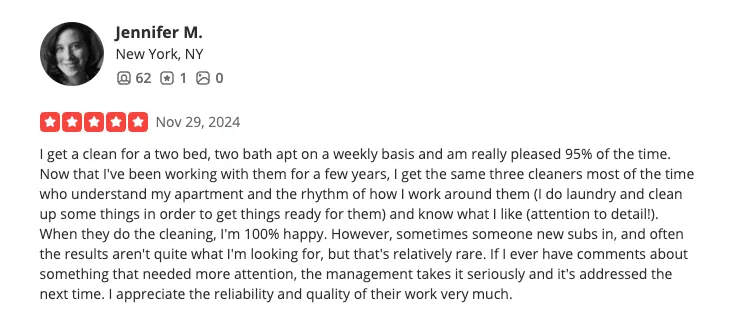
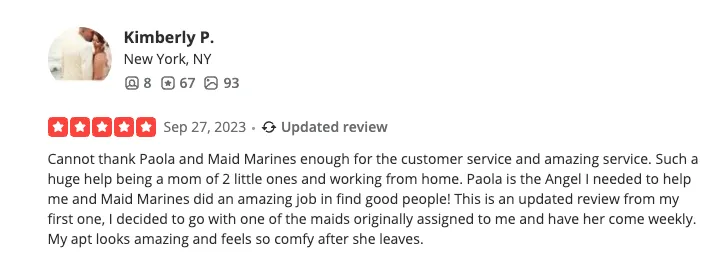
Our cleaners are W-2 employees. They are vetted, trained, and insured, and they arrive with everything needed for your specific home type. If your cooperative board requires vendor documentation, we handle that before the first appointment. If your kitchen needs degreaser work beyond standard cleaning, mention it in the booking notes and we build in the time.
For move-in and move-out cleaning when cooperative shares change hands, for post-renovation cleaning after a bathroom or kitchen update in one of the surrounding houses, and for recurring cleaning on a schedule that fits how your household runs, the process starts the same way. Book, see your price, and let us handle it.
We also serve nearby Bellerose, Floral Park, Little Neck, Oakland Gardens, and the rest of eastern Queens.