
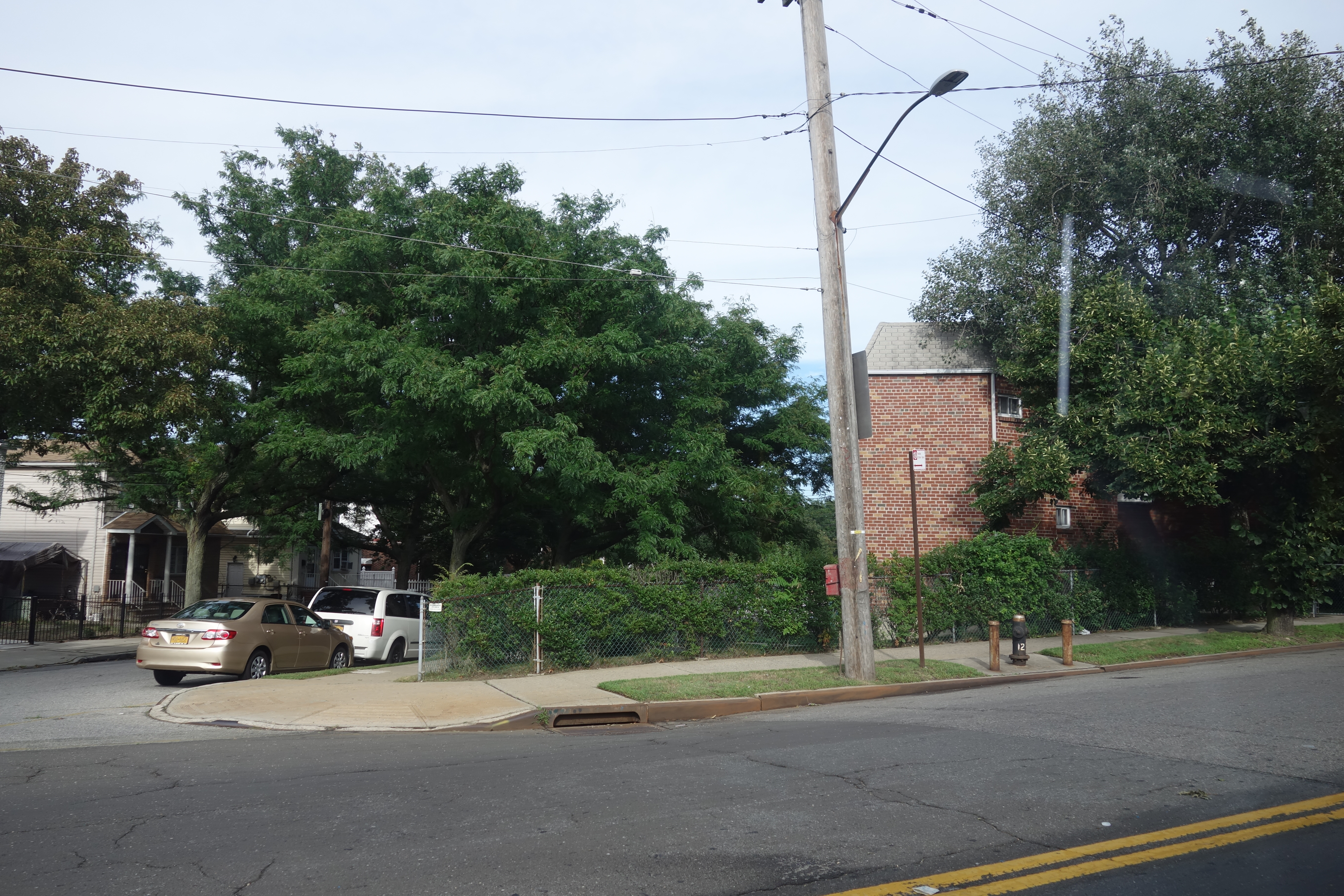
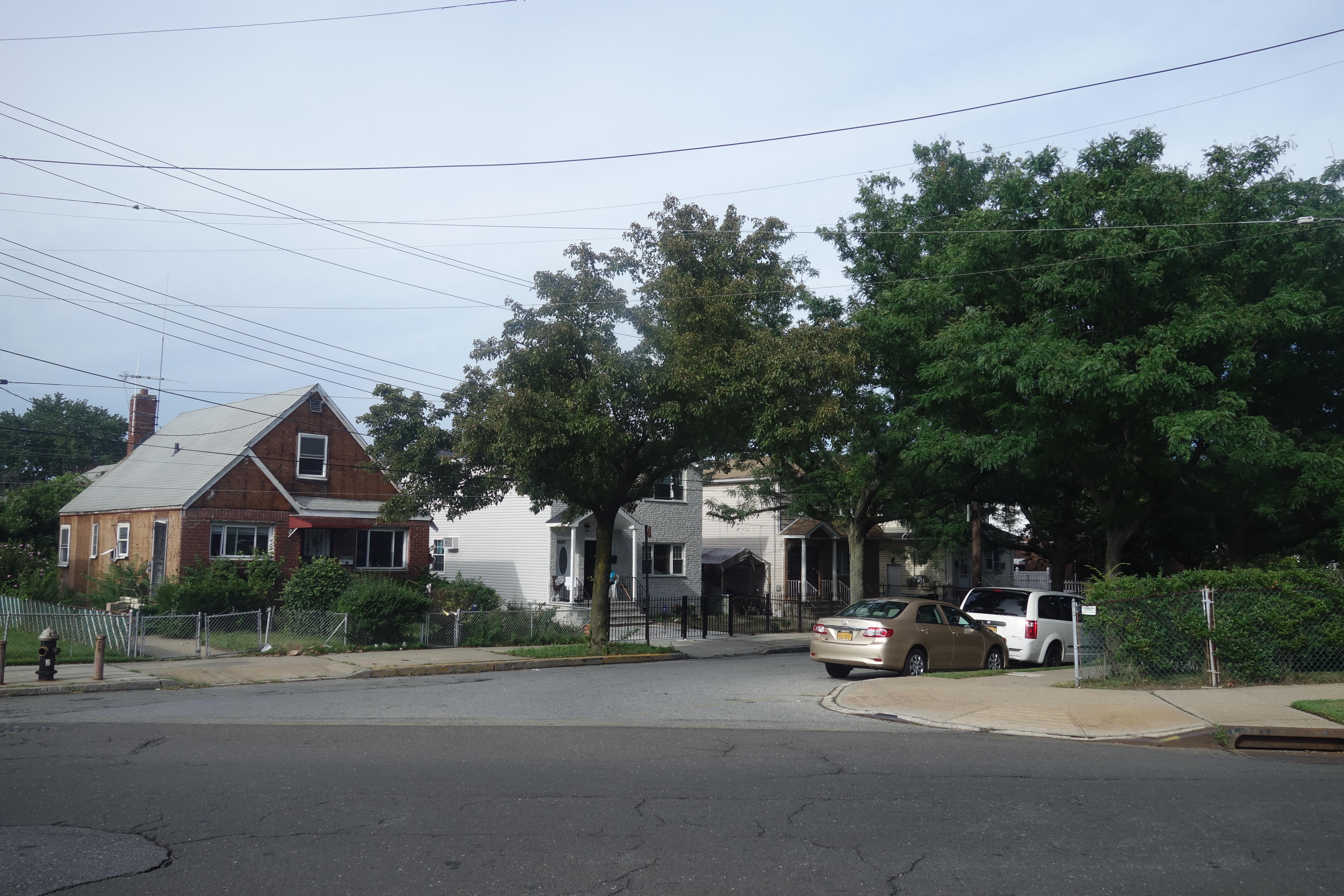
Springfield Gardens is one of the few places in New York City where the house next door has a front lawn, a driveway, a detached garage, and a backyard with grass in it. Not a rooftop terrace. Not a courtyard shared with 40 other apartments. A backyard with soil and a garden and a place to put a grill. That combination of features is genuinely rare in this city, and it defines the daily experience of living here in ways that make cleaning these homes fundamentally different from cleaning an apartment in Long Island City or a walkup in Astoria.
The neighborhood got its suburban character the way most things in Queens happened: through the Long Island Rail Road. The LIRR Montauk Branch reached this area in the 1890s, decades before the subway arrived in Queens, and developers marketed the lots along Springfield Boulevard and Merrick Boulevard as affordable suburban homes for commuters. The houses built in that era, and the Cape Cods, Colonials, and brick bungalows added through the 1940s and 1960s, make up the housing stock that defines Springfield Gardens today. That stock has been maintained, passed down through families, and kept in the same ownership for decades at a time.
What the housing stock in Springfield Gardens actually requires
The detached brick homes that make up the majority of Springfield Gardens are built to last. Brick Cape Cods and Colonials from the 1940s and 1950s have thick walls, solid construction, and interiors that have often been modified, extended, and lived in hard for 70 or 80 years. The cleaning challenges are not architectural complexity. They are the accumulation of real residential use over a long time.
Cast-iron radiators are standard in the older stock. They collect dust between their fins through the summer and release it as a scorched smell when the steam heat kicks on in October. The fins need to be cleared before the heating season, not after. Hardwood floors in the mid-century homes are frequently wax-finished rather than polyurethaned, which means the wrong cleaner or a steam mop will strip the finish off a floor that has survived since the Eisenhower administration. The brick bungalows from the 1920s and 1930s tend to have smaller rooms with lower ceilings, which means dust collects differently and grout in the bathrooms is older and more porous than anything installed in the last decade.
The two-family brick homes that make up roughly a fifth of the neighborhood have their own set of considerations. Owner-occupied units and rental units in the same building often have different maintenance histories. A rental unit that has turned over several times may need the kind of thorough reset that a move-in or move-out cleaning provides: inside cabinets, appliance interiors, window tracks, and every surface the incoming tenant will open or touch.
Kitchens in southeast Queens are not decorative
The cooking culture in Springfield Gardens is one of the neighborhood’s defining characteristics. Jamaican, Guyanese, Trinidadian, and Haitian households cook daily, and the food is real: jerk chicken, oxtails braised for hours, curry goat, Guyanese roti, Haitian griot, rice and peas in coconut milk. African American families have been cooking soul food and Southern-inflected cuisine in these kitchens for generations. The Merrick Boulevard strip provides the commercial version of the same traditions, but the homes do the real production.
That cooking leaves physical evidence. Grease films on range hoods that a standard wipe-down will not penetrate. Curry and jerk seasoning residue on cabinet faces and backsplashes. Oil accumulation on the ceiling above the stove. Drip trays under the burners that need to be pulled and cleaned, not just wiped around. When we clean kitchens in Springfield Gardens, we degrease every surface within six feet of the stove, hood housing included, and pull the drip trays. If the oven interior needs attention, adding a deep clean covers that.
Your Saturday morning belongs at the Merrick Boulevard patty shop or in the backyard with the grill going, not standing at the stove with a degreaser and a scrub pad. That is what we are here for.
Generational homes and what the first visit looks like
A Springfield Gardens home that has been in the same family since the 1970s or 1980s has absorbed 50 years of use that routine cleaning will not address. Wax that has been applied annually over decades builds up into a cloudy film that dulls the floors and holds grime in ways that surface mopping cannot fix. Cast-iron radiator fins packed with dust are a fire and air quality issue, not just an aesthetic one. Kitchen cabinets with layers of cooking grease on their interiors need to be emptied and degreased, not wiped around. Closets, attics, and storage rooms that have not been emptied since the last renovation hold years of accumulated dust.
The first visit to a generational home is always a deep clean. We work room by room, top to bottom: ceiling fans, light fixtures, shelf surfaces, door tops, behind furniture, and every baseboard and radiator in the home. Cabinet interiors are an add-on, and in a house that has been lived in this long it is usually worth checking that box. After that initial reset, recurring house cleaning on a weekly or biweekly schedule keeps it maintained at the level the first visit established. The difference between the first and second visits is dramatic. That is the point.
We have cleaned over 100,000 homes across New York City. The generational homeownership pattern in southeast Queens is one we know well. The homes are not neglected. They are loved and lived in. But they need a different kind of first attention than a newly renovated condo, and we bring it.
JFK Airport next door and the household rhythms it creates
Springfield Gardens sits directly adjacent to JFK International Airport, which is the largest single employer in southeast Queens. Many residents work in aviation, ground transportation, hospitality, and airport services. Early morning departures and late arrivals are common, which means homes that often need to function while the owners are not in them: lockbox access, key-hold arrangements, and the kind of self-directed visit where the team arrives, cleans, and leaves without anyone home.
We handle this routinely. If you leave a lockbox code, we use it. If your building super or a family member holds a key, we coordinate with them. The logistics of entry in a neighborhood without doormen are straightforward, and southeast Queens residents have been figuring out working-household logistics for decades.
The airport’s proximity also explains why Springfield Gardens High School offers FAA-certified aviation ground school training. Students can earn Federal Aviation Administration certifications before they graduate, creating a direct pipeline to employment at the airport next door. The program reflects the practical intelligence that characterizes this neighborhood.

Two-family homes, garden apartments, and how we book them
About a fifth of the housing stock in Springfield Gardens is semi-detached two-family brick homes. These are pairs of houses sharing a party wall, each with its own entrance, typically owner-occupied on one floor with a rental unit on the other. We clean both units if you want. Book the total square footage across both floors and we quote it as one visit, or set up separate recurring schedules if the tenant prefers a different day or time.
The smaller stock of garden apartments and multi-family buildings near the Merrick Boulevard and Springfield Boulevard corridors are straightforward apartment cleaning jobs. No doorman, no elevator, no COI paperwork, no advance-notice windows. Keys, a time, and a clean apartment when you get home from work.
For move-in and move-out situations, our move-in and move-out cleaning handles the full reset: inside cabinets, appliance interiors, bathroom grout, window sills, and every surface the incoming tenant will encounter. The rental market in southeast Queens turns over at its own pace, and we have done enough of these jobs in the neighborhood to know what landlords require and what tenants expect.
What booking looks like for Springfield Gardens residents
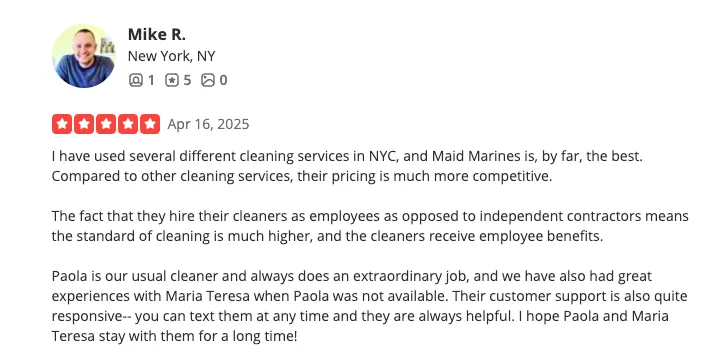
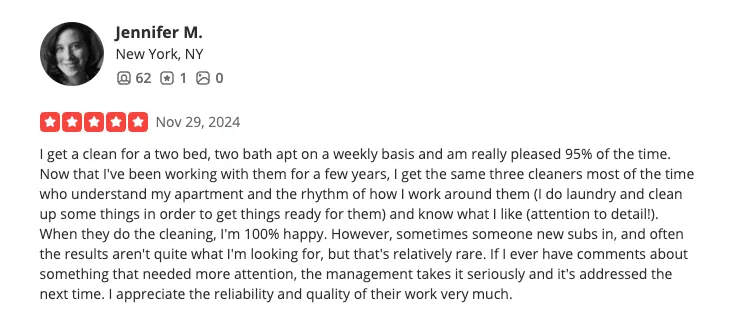
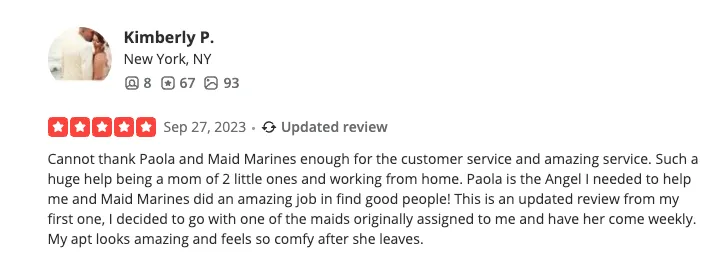
You pick your date and time on our booking page. You see your flat-rate price before you commit. If your Cape Cod has original hardwood floors that need careful handling, you tell us once and we note it on your account permanently. If your two-family house needs both units, we set it up correctly the first time. Our cleaners are W-2 employees, not gig contractors. They are vetted, insured, and they show up with products matched to the specific surfaces in your home.
We also serve nearby St. Albans, Laurelton, and Hollis, and all of southeast Queens.