
Rosedale is the city’s edge in the most literal sense. At the southern end of Brookville Boulevard, New York City simply stops. The streets end, the pavement gives way to grass and marsh, and the tidal wilderness of Jamaica Bay begins. At the eastern end of most cross-streets, Queens ends at the Nassau County line and Long Island begins. Rosedale sits in this corner, defined by water to the south, a county line to the east, the Belt Parkway to the north, and Springfield Boulevard to the west. Everything within those boundaries is one of the most distinctly Caribbean neighborhoods in the United States.
That character is not incidental. It was built by specific families who moved here in specific decades under specific circumstances, bought these houses, stayed, and built something that did not exist anywhere else in New York City. The cleaning implications of that history are direct. These are owned homes, maintained homes, homes where the interior standards match the trimmed hedges and swept driveways visible from the street.
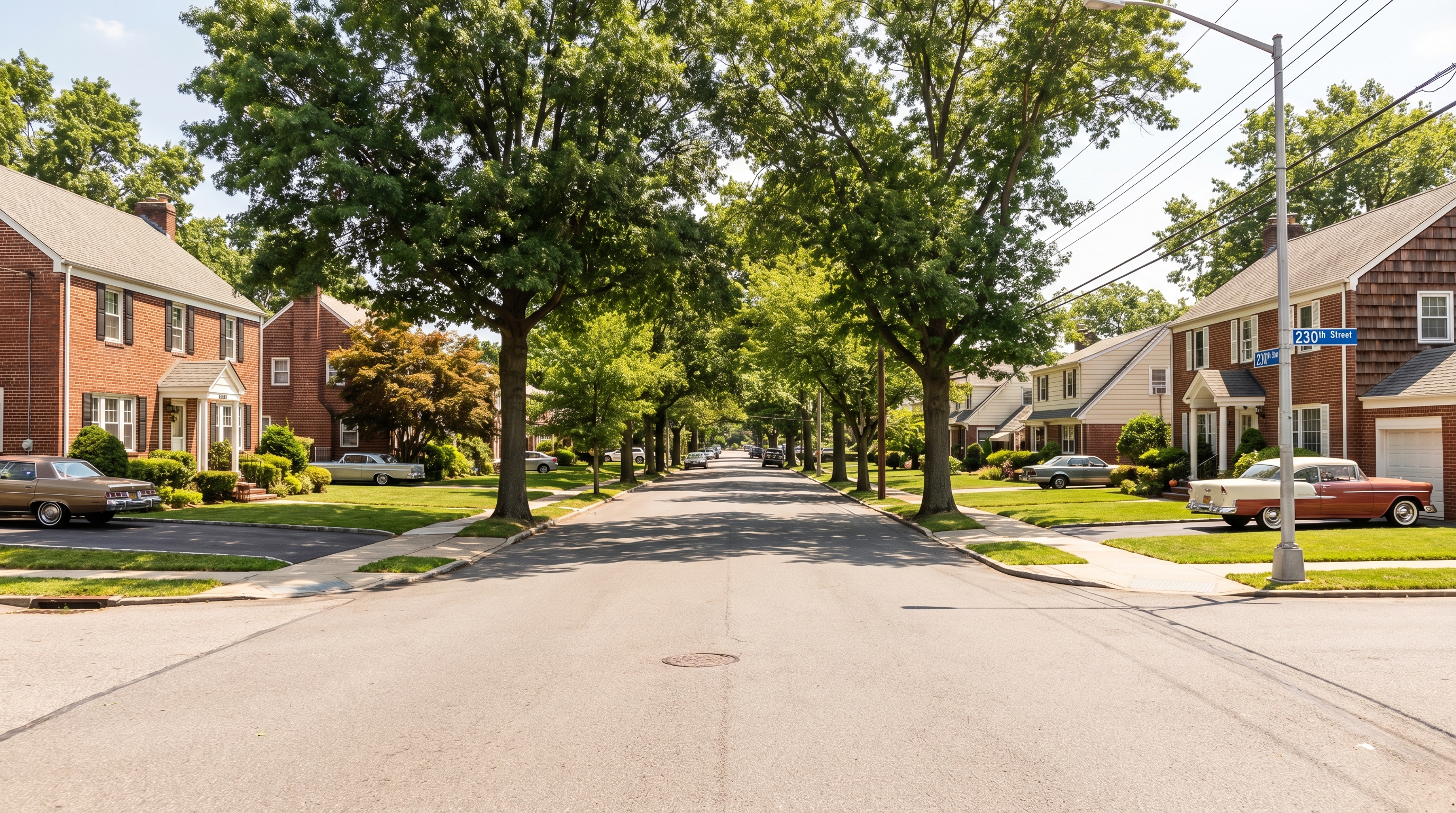
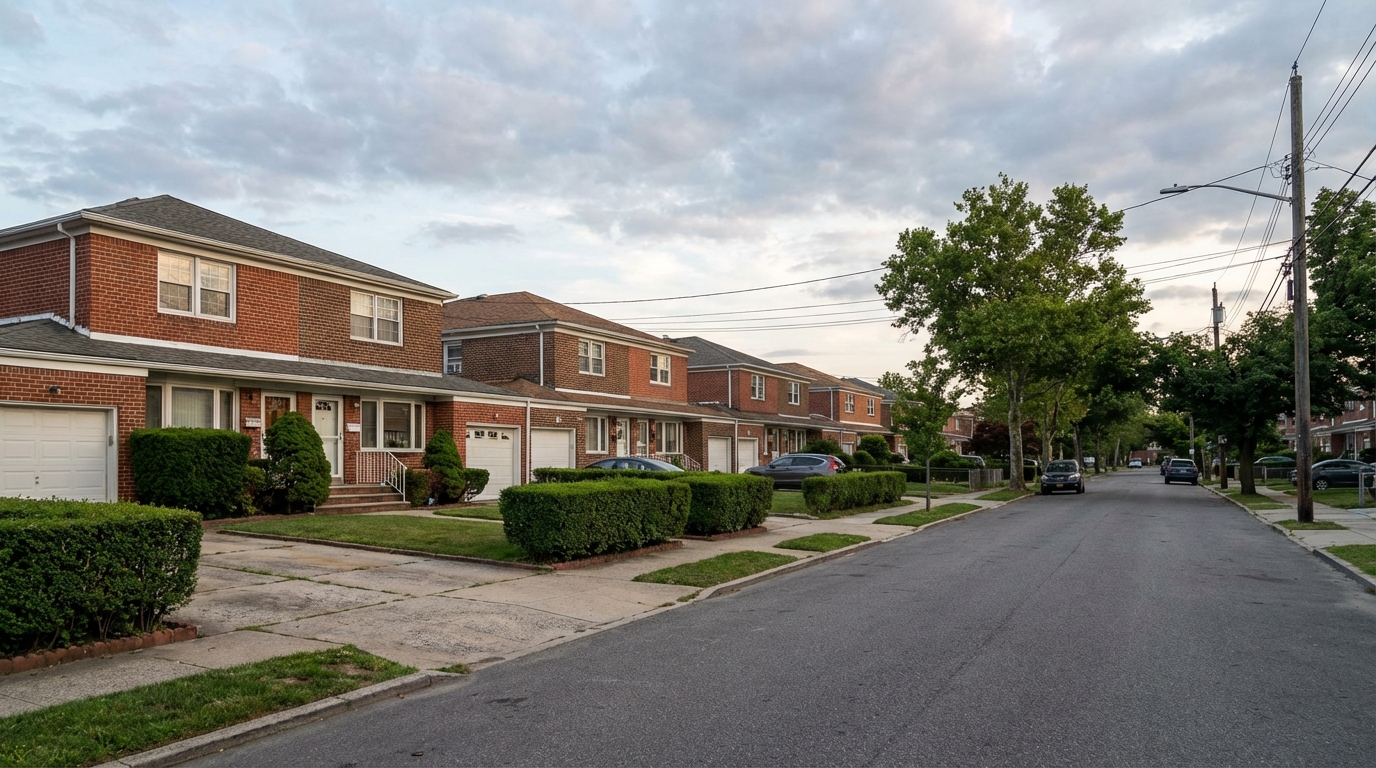
The postwar housing stock runs from Cape Cods to brick two-families and almost everything is owner-occupied
Rosedale filled in rapidly between 1945 and 1965. Veterans used GI Bill loans to purchase Cape Cod cottages and Colonial Revival homes on a grid of quiet residential streets. One-and-a-half-story Cape Cods with steeply pitched roofs and dormered upper bedrooms are the defining housing type. Two-story Colonial Revival homes with symmetrical brick facades and modest front stoops fill the blocks between them. Single-story brick ranch homes from the 1950s appear near the Belt Parkway and the Nassau County border. Two-family semi-detached brick homes are distributed throughout, many of them occupied by an owner on one floor and a family member or tenant on the other.
The homeownership rate in Rosedale is around 55 to 65 percent, nearly double the New York City average. These numbers explain why the blocks look the way they look. Driveways get repaved. Gutters get cleaned. Front gardens are maintained because the person who planted them is still inside the house.
Inside the homes, the surfaces tell you how long a family has been here. Original hardwood floors in the downstairs rooms. Plaster walls in the older builds that chip if you brush them with a vacuum handle and stain if you splash cleaner on them. Kitchens that have been renovated at least once since the house was built, often with modern tile backsplashes meeting mid-century cabinetry. Upstairs in a Cape Cod, the dormered bedrooms almost always have carpet, installed when the attic was finished into living space sometime in the 1950s or 1960s.
Our house cleaning teams work with these surfaces the way they deserve to be worked with. The hardwood gets a flat microfiber mop with a pH-neutral solution, never steam, never excess water. The carpeted upper level gets a HEPA-filter vacuum with real attention to edges and baseboards. Plaster walls get careful treatment, not aggressive wiping. Switching between surfaces mid-house is routine because nearly every Rosedale Cape Cod or Colonial requires it.
Caribbean cooking happens in these kitchens daily and the standard cleaning approach is not enough
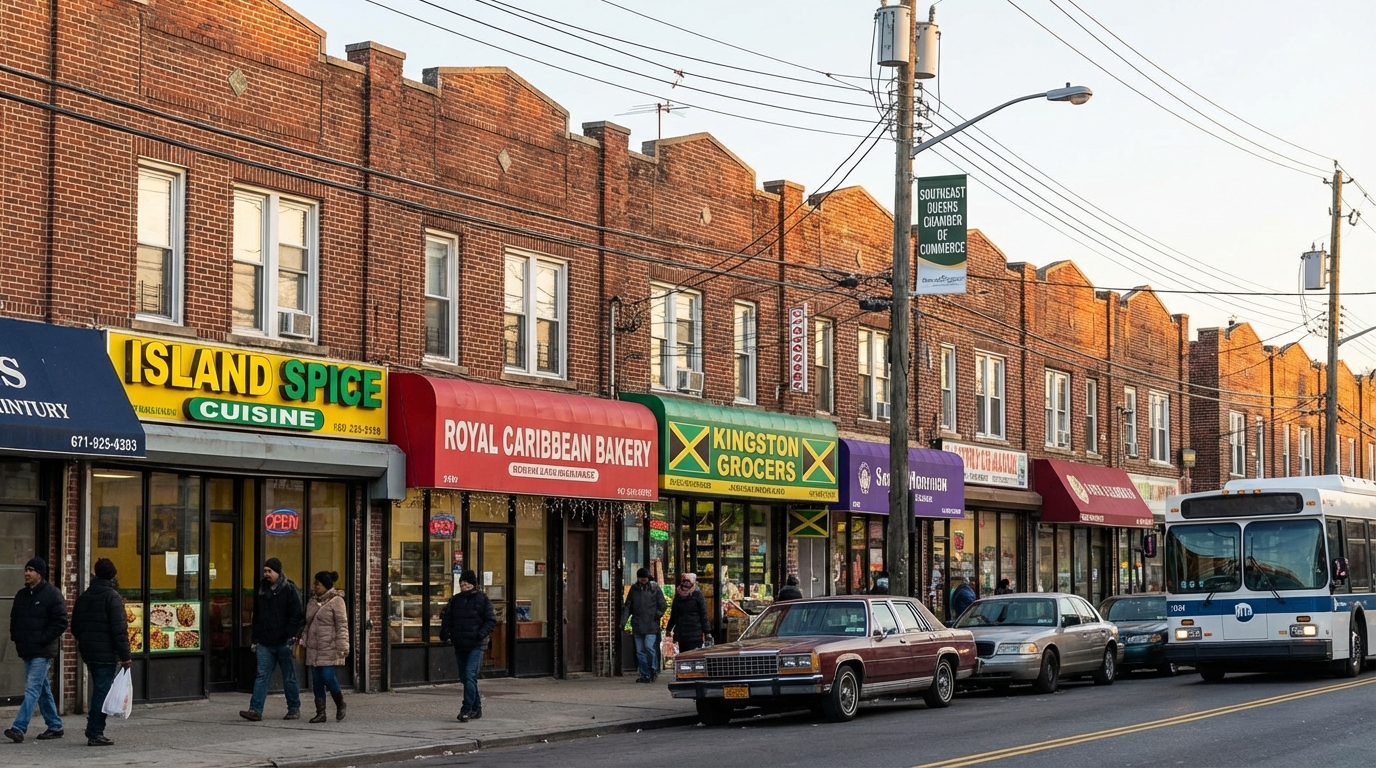
Walk Merrick Boulevard on any afternoon and the food culture of Rosedale is visible on every block. Jamaican patty shops. Roti counters. West Indian bakeries selling hard dough bread, coconut drops, and coco bread. Caribbean restaurants with oxtail, curry goat, jerk chicken, and ackee dishes in the window. This is not a weekend food scene. It is the daily texture of a neighborhood where cooking is a serious practice inherited from grandmothers in Jamaica, Trinidad, Guyana, and Barbados.
That cooking happens in home kitchens first. Curry and scotch bonnet hit hot oil on a Tuesday morning. Oxtail braises for hours on a Saturday. Jerk seasoning, coconut oil, and repeated deep frying leave a film on range hoods, backsplashes, cabinet faces, and the wall behind the stove that a standard wipe-down will not cut through. This is not a criticism of these kitchens. It is a description of what real cooking leaves behind.
We use a degreaser on every kitchen surface within reach of the stove, take the hood’s outer housing back to a clean finish, and pull the drip trays. On a biweekly recurring schedule, the buildup stays manageable. If the kitchen has not had a proper cleaning in a while, a one-time deep cleaning resets the grease load so recurring visits can maintain it from there. Your Sunday should be spent cooking for the family, not scrubbing the residue off the range hood with a toothbrush.
Two-family homes here are wealth-building tools and they need cleaning treated that way
About 30 percent of Rosedale’s housing stock is semi-detached two-family brick homes. The Caribbean-American homeownership pattern that defines southeast Queens developed this form into a particular financial strategy: purchase a two-family home, occupy one unit, rent the other. The rental income offsets the mortgage. The property builds equity. The building stays maintained because the owner lives in it. Families who bought two-family homes in the 1970s and 1980s have seen those properties appreciate from under $100,000 to $650,000 to $800,000 today.
We clean individual units or the full building, on whatever schedule works for the occupants. If you are an owner-occupant who wants only your floor cleaned, book by your unit’s square footage and we handle your entrance separately from the tenant’s. If you want both units cleaned for a sale, an open house, or a new tenant, we send a larger team and handle the whole building in one visit. The move-in and move-out cleaning for a rental unit covers inside cabinets, appliance interiors, baseboards, window sills, and every surface the next tenant will open or touch.
For the apartments in the smaller multi-family buildings near Merrick Boulevard and Brookville Boulevard, the job is straightforward apartment cleaning: no doorman, no elevator scheduling, no COI paperwork. Just a key or a lockbox code and a time.
Generational homes need a different first visit than a recently renovated condo
Many of the Cape Cods and Colonials in Rosedale have been in the same family for three or four decades. Caribbean-American families who bought here in the 1970s and 1980s, often in the aftermath of the blockbusting controversies that destabilized white homeownership in the area, stayed and maintained. Their children and grandchildren now live in or are inheriting these homes. The houses have tenure.
That tenure is visible when you open the kitchen cabinets or turn on the steam heat in October. Hardwood floors with wax buildup that has not been stripped since the last refinish. Cast-iron radiator fins packed with dust that burns off when the heat comes on for the first time each fall, filling the house with that particular scorched-lint smell for a week. Closets that have not been fully emptied since the last renovation. These are not neglected homes. They are used homes, and the first cleaning is always a deep clean.
We work room by room, top to bottom, and reset every surface on the first visit. After that, recurring house cleaning on a weekly or biweekly schedule keeps it maintained with far less time per visit. Over 100,000 homes in New York City have been cleaned by Maid Marines teams. The homes that need the most careful first visit are the ones with the most history behind them. Rosedale homes qualify.
The Belt Parkway puts JFK Airport and Nassau County within reach, but the side streets hear nothing
The Belt Parkway runs directly along Rosedale’s northern boundary. JFK Airport is ten to fifteen minutes by car. Nassau County is five minutes. Downtown Brooklyn is twenty to twenty-five minutes without traffic. The $19 billion JFK Airport redevelopment now underway is bringing road improvements to the Nassau Expressway corridor just east of the neighborhood.
Yet the interior residential blocks of Rosedale are among the quietest in any borough. The houses face inward toward each other and their front yards. The Belt Parkway noise fades within a block. Planes descend over Jamaica Bay on their approach to JFK, and the sound is there if you listen for it, but people who grew up here stopped noticing it decades ago.
This is the practical advantage that makes Rosedale work as a place to live: proximity to a major airport, two counties, a highway, and a commuter rail line, combined with interior streets so quiet that you can hear birds. The LIRR Far Rockaway Branch stops at Rosedale Station, with service to Jamaica and Penn Station in roughly 45 to 55 minutes. Q4 buses run along Merrick Boulevard to Jamaica, connecting to the subway and the AirTrain. Car ownership is essentially universal. Rosedale was built around and for the automobile, and the driveways prove it.
What booking looks like for Rosedale homeowners
You pick your date and time on our booking page. You see your flat-rate price before you commit. No doorman to coordinate, no lobby to navigate, no elevator to schedule. Our cleaners park on your block and walk to the front door. If you are at work when they arrive, a lockbox code is the whole handoff. Our cleaners are W-2 employees, not gig workers. They are vetted, insured, and they arrive on time regardless of how they get to Rosedale.
If your building requires a Certificate of Insurance for any reason, we furnish those. But most Rosedale homes are owner-occupied single-family properties and the process is as simple as unlocking the door.
We serve Rosedale and all of southeast Queens, including nearby Laurelton, St. Albans, and Hollis.