
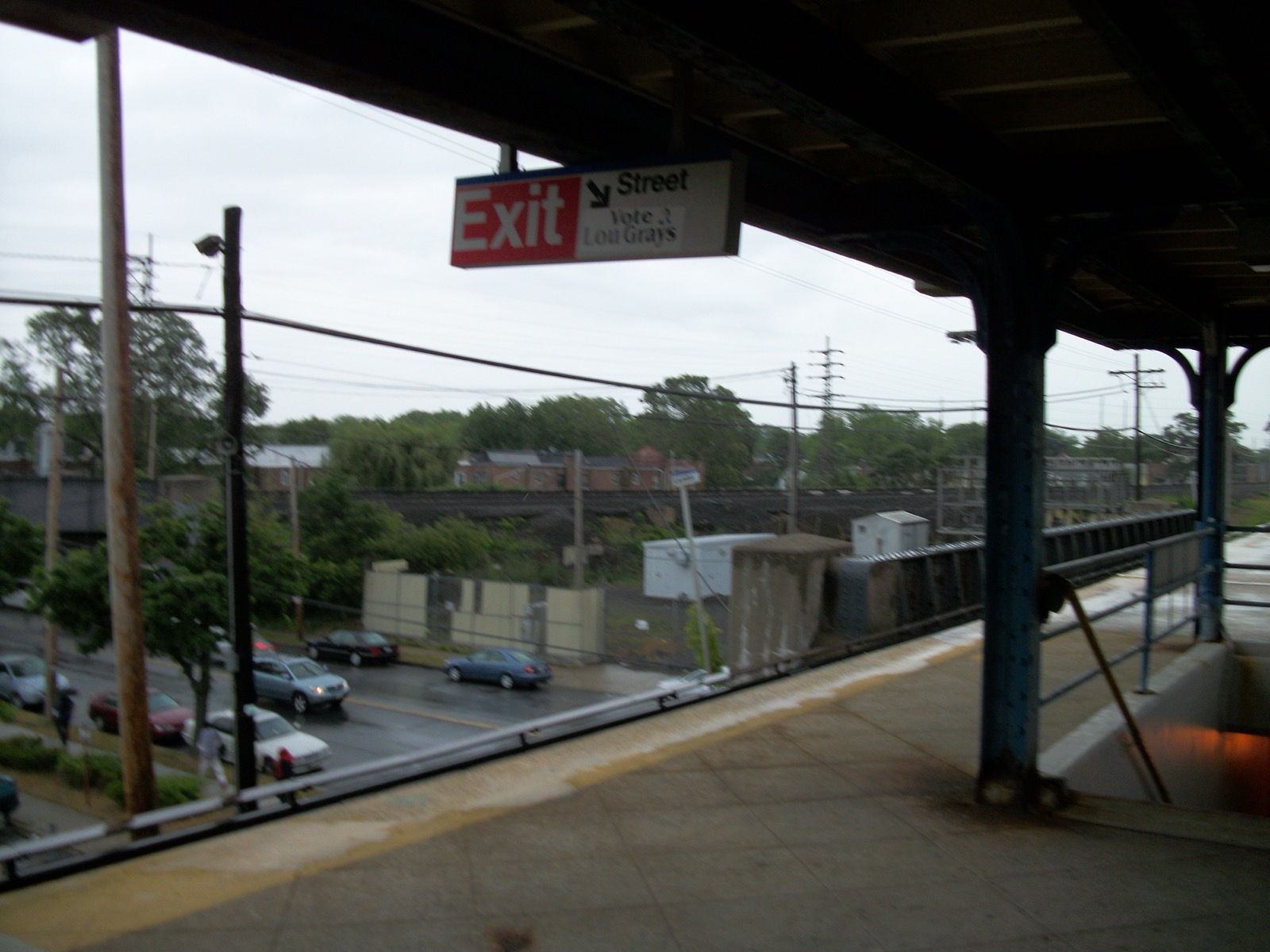
Laurelton is one of the quietest neighborhoods in New York City. Not quiet like a library. Quiet like an actual suburb. Birds in the morning. Driveways with cars being washed on Saturdays. Front gardens with rose bushes and hydrangeas trimmed to the inch. Lawns mowed on a schedule. The smell of curry drifting from a kitchen window at 7 AM on a Sunday, which means someone’s grandmother is starting a pot that will feed the family by afternoon. You can hear all of this because there is no subway rumbling beneath the sidewalk. There has never been a subway here. The Long Island Rail Road brought this neighborhood into existence over a century ago, and the LIRR remains the only rail connection to the rest of the city.
That quiet has kept Laurelton stable for decades. It has also kept it off the radar of the speculators and developers who reshape subway-adjacent neighborhoods every ten years. The people who live here bought their homes. Sixty to sixty-five percent of Laurelton residents are homeowners, nearly double the citywide average. They have stayed. And the houses they maintain are the primary evidence of that commitment.
A developer named Dean Alvord planted laurel trees along the avenues and gave the neighborhood its name
The land that became Laurelton was part of the territory of the Rockaway band of the Lenape people for thousands of years before European contact. English settlers established farms in this southeastern corner of Queens County beginning in the mid-17th century, and for the next two hundred years the area was nothing but agricultural estates, scattered farmhouses, dirt lanes, and meadows.
The modern neighborhood began to take shape in the 1890s and early 1900s when developers acquired the farmland and began platting residential streets. The name came from the laurel trees they planted along the planned avenues, a deliberate marketing gesture in an era before mass advertising. You showed prospective buyers what the finished neighborhood would look like by actually planting the trees. The suffix “-ton,” from the Old English “tun” meaning settlement or estate, was a popular convention for naming new suburban communities. It conveyed pastoral stability and English gentility, which was exactly what the upwardly mobile middle-class buyers of the era wanted to hear.
Dean Alvord, the developer responsible for the area’s earliest subdivision around 1905 to 1910, modeled portions of the planned community after an English village. The streets were laid out with intentional curves and cul-de-sacs rather than the rigid grid that characterized most of New York City. Laurel, linden, and maple trees were planted along every block, ensuring a verdant environment that matched the community’s name. The Long Island Rail Road’s Far Rockaway Branch opened a station at Laurelton in the early 1900s, fixing the name permanently into official usage and making the development viable as a commuter suburb.
Small, single-family homes began to appear on the new streets. Wood-frame Colonials and Cape Cods, built for middle-class families, many of them first-generation immigrants from Eastern Europe and Italy who had graduated from the denser immigrant districts of the Lower East Side and Brooklyn. These families wanted what the developers were selling: a detached house with a yard, a quiet block, a train to the city, and something that felt like a small town even though it was technically within the five boroughs.
The postwar years turned Laurelton into one of the most successful Jewish communities in outer-borough Queens
The post-World War II era brought Laurelton’s greatest period of growth. Veterans returning from the war used GI Bill loans to purchase homes in the modest, affordable single-family streets of southeast Queens. A large and thriving Ashkenazi Jewish community from Brooklyn and the Bronx established itself in the 1940s and 1950s. Synagogues, Jewish community centers, kosher butchers, and delicatessens proliferated along Merrick Boulevard and the surrounding blocks. Laurelton was known as a safe, stable, middle-class enclave where the children could play outside and the commute to Manhattan was manageable if not exactly short.
The community produced people who would go on to shape American life in unexpected ways. Bernard Madoff grew up in a house on these blocks, attended local PS 156, and met his future wife Ruth Alpern at Far Rockaway High School. Meir Kahane, who founded the Jewish Defense League in 1968, was a Laurelton resident. Neil Leifer, the photographer who shot the most famous sports image in American history for Sports Illustrated (Muhammad Ali standing over Sonny Liston in 1965), grew up in the Jewish community here. Hettie Jones, the poet and memoirist, and Sam DeLuca, who played right guard for the New York Jets, both came from these streets.
The neighborhood’s Jewish character lasted roughly a generation. By the early 1960s, demographic forces far larger than Laurelton were reshaping the American city.
The Great Migration brought middle-class Black families who maintained everything that had been built
Beginning in the 1960s, African American and Caribbean families drawn by the Great Migration and the civil rights era’s opening of previously redlined neighborhoods began purchasing homes in Laurelton. Many were middle-class families: teachers, nurses, civil servants, postal workers, and transit workers. They were buying homes, not renting, and they were investing in the same quiet suburban character that had attracted the previous generation.
Unlike similar transitions in other American cities, Laurelton’s demographic shift was not accompanied by disinvestment. Incoming Black families were largely middle-class homeowners who maintained and improved their properties. The lawns stayed mowed. The driveways stayed paved. The churches that moved into the former synagogue buildings filled them with congregations that invested in the physical structures. The commercial strip on Merrick Boulevard continued to serve the neighborhood, its inventory evolving with the tastes of the new residents.
This is the fact that urban scholars cite when they write about Laurelton: it is a counter-narrative. A majority-Black urban neighborhood that has remained stable, maintained, homeowning, and economically solid for over fifty years. The homeownership rate tells the story more concisely than any sociological paper could. Sixty to sixty-five percent of residents own their homes. In a city where most people rent, that single number explains why the blocks look the way they look.
From the 1980s onward the Caribbean became the dominant cultural influence
West Indian and Caribbean families, particularly Jamaican, Trinidadian, Guyanese, Haitian, and Barbadian, became the majority population alongside African Americans from the 1980s through the present. Southeast Queens, including Laurelton, now has one of the highest concentrations of Caribbean-born immigrants in the United States. The cultural footprint is deep. Barbershops and beauty salons are social institutions. West Indian bakeries sell hard dough bread, beef patties, and coconut drops. Reggae and soca drift from car windows on summer evenings. On Emancipation Day and during Carnival season, decorations go up in windows and on stoops.
The churches are the community’s organizational backbone. Baptist, AME, Seventh-Day Adventist, and Pentecostal congregations worship in converted storefronts, purpose-built brick sanctuaries, and former synagogues. Many of the mid-century synagogue structures are significant examples of postwar American synagogue architecture now serving Black Christian congregations. These conversions are architectural history in brick form: the Star of David still visible in some stained glass windows, the sanctuary layout unchanged, the social hall downstairs now hosting fish fry fundraisers and voter registration drives instead of bar mitzvahs.
Walk Merrick Boulevard between 225th Street and 234th Street on any afternoon. Golden Krust Caribbean Restaurant opens at 6:30 AM and sells beef patties, coco bread, jerk chicken, and oxtail. Western Bakery Restaurant serves curried chicken, fried dumpling, and brown stewed chicken. Sweet Treats Delight Bakery does custom cakes and Caribbean baked goods. The smaller independent spots, many of them cash-only, serve doubles, buss-up-shut, and curried chicken roti from storefronts no wider than a hallway. The quality of Trinidadian roti available on this stretch of southeast Queens rivals anything in Port of Spain.
The food culture extends beyond the commercial strip into the homes. Backyard cookouts on summer weekends are the dominant social-eating tradition. Family matriarchs cook for extended households. The smell of curry on a Sunday morning, the crackle of scotch bonnet hitting hot oil, the low rumble of oxtails braising for hours. These kitchens produce real food daily. The grease film on the range hood and the spice residue on the backsplash are the evidence.
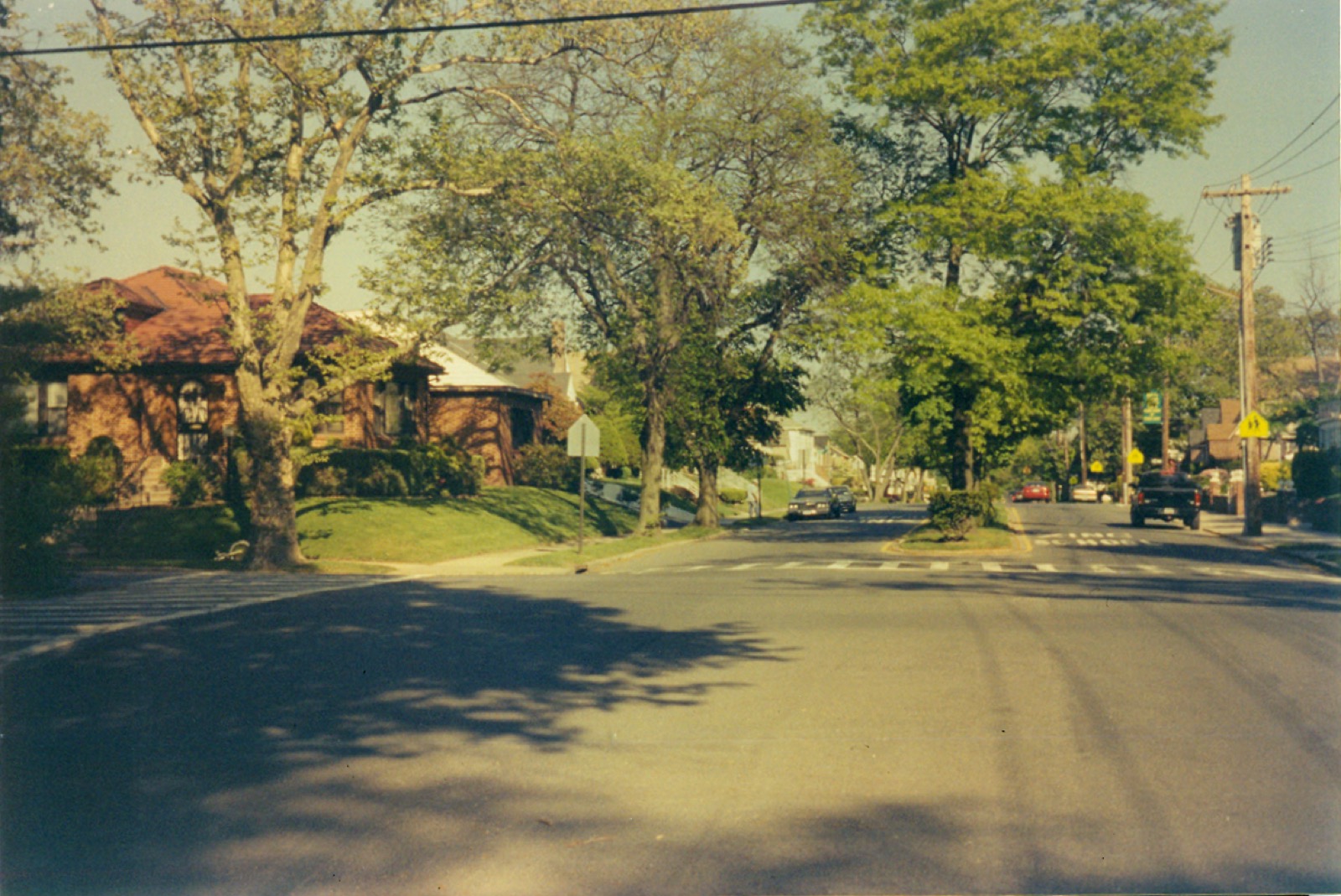
Colonials and Cape Cods built between the 1920s and 1950s define the housing stock
The characteristic dwelling of Laurelton is the detached or semi-detached single-family home. Wood-frame and brick Colonials dominate the interior blocks, typically two to two-and-a-half stories with front stoops, small front yards, and modest back gardens. Cape Cod cottages are common too: one-and-a-half story homes with pitched roofs and dormers. Many homes feature aluminum or vinyl siding added in later decades over original clapboard. The relative uniformity of scale and setback gives Laurelton’s residential blocks a harmonious, unhurried quality that feels more like Nassau County than the city proper.
Along some of the wider lots near the Belt Parkway and Brookville Boulevard, single-story brick ranch homes from the 1950s give certain blocks a distinctly mid-century suburban character. These ranches have flat profiles, attached garages, and open floor plans that were cutting-edge modern when Eisenhower was in office.
About a quarter of the housing stock consists of two-family attached homes. Brick or frame structures with a garden-level apartment and a two-story unit above. Built primarily in the postwar period to maximize the value of residential plots while maintaining the low-rise character. Many owners occupy one unit and rent the other as supplementary income, a classic wealth-building strategy among Caribbean and African American families in southeast Queens.
These are homes where the surfaces tell you how long a family has been here. Original hardwood floors laid 70 to 90 years ago. Plaster walls in the older builds that chip if you bump them with a vacuum handle and stain if you splash cleaner on them. Kitchens renovated at least once since the house was built, with modern tile backsplashes meeting mid-century cabinets. The cleaning approach for each home depends on which decade’s renovation you are encountering in which room.
Preserving these homes means knowing what the floors and walls cannot survive
The hardwood is the main thing to get right. Many of these floors are original, and they have been walked on by three generations. We use a flat microfiber mop with a pH-neutral solution, no steam mops, no soaking, no vinegar. The carpet upstairs gets a HEPA-filter vacuum with attention to edges and baseboards where dust and pet hair accumulate over decades. Plaster walls in the older Colonials are not drywall. They are brittle, they chip, and they stain. Our teams know to work carefully near the walls and to wipe any splashes immediately.
A standard house cleaning for a Laurelton Colonial runs two and a half to three and a half hours depending on the size and the number of bathrooms. Two-family full-building jobs run longer. We send one or two cleaners depending on the scope, and the same team comes back on recurring visits so they learn the house and work efficiently.
For homes that have been in the same family for 30 or 40 years, the first visit is always a deep clean. Decades of wax buildup on hardwood floors. Kitchen cabinets with layers of cooking grease that surface wiping will not remove. Cast-iron radiator fins packed with dust that burns off every October when the steam heat kicks on. We reset every surface on that first visit. After the initial deep clean, recurring maintenance keeps the house in a condition that matches the care the homeowner has put into it from the outside.
The kitchens here produce Caribbean and soul food daily and standard cleaning products cannot keep up
Curry, jerk seasoning, scotch bonnet, coconut oil, and regular deep frying leave a film on range hoods, backsplashes, cabinet faces, and the wall behind the stove that standard surface spray does not cut through. We use a targeted degreaser on those areas and spend real time on the range hood, inside and out. On a recurring schedule, the oil buildup never gets ahead of us. If it has been a while since anyone addressed the kitchen properly, a one-time deep clean resets the kitchen to baseline so the recurring visits can maintain it.
Your Sunday afternoon should be spent at a block party or watching cricket at the park or sitting in a roti shop on Merrick Boulevard, not scrubbing the residue off your range hood with a toothbrush. Book the cleaning for Saturday morning and come home to a kitchen that smells like nothing at all.
Two-family homes and the move-in cleaning before the open house
We clean individual units or the whole building depending on what you need. If you are an owner-occupant renting the other unit, we can clean your floor on one schedule and the rental unit on another. If you are prepping both units for sale, we handle the entire building in a single move-in/move-out visit. The housing market in Laurelton has appreciated steadily. Median home sale prices run $550,000 to $620,000 for single-family homes and $650,000 to $800,000 for two-family buildings. Homes that show well sell faster, and a proper pre-listing cleaning is the cheapest investment you can make relative to the sale price.
For apartment cleaning in the smaller walkups along Merrick Boulevard and the blocks closer to the Belt Parkway, the job is faster and priced accordingly. Same team, same standards, smaller footprint.
JFK Airport is ten minutes away but the interior blocks hear nothing except birds
The Belt Parkway runs directly along Laurelton’s southern edge, connecting residents to JFK Airport in ten to fifteen minutes by car. Nassau County is fifteen minutes. Downtown Brooklyn is twenty to twenty-five minutes without traffic. The $19 billion JFK Airport redevelopment now underway, with Terminal 6 opening in 2026 and bringing 4,000 construction jobs to the immediate area, means increased employment opportunities for the already significant number of Laurelton residents who work in aviation and airport logistics.
Yet the interior blocks are quiet enough to hear birds. The homes face inward, toward each other and their neat front yards, not outward toward the parkway or the flight paths overhead. Planes descend over Jamaica Bay on their approach to JFK, and the sound carries, but it is the background radiation of urban life, not a disruption. People who grew up here stopped hearing it decades ago.
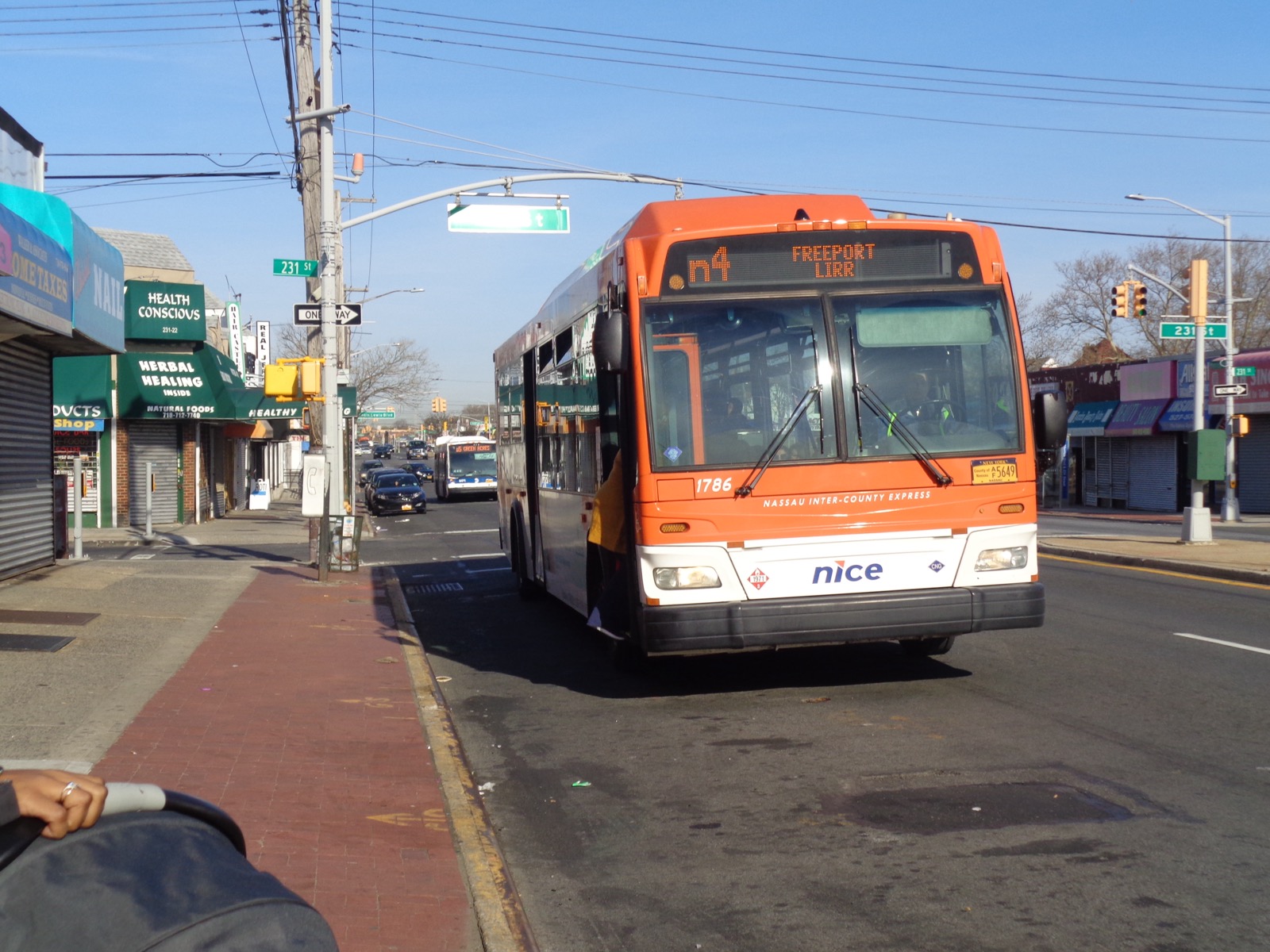
This is the paradox of Laurelton’s location: minutes from one of the world’s busiest airports and the major thoroughfare connecting Brooklyn to Long Island, yet the residential streets feel like a small town that has been here since before anyone built anything nearby. The LIRR will take you to Penn Station in about 45 minutes. Buses on Merrick Boulevard run to Jamaica, where you connect to the subway, the AirTrain to JFK, and the rest of the LIRR network. Everything is accessible. Nothing is immediate. And that distance from immediacy is exactly why the neighborhood has stayed the way it is.
Montefiore Cemetery and the invisible boundary that shaped where Laurelton ends
Montefiore Cemetery, established in 1885 on 200 acres straddling the Laurelton and Springfield Gardens border along Springfield Boulevard, is one of the largest Jewish cemeteries in New York City. It holds the graves of Samuel Gompers, founder of the American Federation of Labor, and the families of countless Lower East Side and Brooklyn immigrants who made the journey to southeast Queens in death even if they never lived here. The cemetery’s western edge runs along blocks where Laurelton residents walk their dogs and push strollers past gravestones dating to the 1890s. It is a quiet neighbor in a quiet neighborhood, and its presence has functioned as a natural growth boundary that kept the blocks immediately west from ever densifying beyond the low-rise residential character.
Springfield Gardens sits directly to the east, sharing Laurelton’s suburban character and Caribbean demographics. The two neighborhoods blur into each other along Springfield Boulevard, and residents on either side of the line often identify with both. The LIRR stations at Laurelton and neighboring Rosedale anchor a commuter corridor that has defined daily life here for over a century. Families bought these homes specifically because the train made a Manhattan job possible without a Manhattan apartment. The morning ritual has not changed in three generations: drive to the station or walk the six to eight blocks, board the Far Rockaway Branch train, read or sleep for 45 minutes, arrive at Penn Station. The evening reversal brings them back to streets where the only sounds are car doors closing and someone’s sprinkler running.
That commuter pattern is why so many of our Laurelton clients book weekday cleanings. The house is empty from 7 AM until 6 PM five days a week. Our team arrives after the family leaves, cleans the entire house without anyone underfoot, and is finished before anyone walks back through the front door. The LIRR schedule and the homeownership culture together create an ideal cleaning window that apartment-heavy neighborhoods cannot match.
The homeownership culture here explains why the blocks look better than most of New York
Laurelton’s homeownership rate is not just a statistic. It is visible on every block. When people own their homes, they maintain them. Front stoops are swept. Gutters are cleaned. Siding is pressure-washed. Hedges are trimmed. Seasonal decorations go up in December and come down in January. The driveway is repaved when it cracks. The house gets painted on a cycle.
That culture of exterior maintenance extends to expectations about the interior. People who have maintained a front yard for thirty years do not want a dirty kitchen or dusty baseboards behind closed doors. The standard in Laurelton homes is higher than what most cleaning services encounter in apartment buildings where tenants rotate every two years.
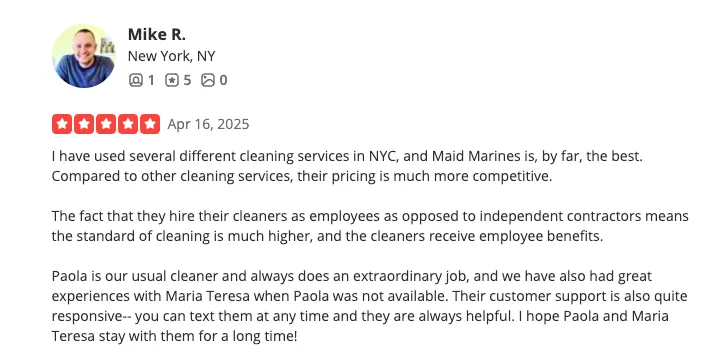
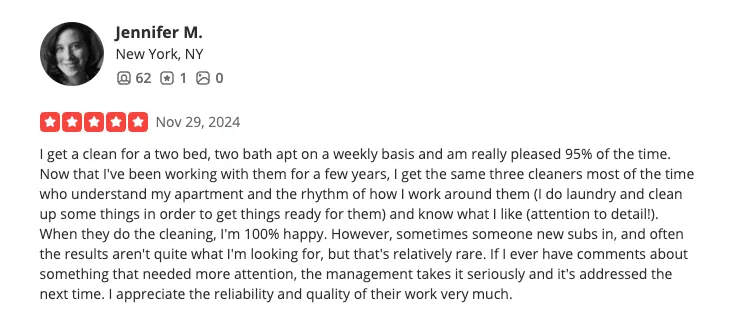
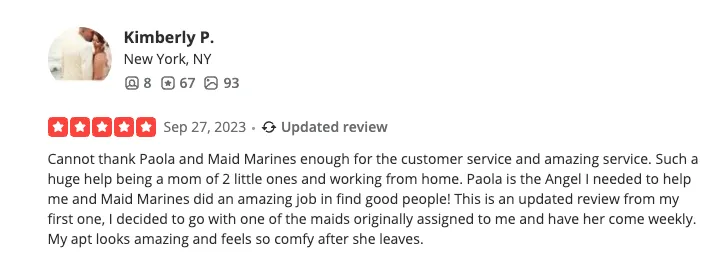
We match that standard. Our cleaners who serve Laurelton and southeast Queens understand that they are entering homes where maintenance is a point of pride, not a chore outsourced as an afterthought. We treat the interiors accordingly, and the same team comes back each time because a house worth maintaining is a house worth learning.
What booking looks like for Laurelton homeowners
You pick your date and time on our booking page. You see your flat-rate price before you commit. No doorman to coordinate, no lobby to navigate, no elevator to schedule. Our cleaners drive to Laurelton, park on your block, and walk to your front door with everything they need. They are W-2 employees, vetted, insured, and bonded. If you need a Certificate of Insurance for any reason, we furnish those. But most Laurelton homes are owner-occupied and the process is as simple as unlocking the door or leaving a lockbox code.
We also serve nearby St. Albans and Hollis, as well as Forest Hills and the rest of Queens. Our teams use the LIRR Far Rockaway Branch or drive directly. The fact that there is no subway in Laurelton does not affect our availability or pricing. We arrive on time regardless of how we get there.