
The name South Jamaica is not what it appears to be. It has nothing to do with the Caribbean island. The neighborhood takes its name from the Lenape word Yameco, which colonial English settlers corrupted into Jamaica when they established the Town of Jamaica in 1656. The Jameco people, who fished Jamaica Bay and hunted the coastal plain of western Long Island, gave their name to the bay, the town, and eventually to the neighborhood sitting just south of that town center. That the neighborhood now has one of the largest Jamaican immigrant communities in Queens is one of New York’s more striking toponymic coincidences.
South Jamaica occupies the lower section of the southeast Queens residential grid, bounded roughly by the Jamaica Transit Hub to the north, the Van Wyck Expressway to the west, Springfield Boulevard to the east, and Rockaway Boulevard to the south. It is an old neighborhood in Queens terms, built up in waves from the 1910s through the 1940s when working-class families sought affordable housing within the city limits. The streetcar lines and expanding bus network made the area accessible. Two-story brick row houses and wood-frame homes rose block by block, creating the dense low-rise residential fabric that still defines most of the private housing stock today.
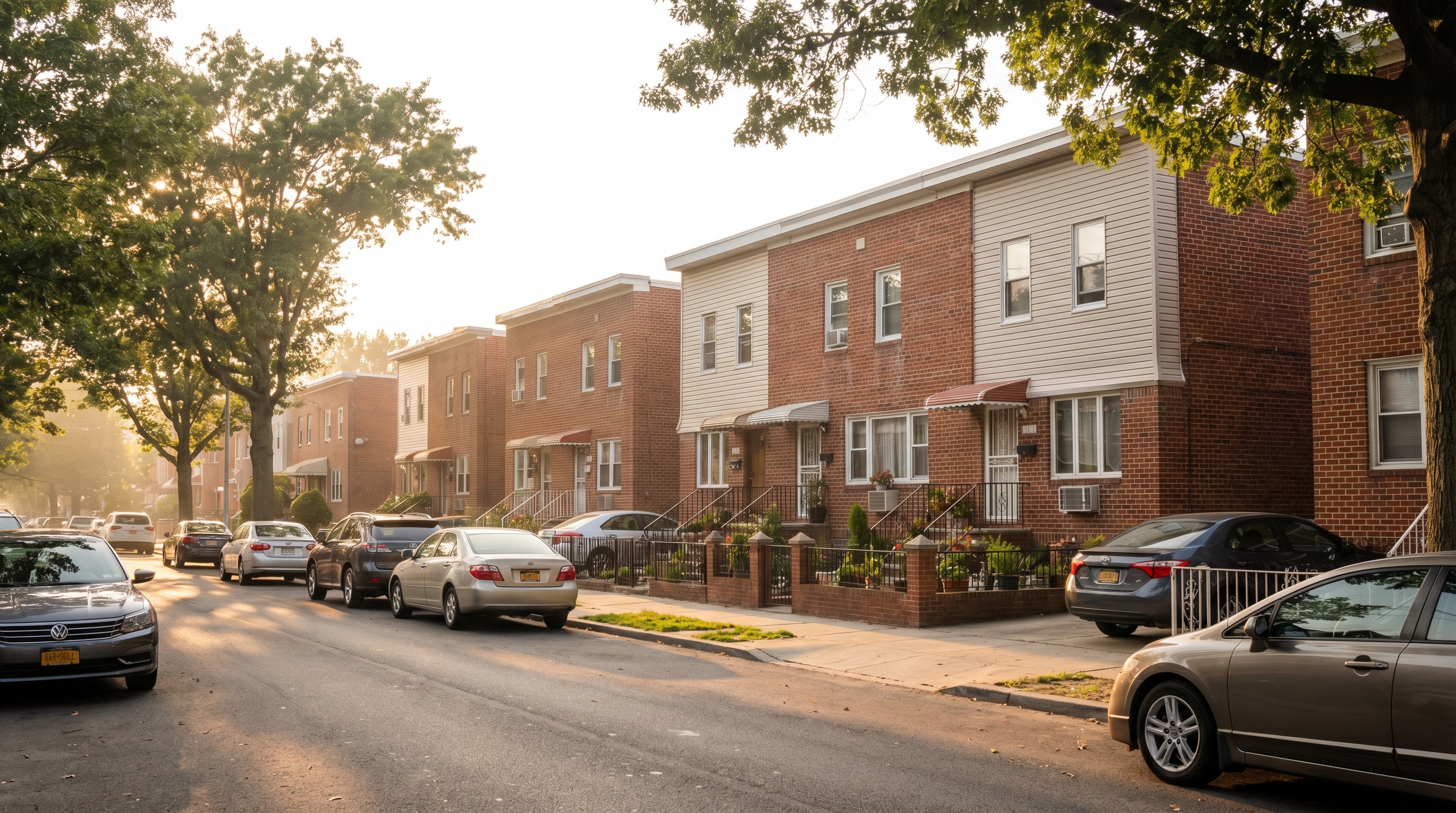
A neighborhood built in brick one row house at a time
The physical character of South Jamaica’s private blocks is unmistakably outer Queens. Attached and semi-detached brick row houses, two and three stories, flat roofs, stoops with iron railings, small rear yards, and the accretion of decades of owner-directed modification. Many facades have aluminum siding added over the original brick. Stoops have been enclosed or rebuilt. Ground-floor windows get security gates. These are homes that people have lived in and adapted for decades, and the modifications tell the story of occupancy.
The typical attached row house runs 900 to 1,400 square feet across two floors. The layout is predictable: living room and kitchen on the ground floor, two or three bedrooms and a bathroom above, with a basement that functions as storage, laundry room, or additional living space depending on the family. Some homes have finished basements with separate entrances that function as informal rental units.
In the southern and eastern sections of the neighborhood, the housing stock shifts toward post-war Cape Cod and Colonial brick homes, detached, owner-occupied, and somewhat larger. These are the homes that Caribbean immigrant families began purchasing in significant numbers starting in the 1970s and 1980s, drawn by the neighborhood’s affordable prices and established Black community infrastructure. The families who bought those homes 40 years ago often still live in them, and their children and grandchildren are in the houses next door.
What decades of cooking do to a kitchen in southeast Queens
South Jamaica households cook seriously. The Caribbean and African American culinary traditions that define the neighborhood’s food culture both rely on methods that leave a mark: the long-braised oxtail, the curried goat cooked until the sauce coats everything in the kitchen, the jerk chicken that spends hours on a backyard grill before it finishes in the oven, the Guyanese cook-up rice that requires a deep pot and a patient hand. Haitian griot, Trinidadian doubles, Jamaican beef patties made from scratch. These are not weeknight convenience meals. They are daily commitments.
That cooking leaves residue on every surface within six feet of the stove. Grease films build on the range hood, the cabinet faces above the stove, the tile backsplash, and the painted ceiling. Curry and jerk seasoning are particularly stubborn because they contain both oil and turmeric or allspice compounds that bond to surfaces. Standard wiping spreads the film rather than removing it.
Our house cleaning teams carry commercial-grade degreasers for kitchen surfaces. We degrease the outside of the hood rather than wiping around it. We pull the drip trays. On deep clean visits we clean the oven interior, and the insides of the cabinets above the stove, where oil vapor accumulates over time, are an add-on you can put on the same booking. If your kitchen sees daily cooking, it benefits from this full treatment every three or four visits to prevent buildup from becoming structural.
The aircraft noise problem and what it does to indoor air
South Jamaica sits directly under the flight paths of JFK International Airport’s most active runways. The AirTrain connecting Jamaica Station to JFK runs nearby and provides a practical commute for the many South Jamaica residents who work in airport-related industries. But the proximity comes with jet exhaust particulates settling on every outdoor surface, a fine carbon-oil compound that differs from ordinary urban dust.
Families in South Jamaica tend to keep windows closed more than residents of neighborhoods further from the flight paths, which concentrates indoor particulates. The result is a specific cleaning challenge: surfaces accumulate a denser, stickier dust film than you find in neighborhoods without this exposure, and recirculated indoor air carries those particles to unexpected places. Window tracks collect concentrated grime. HVAC vents and return air grates build up quickly. The area behind picture frames and on top of bookshelves gets a visible layer within weeks.
We use microfiber on all surfaces rather than dry dusting. Dry dusting redistributes particulates into the air where they resettle. Microfiber traps them. Window sills and ledges get attention on every visit, not just on deep cleans. We recommend changing your air filter every 60 days rather than every 90 in this neighborhood. It makes a noticeable difference in the clean between our visits.
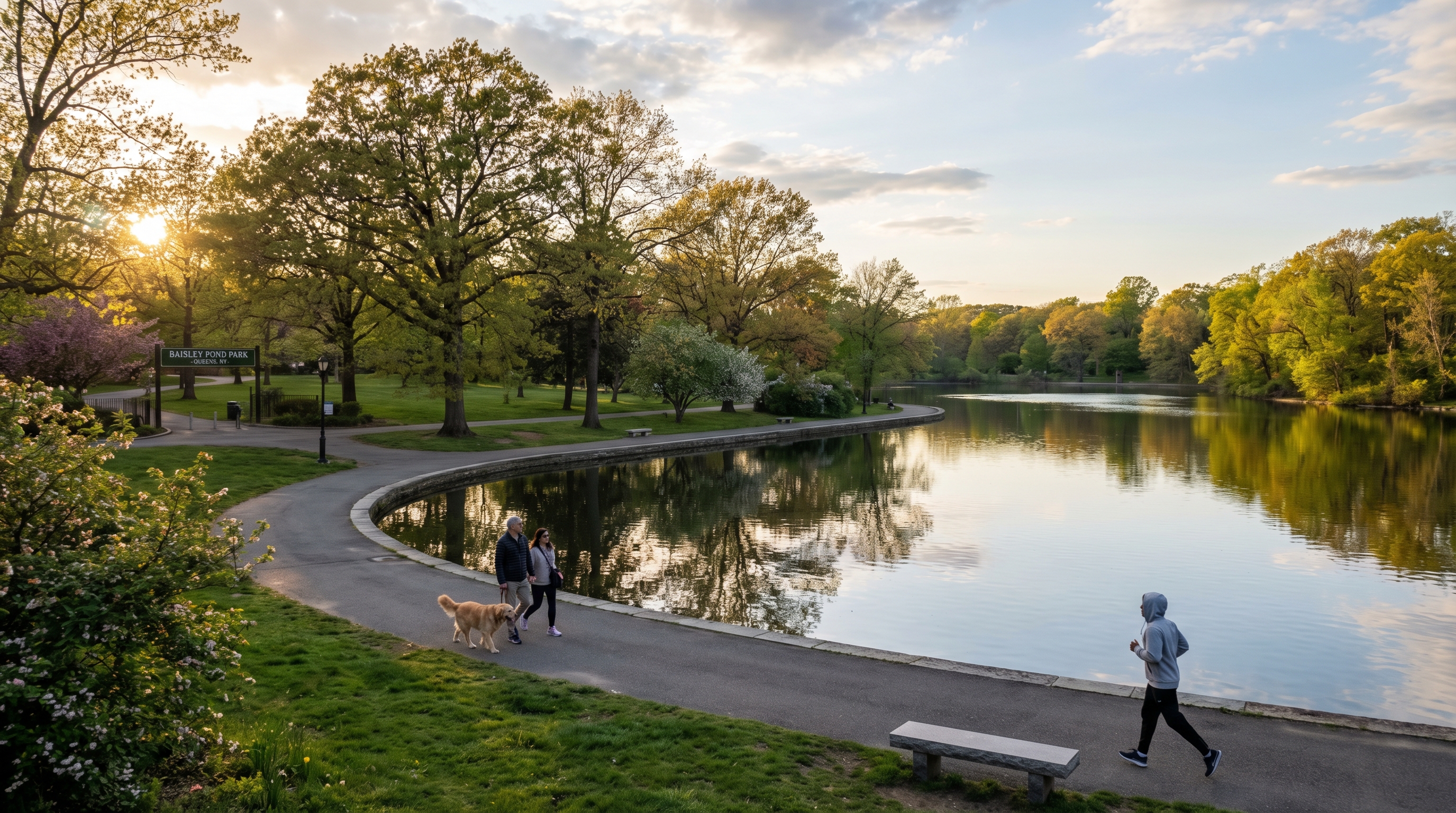
Baisley Pond Park and the green space that the neighborhood built its life around
The 97-acre park sitting on the South Jamaica and St. Albans boundary is the most underrated green space in southeast Queens. Baisley Pond itself is a genuine body of water with a walking loop, waterfowl, and a stillness that is hard to find in this part of the borough. The athletic fields on the park’s eastern edge run full every warm weekend with youth baseball, soccer, and informal basketball. Roy Wilkins Recreation Center, named for the NAACP leader, sits nearby and provides an indoor pool and gym year-round.
The park is also one of the few places in South Jamaica where the neighborhood’s different communities visibly share space. The walking path on a spring morning has Caribbean elders, teenagers from the Baisley Park Houses, parents with strollers, and dog walkers from the private blocks. The park has no ideology about who belongs there.
Book your Saturday morning cleaning and come here in the afternoon. Walk the pond loop in about 45 minutes or sit by the water and let time pass. It is as good a way to spend a Saturday afternoon as Queens offers.
The commercial corridor that is South Jamaica in one block
Guy Brewer Boulevard runs north to south through the heart of the neighborhood, named for the Black New York State Assemblyman who navigated the mid-century Queens Democratic Party at a time when that took sustained courage and political skill. The naming decision was not casual. South Jamaica honored a community political figure, not a general or a national symbol.
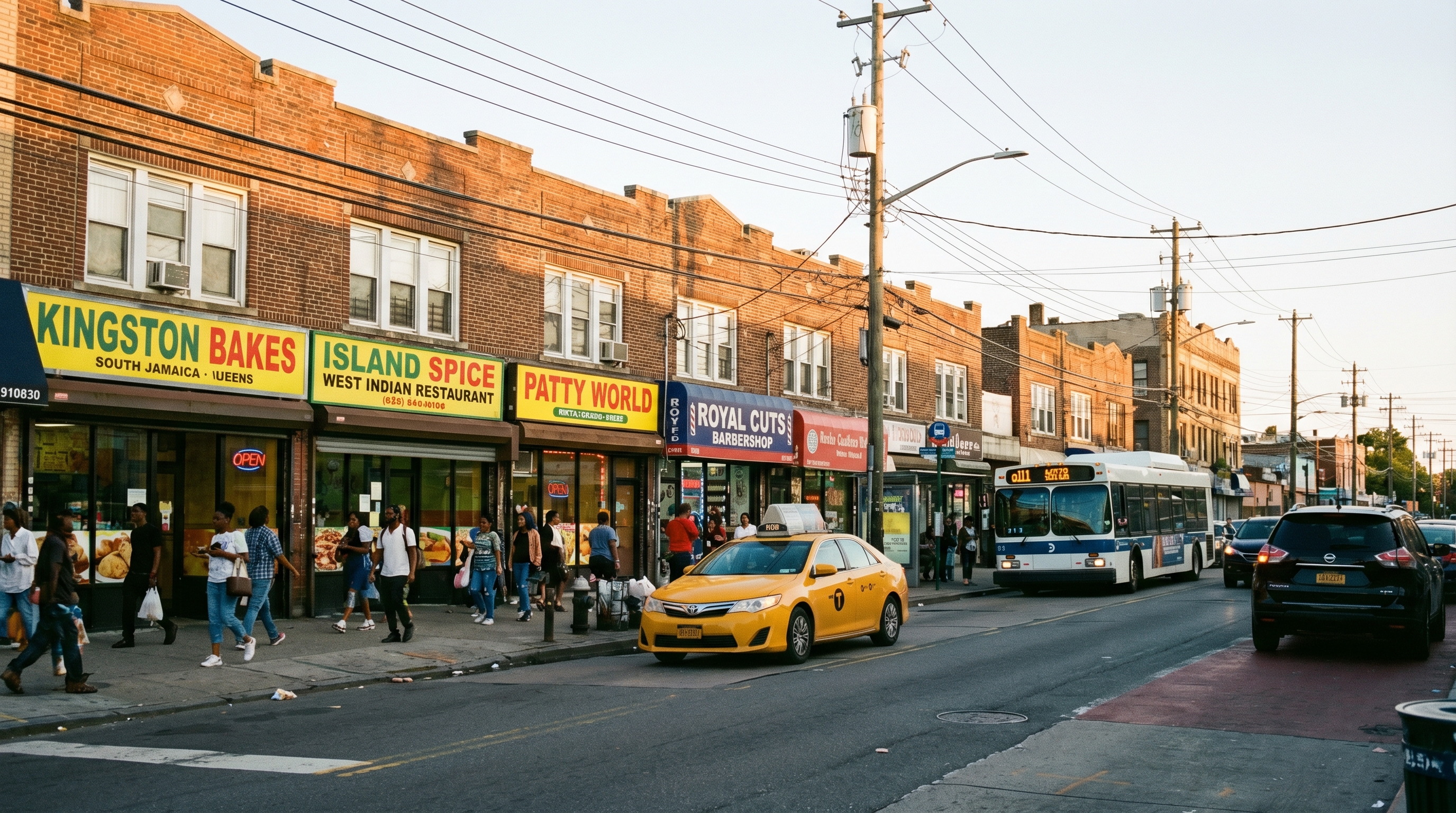
The commercial strip along Guy Brewer Boulevard is a dense sequence of Caribbean bakeries, Jamaican restaurants, West Indian beauty supply stores, barbershops, Pentecostal churches, and community organizations occupying converted storefronts. It is one of the most concentrated expressions of Caribbean-American commercial culture in Queens, with a range that takes in Jamaican, Guyanese, Trinidadian, and Haitian businesses within a few blocks of each other.
The bakeries here bake Jamaican beef patties fresh every morning. The yellow casing, the spiced ground beef filling, the slight crisp on the edge of the pastry. These are not the wax-paper wrapped versions from a chain. They come out of an actual oven at the back of an actual bakery, and they are better. Several of the bakeries on this corridor have been operating since the 1980s, which in New York terms means they survived the crack epidemic, two recessions, a pandemic, and whatever came before each of those things.
Row houses and two-family homes need cleaners who understand the layout
The attached row house is the default building type in South Jamaica’s private sections, and it has a logic that is different from a condo or a brownstone. The stoop leads to a ground floor with living room and kitchen, tight floor plans, narrow hallways, and a basement that tends to accumulate. Upstairs: bedrooms, a bathroom, sometimes a second bathroom added during a renovation that squeezed it between two existing rooms.
Two-family homes, where an owner occupies one floor and rents the other, are common throughout the neighborhood. The second unit typically has its own side or rear entrance. We clean both units in sequence during the same visit if the timing works, or on separate schedules if the tenant prefers different days. Book the total square footage and we price it as one job.
For move-in and move-out cleaning, the transition between tenants in a South Jamaica row house requires attention to the kitchen and bathroom above all else. Grease-coated cabinet interiors, mineral deposits on bathroom fixtures, scuffed baseboards, and the general accumulation of the last tenancy. We handle this as a full reset: inside cabinets, appliance interiors, window sills, and every surface the incoming tenant will open or touch on their first day.
A deep cleaning for homes that have absorbed years of use
South Jamaica has homes that have been in the same family for 30 and 40 years. The homeownership culture that Caribbean immigrant families brought to the neighborhood in the 1970s and 1980s produced a stock of houses that are genuinely cared for, but that also show the accumulation of long tenure. Wax buildup on hardwood floors that has not been addressed since the last refinish. Cast-iron radiator fins packed with dust that burns off every October when the steam heat comes on for the first time, sending that scorched-lint smell through the house for a week. Kitchen cabinets where layers of cooking grease have built up on interior surfaces. Closets that have not been emptied in years.
The first cleaning in a home like this is always a deep clean. We have cleaned over 100,000 homes across New York City and we know what accumulated tenure looks like and what it takes to reset it. After that first visit, recurring house cleaning every one or two weeks maintains the result. The gap between the first visit and the second is always the most dramatic. That is the point.
What booking looks like for South Jamaica residents
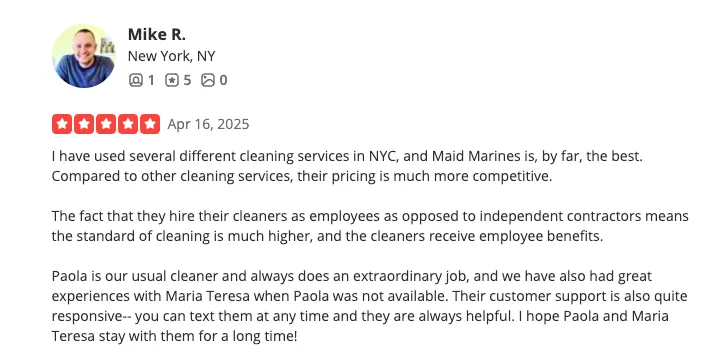
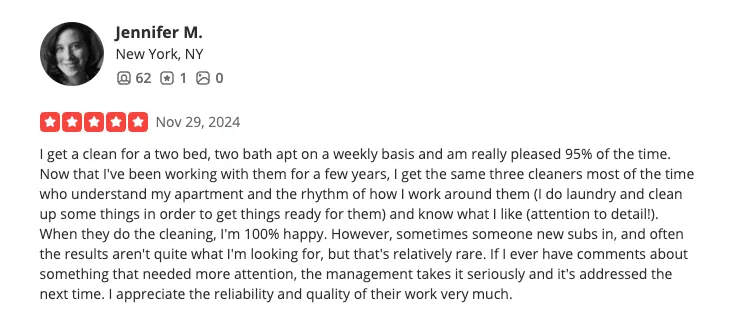
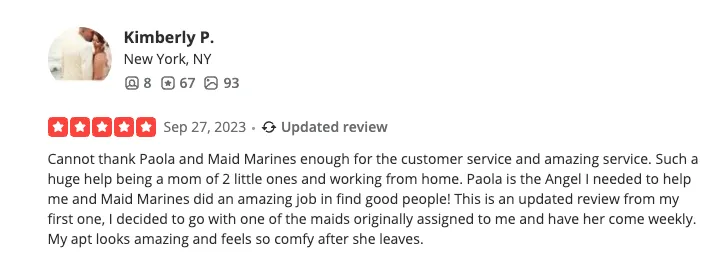
You pick your date and time on our booking page. You see your flat-rate price before you commit. If your row house has surfaces that need specific handling, you tell us once and we note it on your account. If your two-family home needs both units done, we set it up correctly on the first call. Our cleaners are W-2 employees, not gig workers. They are vetted, insured, and they show up with the right products for your specific home.
We serve South Jamaica and all of southeast Queens, including nearby St. Albans, Jamaica, Hollis, and Richmond Hill. Our teams use the F or A train to the Jamaica hub or drive directly from southeast Queens. Transit access is not an issue here and it does not affect our pricing. We arrive on time.