
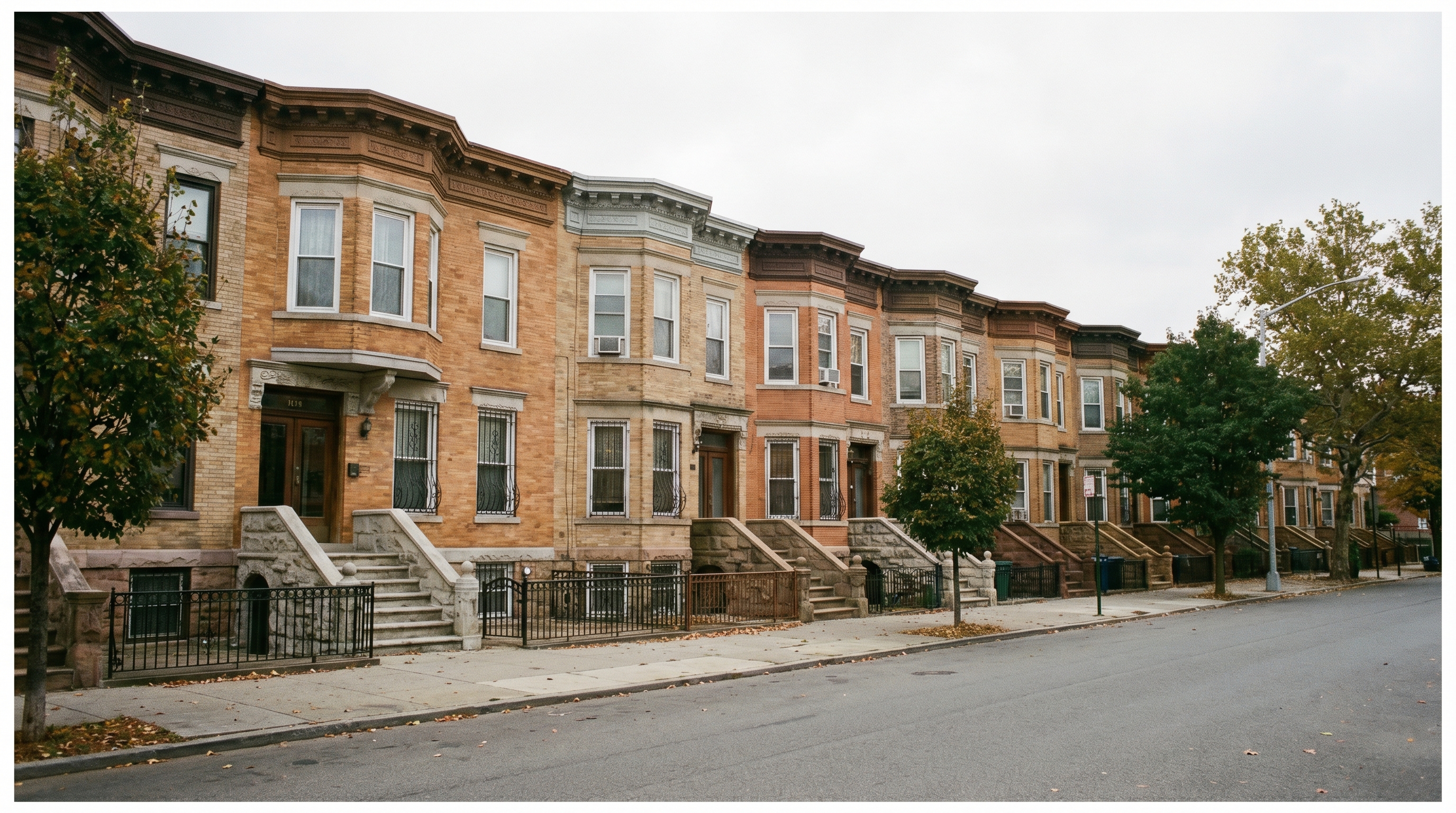
Woodhaven’s rowhouse blocks have been working-class for over 120 years, and they look it. Not in a neglected way. In the way of buildings that were built to last, have been inhabited continuously, and carry the accumulated texture of generations who lived inside them. The attached brick rowhouses running along every interior residential street from Jamaica Avenue to Atlantic Avenue are 1890s to 1920s construction with original stoops, original ironwork, and, in many cases, original hardwood floors that have never been replaced. Over 100,000 homes across New York City have gone through our hands. The ones in Woodhaven are among the most intact.
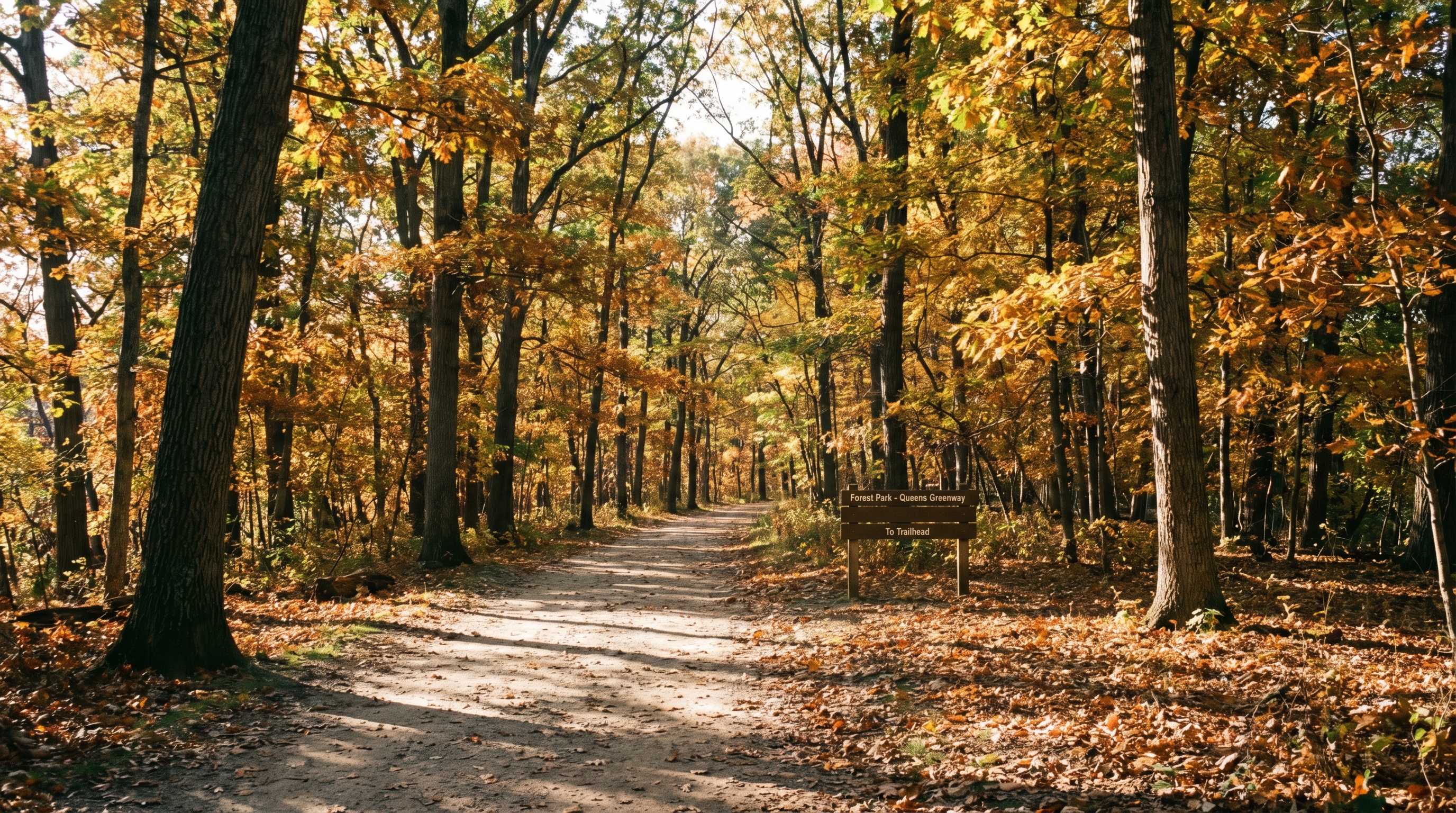
The Forest Park oak forest covers 538 acres directly behind the neighborhood’s northern blocks. From certain streets in Woodhaven, you can hear the wind move through the old-growth trees. In October, leaves blow down from the glacial moraine ridge above and collect in drifts against the rowhouse stoops. In summer, the nearest streets have a canopy and a quiet that you do not find in most of Queens.
The rowhouse stock here is what makes cleaning in Woodhaven different from anywhere else in Queens
Woodhaven’s housing is almost entirely the two-story attached brick rowhouse type built between the 1880s and the 1920s, and most of those rowhouses are configured as two-family homes: the owner occupying one floor, a tenant on the other. This is a different cleaning context than a standard apartment building and a different context than a detached house in Forest Hills or Flushing.
The floors in these homes are almost always original hardwood, and original hardwood from the 1910s and 1920s is typically wax-finished rather than polyurethane. A standard all-purpose cleaner or a wet mop will cloud a wax finish and eventually destroy it. The baseboards along the staircases collect dust that has been settling since the Taft administration. The bay windows on the upper story face north or south depending on the block orientation, and the ledges inside those bays trap grime in the corners of old sash window frames. The bathtubs in original rowhouse bathrooms are sometimes cast iron with enamel that cannot tolerate abrasive scrubbers without scarring.
The kitchen is usually the most used room in a Woodhaven rowhouse. These are active households. The stove gets daily use. The range hood, in many original kitchens, has never been deep-cleaned by anyone outside the family. Grease films build up on upper cabinet faces, on the ceiling above the range, and on the backsplash tiles. Standard all-purpose cleaners do not cut through this. We bring commercial degreasers to kitchens where the cooking is serious, and we allocate the time the job requires.
For house cleaning in a two-family rowhouse, we treat each unit as a separate appointment with its own pricing and its own service. Owners who want both floors cleaned coordinate both at booking.
What the century-old stoops and ironwork need
Every Woodhaven rowhouse has a front stoop, and most of those stoops have decorative ironwork railings from the original construction. The railings are painted but the paint on cast iron from the early 1900s is layered over decades of previous coats, and underneath it, the metal corrodes slowly if moisture penetrates between layers. We clean stoop surfaces and ironwork without using anything acidic or salt-based. Grime comes off with a neutral cleaner and a stiff brush on the tread surfaces. The ironwork gets wiped down with a damp cloth only. Nothing that would lift paint or accelerate corrosion at the metal-paint interface.
Inside, the plaster walls in original rowhouses are not drywall. They are three-coat lime plaster applied over wood lath, and that plaster is rigid but not forgiving of excessive moisture. We do not spray product directly on plaster walls. We spray on the cloth and wipe, which keeps moisture off the wall surface while still cleaning effectively.
The Victorian ornamentation on some Woodhaven rowhouses includes decorative cornice brackets and carved brick patterns at the roofline. Interior plaster ornamental details above doorways and along ceiling edges collect dust in their recesses. We use a soft brush on those details, not a damp cloth, which would push grime deeper into the crevings rather than pulling it out.
Deep cleaning when the season changes or the family expands
The twice-a-year cleaning rhythm in Woodhaven tends to follow the same markers it follows in every outer-borough working-class neighborhood: before the holidays when family visits, and after the long winter when the apartment has been sealed for months. A deep cleaning in a two-story rowhouse unit covers everything that a regular cleaning skips. Under the refrigerator, as far as we can reach. The tops of door frames. The sills and ledges on the original double-hung sash windows, which collect compacted grime that does not come out with standard wiping. The grout lines in original bathroom tile, which can be whitened significantly with the right cleaner and a grout brush if the tile itself is still good. The covers on the cast-iron radiators, which sit over a full season of dust that burns off as a scorched smell when the heat kicks on each October. Cabinet interiors are not in the deep clean; they are an add-on you attach to the booking.
For families with young children, non-toxic and fragrance-free products are the standard on every cleaning, not a special request. We do not use bleach or ammonia in homes where a child will be on the floor within an hour of us leaving. Every surface gets a pH-neutral cleaner that dries without residue. Pet households get pet-hair removal as part of every recurring visit, concentrated on the areas where it builds up: entryways, upholstered furniture, and the rugs near the back door where dogs come in from the yard.
The move-in and move-out cleaning demand in Woodhaven is consistent because the rental market in these two-family homes turns over regularly. A tenant vacating a ground-floor unit that has been occupied for three years leaves a cleaning job that is longer than a standard visit. We price move-out work by the hour with a walk-through estimate. For landlords who manage multiple units in the same building, we offer recurring scheduling that keeps the rotation on a calendar.
Your cleaning takes about three hours and the park is right there
The Forest Park trailhead is a ten-minute walk from most Woodhaven addresses. The main loop through the oak forest runs long enough to fill a cleaning window without any effort. The trail surfaces are dirt and packed gravel. The canopy on the ridge blocks enough street noise that you can hear birds rather than traffic. In October, the leaves on the oaks and maples turn gold and rust and the light through the canopy in the afternoon has the quality of late-season New England forest, except that you are in Queens and the J train is running five minutes away.
The Forest Park Carousel near the Woodhaven Boulevard entrance was built in 1903 and has hand-carved wooden horses that are over 120 years old. It runs on summer and fall weekends. If you have children, this is where your cleaning window goes.
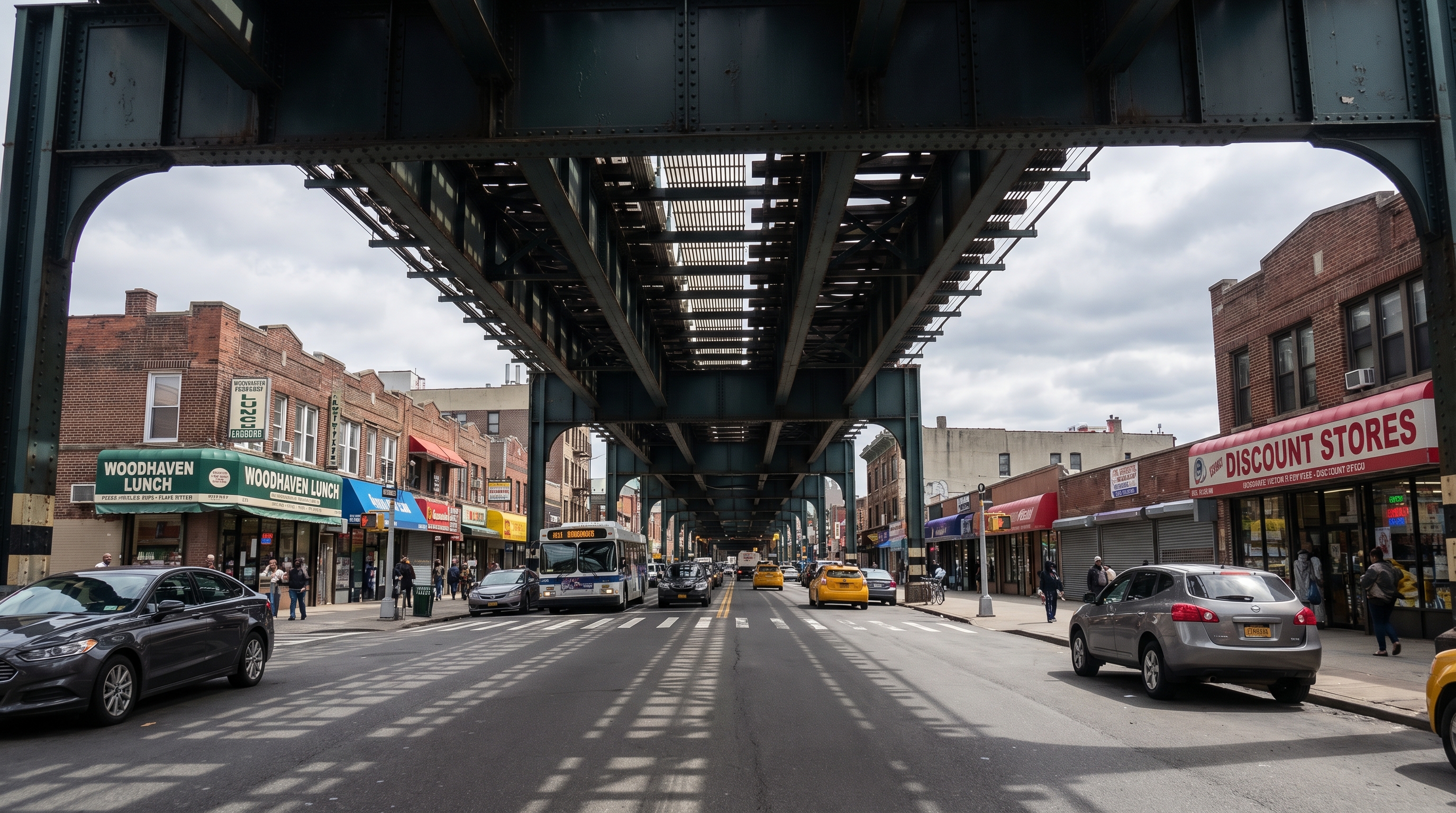
On Jamaica Avenue under the elevated structure, the commercial corridor runs from 85th Street to 111th Street and has been running in some form since the El opened in 1898. The storefronts cycle but the character holds: bodegas, Bangladeshi sweet shops, pizza by the slice from a place that has been open since 1971, a Puerto Rican lunch counter where pernil and mofongo are ready by noon. Walk the strip with no destination and you see exactly what this neighborhood is. Then come home to a clean apartment.
Getting our teams to your door on the J and Z
The J and Z trains run over Jamaica Avenue with stops at 85th Street-Forest Parkway, 88th Street-Boyd Avenue, 104th Street, and 111th Street. All four stops are within the neighborhood, and our teams reach any Woodhaven address easily from the 88th Street or 104th Street station. Express Z train service to Downtown Brooklyn and Lower Manhattan runs roughly 35 to 45 minutes, which means our crews coming from Brooklyn or Manhattan arrive on schedule.
We are fully insured and bonded. If your building or co-op management requires a Certificate of Insurance before any vendor enters, we furnish those before the first appointment. Tell us your building’s requirements when you book.
We serve the full zip code 11421, including the blocks closest to Forest Park, the Jamaica Avenue corridor, and the southern edge near Atlantic Avenue where the neighborhood merges into Richmond Hill. If you are not certain whether your address is technically Woodhaven or a neighboring area, book anyway. We serve the whole corridor.
For flat-rate apartment cleaning in Woodhaven’s walk-up buildings along Jamaica and Atlantic Avenues, for recurring house cleaning in the rowhouse belt, and for deep cleaning or move-out work, you see your price on our booking page before you commit to anything.
We also serve nearby Forest Hills, Sunnyside, Astoria, and the rest of Queens.