

Gerritsen Beach is the kind of neighborhood that the rest of New York City does not quite believe exists. Tucked onto a peninsula at the far southeastern edge of Brooklyn, bounded by Shell Bank Creek to the west and Gerritsen Creek and Marine Park to the east, it sits at the end of a single road that is both the neighborhood’s lifeline and the reason it has remained, against all urban logic, a genuine small town inside the largest city in the country.
The bones of the place go back to the mid-1600s, when a Dutch settler named Wolphert Gerretse built a tide-powered grist mill on the creek that now bears the family name. That mill ground flour and grain for the surrounding community for over two centuries, reportedly supplying Washington’s Continental Army during the Revolution, before finally closing in 1889. The mill is long gone, destroyed by fire in 1931, but the name stayed, and so did the character of the place: working, self-sufficient, oriented toward the water, and largely indifferent to whatever the rest of the borough was doing.
The modern neighborhood took shape in 1920 when Realty Associates began building a planned summer resort community on the peninsula. The vision was compact and deliberate: wood-frame bungalows on narrow lots along compressed streets designed for seasonal escape from the rest of Brooklyn. Within a decade, 1,500 small homes had been built. They were never supposed to be permanent. The streets were narrow because summer visitors did not need wide roads. The lots were small because no one expected to raise a family there year-round.
Then the summer visitors stayed. Irish and Italian working-class families began winterizing the bungalows through the 1930s and 1940s, insulating walls, enclosing porches, building additions. What had been a vacation colony became a year-round neighborhood. The transformation was accomplished entirely by the residents, household by household, without any planned redevelopment or city involvement. It is the kind of thing that only happens when people decide a place is worth staying for.
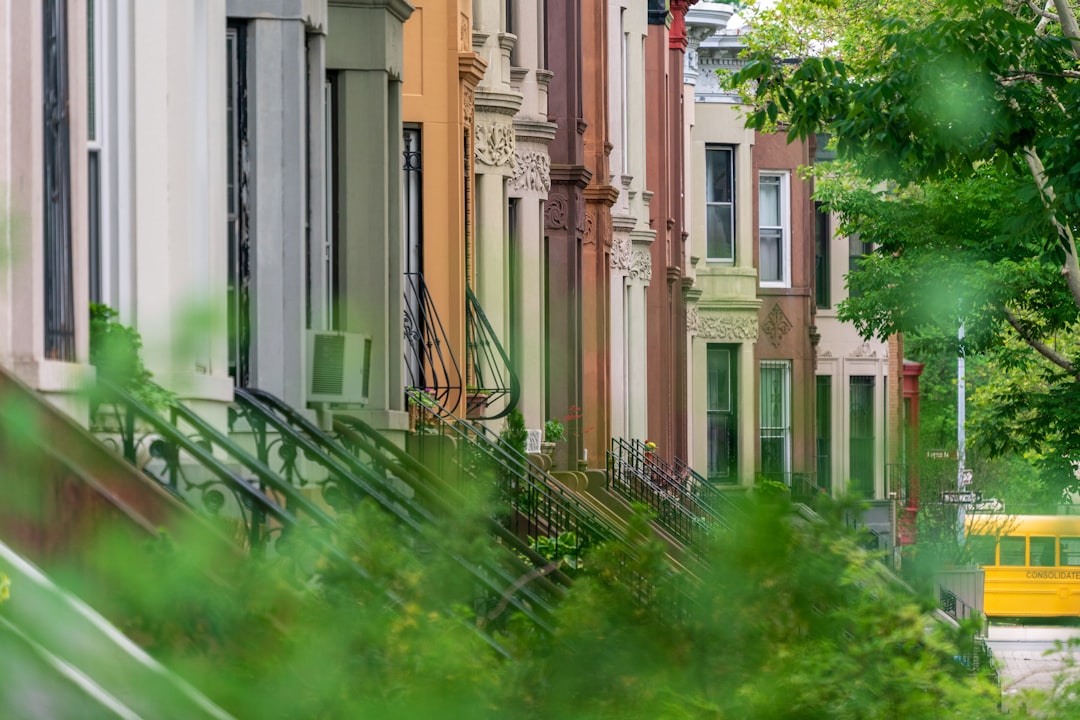
The housing stock is unlike anything else in Brooklyn and cleaning it requires a different approach
Roughly 70 to 75 percent of Gerritsen Beach’s homes are single-family detached structures, a rate that belongs more to a small New Jersey suburb than to a borough of 2.7 million people. The dominant building type is the wood-frame bungalow: one and a half to two stories, shallow pitched roof, front porch, minimal setback from a street that was never designed for full-time residential use. These were built cheaply and quickly as vacation cottages, and the best of them still read that way from the street.
What complicates them, from a house cleaning standpoint, is everything that happened next. For a century, families added to, altered, and expanded these original 600-square-foot structures in every conceivable way. A typical old-section bungalow might have its original hardwood floors in the front two rooms, ceramic tile laid in a kitchen addition from 1968, laminate in a rear extension from the 1990s, and a bathroom that was renovated twice and contains three different tile specifications. The ceiling heights shift between sections. The windows are different sizes. The radiators are original steam heat in the old section, forced air in newer additions.
No two Gerritsen Beach homes are quite alike, because no two families made the same choices about how to enlarge their summer cottage into a permanent family residence. This means that a cleaning team that shows up with one product and one approach is going to get some of those surfaces wrong. Old-growth hardwood from the 1920s does not tolerate the same treatment as laminate from 1994. Marble tile installed by a 1970s renovation needs pH-neutral care. The steam radiators that heat the old section collect dust between their fins all summer and release it in October when the heat first kicks on.
Our deep cleaning teams carry separate products for each surface type and switch as they move between rooms and between the different eras of a Gerritsen Beach home. The old floors get a barely damp microfiber mop and a wood-safe cleaner. The radiator and vent covers get dusted, and the sills below the windows get the salt film taken off rather than smeared around. Those sills and ledges, especially in homes close to the water where salt air accelerates buildup, get detailed attention during every deep clean; the tracks are part of the interior-window add-on if you want them done at the same time. These are not special requests. They are the standard for this neighborhood.
The old section’s narrow streets are part of what defines this community
South of Gotham Avenue Canal, the streets of Gerritsen Beach narrow dramatically. Some blocks are barely wide enough for one car and a half. Sidewalks often disappear entirely, or survive as strips barely adequate to walk on. The block lengths are roughly a third of a standard Brooklyn block, and the density is counterintuitive: small homes on small lots, closely packed, with the intimacy of a fishing village rather than the open scale of suburban development.
These streets were designed for pedestrian summer life in 1920, not for the daily automotive traffic of a year-round community in 2026. The GPS applications that work fine everywhere else in Brooklyn regularly fail in the old section because the street grid is non-standard and the address numbering does not match the broader borough pattern. Emergency vehicles have navigated this for a century, which is part of the reason the Gerritsen Beach Volunteer Fire Department still exists.
The department was organized in 1922 after a fire on Abbey Court in 1921 showed residents that the city’s professional fire apparatus could not reach the peninsula in time. It is today the only volunteer fire company in Brooklyn and one of nine remaining in all of New York City, a fact the neighborhood cites with genuine pride. More than a hundred years after its founding, it is still staffed by lifelong residents and their children, still housed on Gerritsen Avenue, and still the central civic institution of the community.
What owner-occupancy at 84 percent means for the homes we clean
Gerritsen Beach has an owner-occupancy rate of approximately 84 percent, a figure that has held stable for decades and that is almost without precedent in Brooklyn. Most properties here do not turn over through the open market. They are inherited, passed within extended family networks, or sold to buyers with existing connections to the neighborhood. The average home spends about 130 days on the market when it does sell, more than twice the broader Brooklyn average, because the pool of buyers who want to live in an isolated, transit-poor, flood-zone-designated peninsula is specific.
This ownership culture shapes the homes in ways that matter for cleaning. A house that has been in the same family for 40 years has accumulated not just belongings but layers of decisions about materials and finishes, repairs and additions, systems that were updated and systems that were not. The kitchen may have original cabinet hardware from 1955. The bathroom tile may date to three different renovation periods. The basement, if the home was flooded during Hurricane Sandy in 2012, may have a history of moisture that affects what accumulates on lower-level surfaces.
Sandy hit Gerritsen Beach with particular force. The combination of peninsula geography, low elevation, and proximity to Gerritsen Creek and Sheepshead Bay meant that floodwaters reached 10 to 12 feet in parts of the neighborhood. Nearly every home was damaged or inundated. The neighborhood was reclassified from Flood Zone C to Zone A, the highest-risk designation, after the storm. Recovery was slow and largely community-led, organized around a group called Gerritsen Beach Cares that emerged in the weeks after the flooding. More than 13 years later, the flood vulnerabilities remain largely unaddressed.
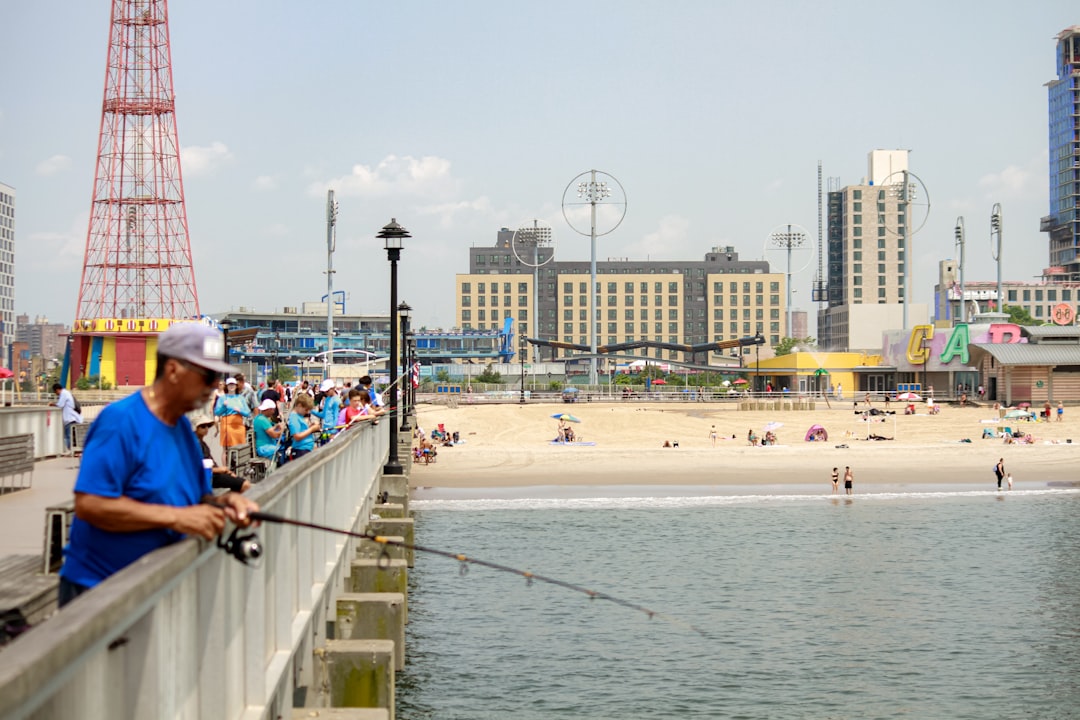
The waterfront shapes everything about daily life here
Gerritsen Beach sits on a peninsula, and the water is never far. To the west, Shell Bank Creek separates the neighborhood from Sheepshead Bay along Knapp Street. To the east, Gerritsen Creek runs along the edge of Marine Park toward the open water of Jamaica Bay. The southern tip of the peninsula faces Plumb Beach Channel and Rockaway Inlet. Water surrounds the community on three sides, and the residents relate to it the way people in coastal communities always do: through fishing, boating, swimming, and an acute awareness of what happens when weather turns serious.
Fishing is a serious pursuit here. Anglers work the southern shore of Gerritsen Avenue, the creek channels, and the open waters of the inlet. Chartered fishing boats operate from the old section’s shoreline. The proximity to Marine Park’s 530 acres of preserved salt marsh, tidal wetlands, and Gerritsen Creek means that kayak and canoe launches are minutes from most front doors. The park’s bocce courts, cricket pitches, and golf course extend the recreational options year-round.
Kiddie Beach, the neighborhood’s private resident-only shoreline at the end of Post Court and Hyman Court, has existed in some form since the early development of the neighborhood. It is not a commercial beach and not a club. It is a piece of shoreline maintained for and by residents, one of the very few private community beaches in New York City. On summer afternoons it fills with children whose grandparents and great-grandparents brought them to the same stretch of water. The beach-town identity of Gerritsen Beach, the thing that distinguishes it from every other neighborhood in Brooklyn, is most clearly felt there.
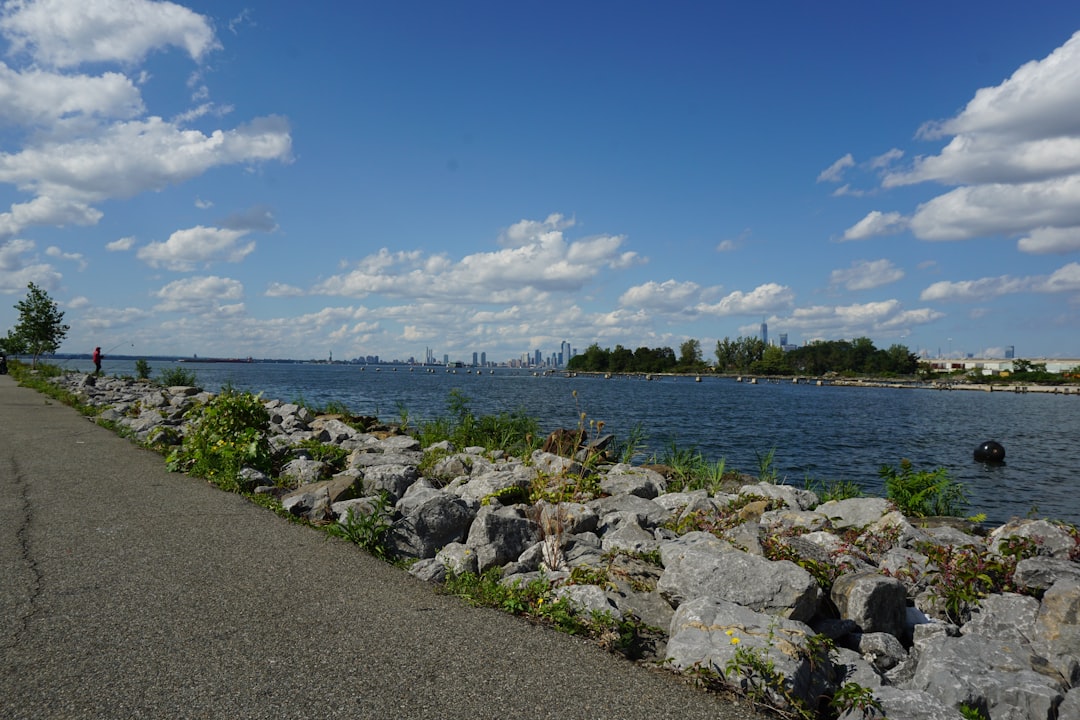
Recurring cleaning for homes that have been in the family for generations
We have cleaned over 100,000 homes across New York City, and Gerritsen Beach homes are among the most specific in terms of what they require. The combination of wood-frame construction, decades of layered additions, proximity to salt air and tidal water, and in many cases the lingering effects of Sandy-era moisture means that these houses accumulate grime differently than a prewar co-op in Crown Heights or a new-construction condo in Williamsburg.
Salt air from the surrounding waterways accelerates the buildup in window tracks, on exterior-facing surfaces, and in the gaps between window frames and walls. Homes close to the creek see more moisture in basements and ground-level rooms, which affects what grows in grout and on tile in lower-level bathrooms. Wood-frame homes breathe differently than masonry and require surface care that accounts for seasonal movement in the floors and walls.
Our apartment cleaning and recurring house cleaning service for Gerritsen Beach is designed around the specifics of the housing stock, not around a one-size approach. The same team returns for every recurring visit. They learn the house, learn the surfaces, and learn what you care about. If your steam heat radiators need extra attention every October when the system first turns on, that is in the notes. If your ground-level bathroom tile needs monthly grout attention because of moisture from the creek, we do not skip it.
Getting to a neighborhood with one road in and one road out
The B31 bus runs along Gerritsen Avenue and connects the neighborhood to Sheepshead Bay, where B and Q train transfers are possible. The BM4 express bus provides a peak-hours route to Midtown Manhattan. Car ownership is near-universal because transit service is infrequent and the neighborhood’s single-road geography makes alternatives impractical.
We serve the full peninsula including the old section’s narrow streets south of Gotham Avenue Canal. Travel logistics are our concern, not yours. Book your clean on our booking page and we coordinate the rest. Flat-rate pricing means the price you see before you book is the price you pay, no surcharges for neighborhood location or distance from transit.
We also serve neighboring Brighton Beach, Bensonhurst, Gravesend, and Borough Park, along with neighborhoods across the rest of Brooklyn and New York City.