
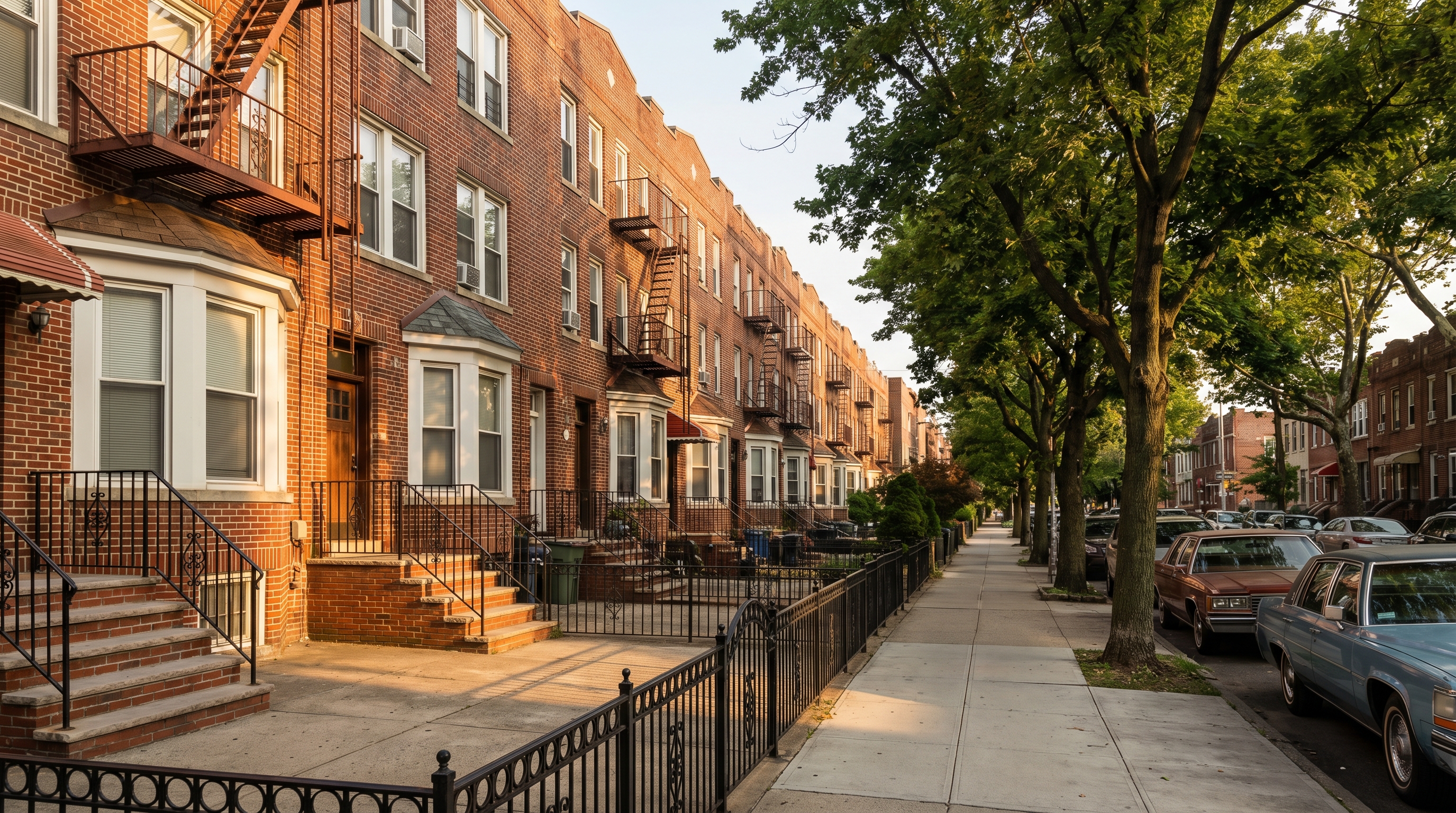
Borough Park’s brick rowhouses were built for families. Not as a design aesthetic or a talking point, but as a practical fact: two and three floors, side-by-side down every block between 39th and 55th Streets, built in batches by local developers in the 1920s and 1930s for the working-class Jewish families who were moving here from the Lower East Side and Williamsburg. The families who live here now are the descendants of those families, or the descendants of Holocaust survivors who arrived after 1945 and rebuilt their communities on these same streets. The buildings have outlasted several complete demographic transformations and are still standing, still rented floor by floor, still generating the kind of daily household traffic that cleaning has to keep up with rather than just address.
This neighborhood cleans on its own terms and its own calendar. The week runs to the Jewish calendar, not the secular one. Shabbat preparation on Fridays drives a rhythm you feel in every errand. Passover drives an annual cleaning intensity unlike anything in any other Brooklyn neighborhood. The kitchens often have two completely separate sides, meat and dairy kept distinct by both law and practice. A cleaning service that does not understand these details is a cleaning service that will eventually make an expensive mistake.
What the housing stock actually looks like and what it asks of a cleaner
Borough Park’s residential architecture is a layered record of a century of construction, and almost none of it was designed with cleaning convenience in mind.
The dominant type is the two- or three-story brick rowhouse or semidetached house, built between 1900 and 1940. These buildings are solid and unpretentious: red or tan brick, front stoops, bay windows on the parlor floors, small concrete pads where gardens used to be. The interiors have narrow floor plans with rooms stacked vertically, meaning a full house cleaning covers three distinct floor environments in a footprint that was not designed for easy circulation. The kitchens are typically on the ground floor or in a rear extension. The original hardwood throughout the upper floors is old-growth and hard, but often waxed rather than polyurethane-sealed, which means it needs specific products and a specific technique.
The prewar six-story elevator buildings that line 13th, 16th, and 18th Avenues were built in the 1920s and 1930s in a stripped Classical or Art Deco-adjacent style. The apartments inside tend to be larger than their post-war counterparts, with real room dimensions and plaster walls that still have some mass to them. Many operate as co-ops. The building lobbies are maintained, but the individual apartments show four generations of accumulated use.
Post-1992 new construction buildings are utilitarian four-to-six-story structures built under the zoning change that allowed 65 percent lot coverage. The interiors are standard market-rate finish: laminate counters, tile floors in kitchens and baths, neutral carpets in bedrooms. They clean fast and predictably. There are more of these buildings going up every year.
Our house cleaning teams carry separate product sets for hardwood, stone, and tile and switch between them as they move through the building. The wax-finished floors in 1920s rowhouses get a flat microfiber mop barely dampened with a wood-safe solution, not the all-purpose spray that ruins wax finishes in one visit. The tile in newer construction gets a different approach and more attention on the grout lines, which collect buildup faster in high-use kitchens.
Kosher kitchens and the cleaning protocols they require
The kitchen is the most specific room in Borough Park, and it rewards attention.
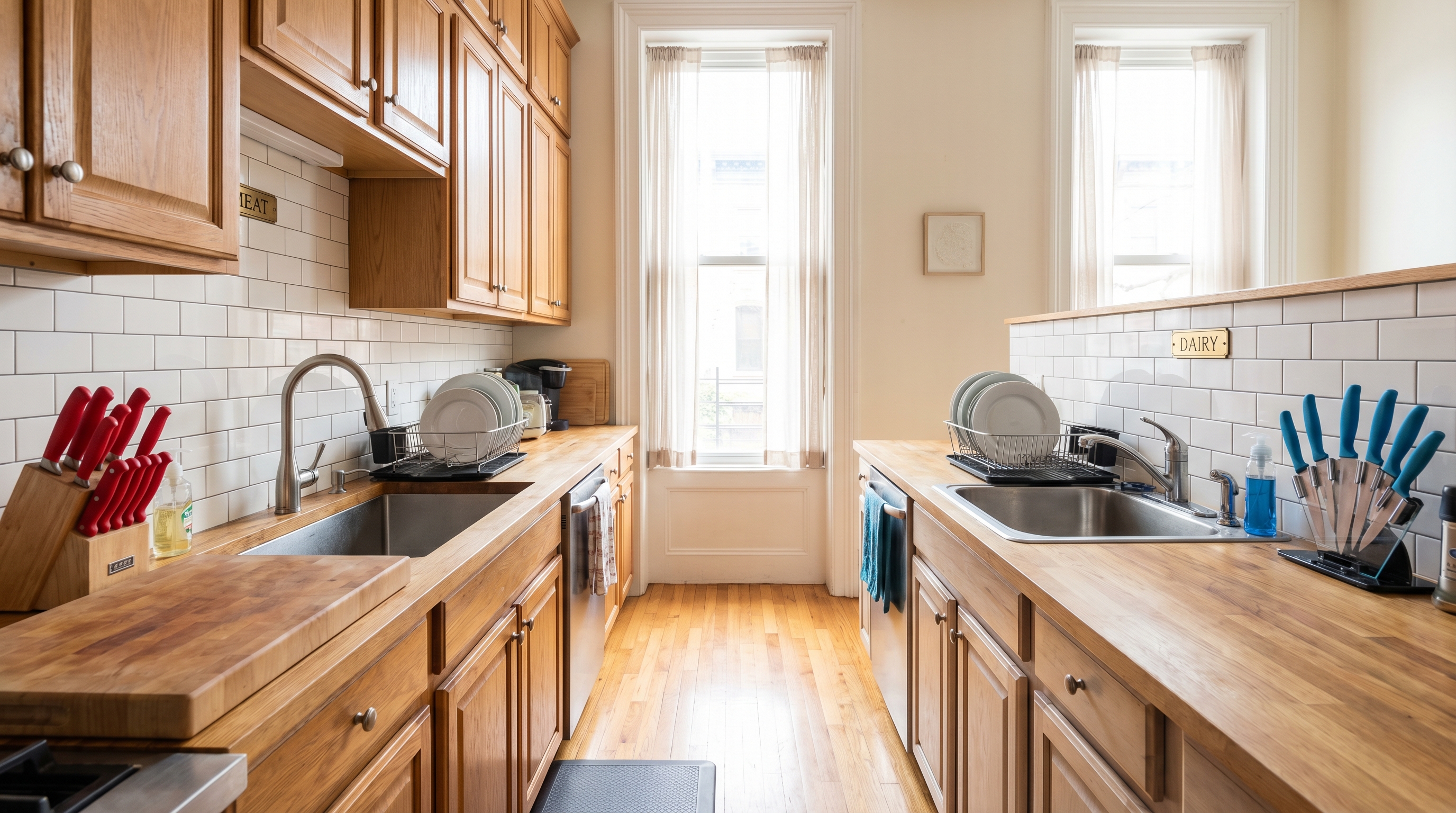
Observant households maintain kosher kitchens with completely separate meat and dairy sides. Not just separate dishes — separate counters, separate sinks, separate storage areas, separate sets of cooking equipment. The two sides need to be cleaned with separate tools and separate products, with no cross-use between them. In a standard Borough Park rowhouse kitchen, this means the cleaner needs to understand which surface belongs to which side before they start, and maintain that separation throughout the visit.
Beyond the two-side structure, Borough Park kitchens get used hard. Large families mean daily cooking for six, eight, ten people. The range sees real use. The backsplash behind the stove collects grease from months of frying. The range hood needs periodic deep attention. The counters, especially on the heavily-used sides, develop the kind of buildup that a weekly wipe-down maintains but that an initial deep cleaning needs to address from scratch.
We assign the same team to returning Borough Park clients so the kitchen layout becomes familiar. After the first visit, the cleaner knows which side is meat, which is dairy, which cabinet is which, and where the equipment lives. No one needs to explain it again.
Passover, Shabbat, and the cleaning calendar Borough Park actually runs on
The Borough Park cleaning calendar does not match the secular calendar, and we schedule accordingly.
The most intensive cleaning period of the year is the two weeks before Passover. Observant households conduct a thorough search and removal of chametz, the leavened products that cannot be present in the home during the holiday. The observance calls for cleaning inside cabinets and drawers, going through pantry shelves, and addressing any surface that may have had contact with leavened food. Cabinet and drawer interiors are an extra you tick on the booking form rather than part of the base clean, and appliances stay where they are unless you slide them out for us before we arrive. The scope of a pre-Passover deep clean goes well beyond a standard apartment cleaning: it is a systematic room-by-room job that takes several hours in a full rowhouse and requires a team that understands what it is looking for.
We book pre-Passover deep cleans explicitly and the schedule fills early. If you want a specific date in the two weeks before the holiday, the practical answer is to contact us around Purim.
The weekly Shabbat rhythm also matters for scheduling. Many Borough Park families prefer to have their cleaning completed before Shabbat preparation begins on Friday afternoon. We accommodate this. We also do not schedule Friday evening or Saturday appointments in this neighborhood. If you have a recurring cleaning appointment and one of your dates falls on a Jewish holiday, we flag it in advance and reschedule so there are no surprises.
Deep cleaning and move-in work for buildings that have seen generations of families
A Borough Park rowhouse that has had three or four long-term tenants over sixty years has accumulated the kind of layered buildup that a standard recurring clean cannot address. The grout in the tile floors has darkened through years of mop water. The inside surfaces of kitchen cabinets have the film that comes from years of steam and cooking oil. The bathroom tile and fixtures need a genuine reset, not maintenance-level attention. The radiators on the upper floors have been dusty through enough summers that the heat cycle alone is not clearing them.
Our deep cleaning service addresses this systematically. Inside cabinets and drawers. Appliance interiors including the refrigerator and oven. Bathroom tile and grout scrubbed rather than wiped. Radiators cleaned between the fins on every floor, not just across the top. Crown molding and door frames that have not been wiped since the last tenant moved out.
For move-in and move-out cleaning, Borough Park rowhouses typically turn between tenants with a gap of days rather than weeks, and the incoming family expects a clean home for their first Shabbat. We schedule accordingly and we know what these buildings need. The previous tenant’s cooking habits, the grout color when the kitchen tile was new, the baseboard dust behind the radiator covers — none of it surprises us.
While your home is being cleaned, 13th Avenue has more than a day’s worth of errands
Your cleaning runs two to four hours depending on the home. Borough Park has what you need to fill that time.
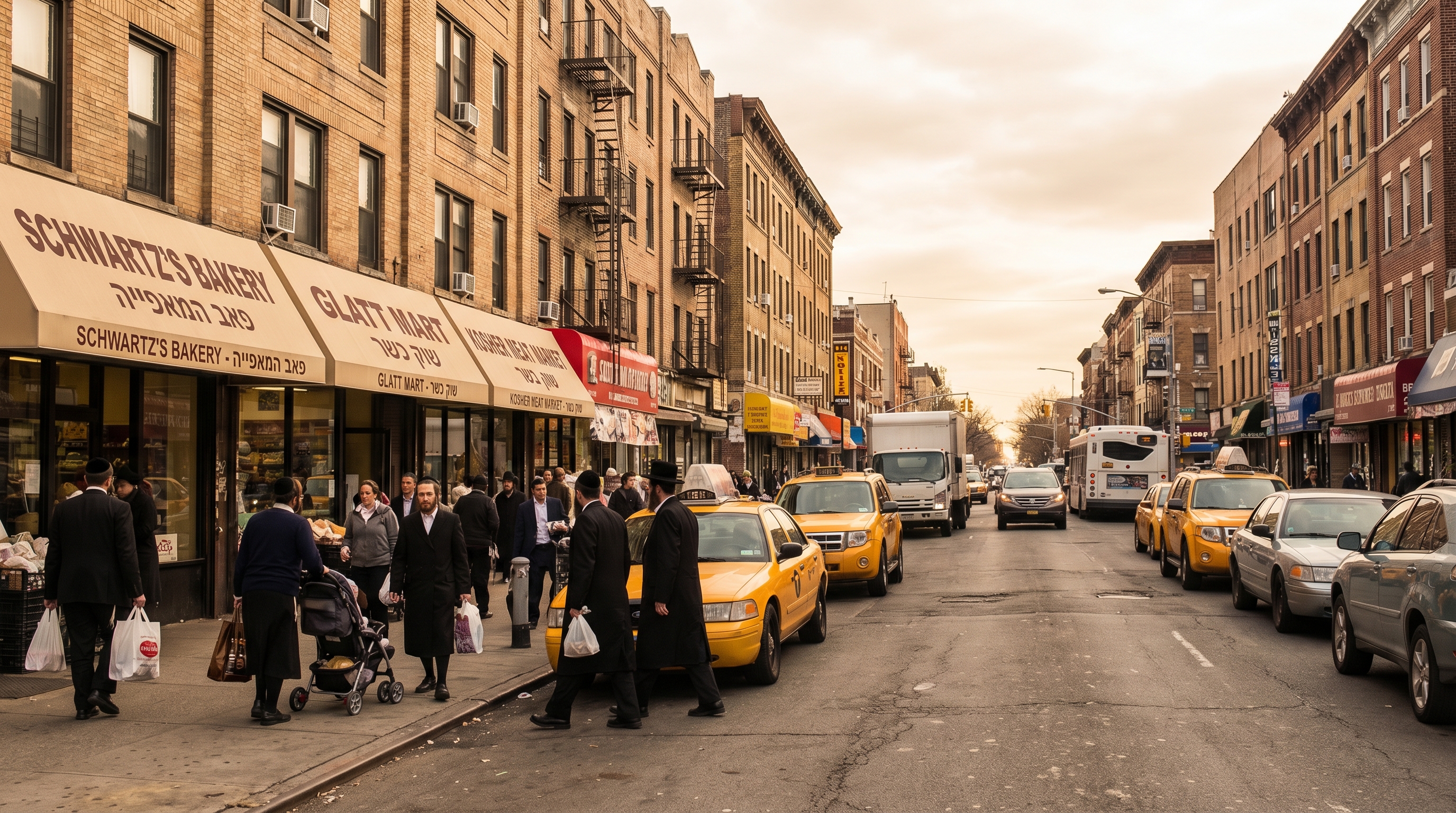
The full walk from 39th Street to 55th Street on 13th Avenue takes an hour if you move deliberately and stop at nothing. If you stop at the bakery counter, argue about challah sizes, buy something from the appetizing store, and get pulled into a conversation in front of the Judaica shop, it takes two hours. The avenue on a Thursday or Friday morning is a working street market operating at full speed, and it is one of the most charged and specific street scenes in all of New York City.
Green-Wood Cemetery is a twelve-minute walk from the northern edge of the neighborhood and one of the best places in Brooklyn to spend two unscheduled hours. The 478-acre Victorian landscape has rolling hills, mature trees, and a level of silence you cannot find anywhere in the adjacent neighborhoods. The Civil War monuments and carved mausoleums are worth examining up close, and the views from the crest over Upper New York Bay are among the best in the borough. It is free to enter.
Weiss Bakery, Amnon’s Pizza, and the Glatt Mart prepared-foods counter each fill a comfortable stretch of time and produce something worth eating. If you are in the neighborhood for the first time, the prepared-foods counter at Glatt Mart is the most instructive single stop for understanding what the community actually eats.
Getting to your home and the logistics of Borough Park buildings
The D train stops at 55th Street, 50th Street, and Fort Hamilton Parkway along the western edge, with direct service to Atlantic Avenue-Barclays Center and into Manhattan. The F train runs along McDonald Avenue on the eastern border, stopping at Fort Hamilton Parkway and 18th Avenue. The N and W trains stop at Fort Hamilton Parkway to the west.
The neighborhood’s interior around 13th Avenue is not directly served by subway. The B8 bus runs along 13th Avenue and is one of the busiest bus routes in Brooklyn. Our teams navigate these transit lines daily and know the blocks between the stations.
Most Borough Park rowhouses have no doorman and no service elevator. Access is coordinated directly with the homeowner or a family member. For the prewar co-op buildings on the main avenues, we handle any advance vendor notice requirements and Certificate of Insurance requests before the first appointment. You tell us the building name when you book and we take it from there.
We carry full liability coverage and our cleaners are W-2 employees, not contractors. If your building management has a standard vendor form, we have filled it out dozens of times for Brooklyn co-ops and it will not slow anything down.
What booking looks like
You pick your date and time on our booking page and see your flat-rate price before you commit. For pre-Passover deep cleans or any appointment with specific scheduling requirements, you can note that during booking and our team follows up to confirm the details.
Our cleaners are W-2 employees with background checks, liability insurance, and the product knowledge your specific home requires. For Borough Park rowhouses, that means understanding wax-finished floors, kosher kitchen separation protocols, and the difference between maintenance cleaning and the reset a multi-generational home needs every few years.
We also serve nearby Bensonhurst, Sunset Park, Kensington, Dyker Heights, and the rest of Brooklyn.