
The two-family rowhouses on Etna Street, Barbey Street, and Elton Street were built between 1890 and 1920 for immigrant working-class families who wanted to own the building they lived in. The formula was simple and durable: one family occupies the upper floors, one family rents the ground floor, and the rental income helps carry the mortgage. Those buildings are still standing. A significant number of them are still owned by working-class immigrant families, some for two or three generations. The formula still works.
That continuity of ownership is part of what gives Highland Park its particular character. The neighborhood did not get rediscovered. It did not go through a cycle of decline followed by a cycle of arrival. What happened instead is that successive waves of working-class immigrant families replaced each other in the same buildings, maintaining the same ownership model with the same orientation toward neighbors and block associations. The facades got painted different colors. The languages on Jamaica Avenue shifted from German to Italian to Dominican Spanish. The buildings stayed.

The housing stock here is older and denser than it looks from the street
A Highland Park rowhouse that presents as a simple two-story brick building from the street often contains more than it promises. The typical configuration puts a full family apartment on the upper floor and a second apartment in the ground-floor unit, but many of these buildings have full-height basements that became storage rooms, laundry rooms, or additional living space over time. The stairwells are narrow. The rooms connect in the pre-war sequence: parlor opening to dining room opening to kitchen, with bedrooms off a single hallway. The window casements are original wood, painted over many times.
Inside these buildings you typically find original plaster walls that have outlasted five or six rounds of wallpaper and paint. The floors are old-growth hardwood, usually maple or pine, installed before 1920 and refinished if the owners were lucky and left worn if they were not. The radiators are cast iron, connected to a steam boiler in the basement, and they have been on the same pipes since Woodrow Wilson was president. The bathrooms on the upper floors often have the original hexagonal floor tile, small and white, with grout lines that have darkened over a century of use.
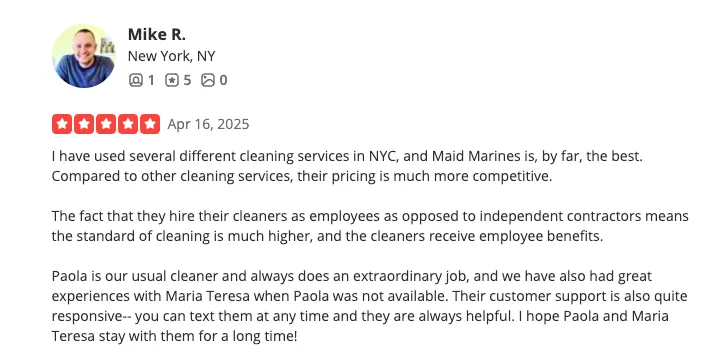
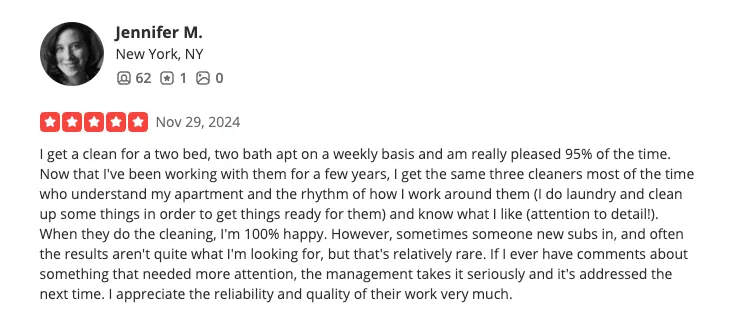
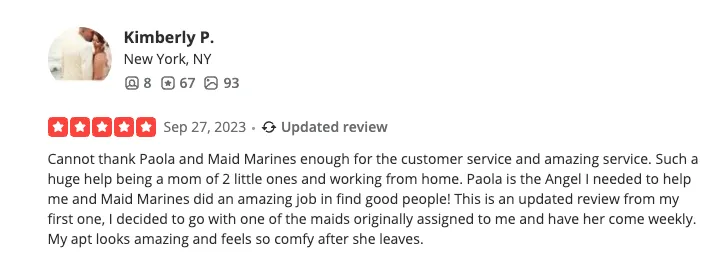
This is the physical texture of the housing stock our house cleaning teams work with in Highland Park. The approach has to match the building. Old-growth hardwood with a wax or oil finish will not tolerate the same treatment as a modern polyurethane floor. Original plaster walls are more porous than drywall and require care around baseboards. The cast-iron radiators collect dust between their fins across the heating-off months and burn it when the steam comes back on. A cleaning team that understands none of this will leave the building looking clean on the surface while damaging the finishes that give these rooms their character.
A Victorian water works became one of the most unusual bird sanctuaries in any American city
The Ridgewood Reservoir was built in 1858 to supply Brooklyn with water pumped up to the Harbor Hill Terminal Moraine ridge, from which it flowed by gravity to homes and businesses below. Three stone-and-earthen basins were excavated into the glacial ridge, each holding tens of millions of gallons, their walls built from local granite and schist with the precision of Roman aqueduct construction. The reservoir served as Brooklyn’s primary water supply for over a century before new tunnel connections to the Catskill-Delaware system made it obsolete. The city decommissioned it in 1959.
Over the following six decades, nature did what nature does when left alone in a bowl of water in a temperate climate. The basins filled with rainwater and groundwater. Willows rooted in the embankment cracks. Cattails colonized the shallows. Migratory birds discovered that the water and vegetation made an excellent stopover on the Atlantic Flyway. Great blue herons established territories in the wetland margins. Yellow warblers and vireos moved through every spring and fall. Red-tailed hawks hunted the open basin surfaces from the embankment tops.
By the 1990s, birdwatchers from across the city had identified the Ridgewood Reservoir as one of the most productive birding locations in Brooklyn. The three basins had become an accidental wetland of extraordinary ecological value, the byproduct of abandonment rather than design. In 2018, the reservoir was listed on the National Register of Historic Places and officially designated by the New York State DEC as a Class I freshwater wetland, giving it permanent legal protection. NYC Parks has since added wooden boardwalk platforms that run along the top of the stone embankments, allowing visitors to look down directly into the wetland basin from 20 feet above.

Standing on those boardwalks in April during warbler migration, watching a great blue heron stand completely still in the cattails below you, surrounded by stone walls that date to the administration of James Buchanan, you are having an experience available in almost no other American city. It is one of the genuine hidden gifts of New York’s park system, largely unknown beyond the neighborhood itself.
Deep cleaning in a two-family owner-occupied home requires a different approach than a rental apartment
The owner-occupied two-family rowhouse is not the same cleaning job as a rental apartment, and it is not the same job as a single-family brownstone. The owner usually lives on the floor above the rental unit, which means the common stairwell, the vestibule, and the building’s shared spaces exist in a gray zone that gets cleaned by whoever cares more. In most cases, that is the owner. The rental unit below may have different finishes, different tenants, and a different level of wear than the owner’s floor.
Our deep cleaning approach treats these as distinct environments connected by a shared structure. The owner’s floor gets attention appropriate to a long-term personal space: the baseboard profiles, the radiator fins, the plaster crown molding in the parlor that collects a film of dust between cleanings. The rental unit gets the thoroughness appropriate to a unit that needs to be returned to a baseline before a tenant moves out or after one moves in. The common stairwell gets the treatment no one ever gives it: the banister rails, the staircase risers, and the light fixture at the top that has been accumulating particulate matter for years.
We have cleaned over 100,000 homes across the five boroughs. The two-family rowhouse in eastern Brooklyn is one of the building types our teams know best, because there are a lot of them and because their owners care about getting the cleaning right.
The Arlington Carnegie Library and the block that surrounds it
At 203 Arlington Avenue, the Cypress Hills branch of the Brooklyn Public Library occupies a building that was completed in 1906 with funding from Andrew Carnegie’s philanthropy program. The exterior is Classical Revival: brick and stone, restrained ornament, a facade that communicates public institution without grandeur. The interior is something else. The original Victorian woodwork survived intact: carved staircases, a working fireplace, wood-paneled walls, and a reading room with the proportions and weight of a room built to last for generations. Forty years of underfunded libraries stripped most Carnegie interiors of their original features. This one was maintained. It is one of the most beautiful branch library interiors in the city and it is open to everyone.

The surrounding blocks on Arlington Avenue, Barbey Street, and Norwood Avenue represent the quieter residential register of the neighborhood. These streets have the unified character that comes from a coherent construction period: the rowhouses were all built within a thirty-year window, all from the same palette of red brick, tan brick, and limestone, all at roughly the same two- to three-story scale. The consistency makes walking them feel different from the more architecturally jumbled streets of other eastern Brooklyn neighborhoods. The block associations here are active, and you can see the evidence: maintained facades, flower boxes on stoops, a general sense of collective ownership over the shared streetscape.
The Jamaica Avenue corridor runs on Dominican culture and elevated train noise
The J and Z trains run elevated on Jamaica Avenue along the northern boundary of the neighborhood, and the avenue below them is one of the most genuinely diverse commercial streets in southeastern Brooklyn. The noise is constant. The commercial mix is not curated or gentrified: bodegas, Dominican lunch counters, Haitian bakeries, Colombian restaurants, phone repair shops, hair salons, Western Union outlets, and clothing stores that specialize in quinceañera dresses and church hats. On warm evenings, music comes out of car speakers parked in front of the bodegas and the street smells of frying plantains.
This is the neighborhood’s public room, and it functions the way that kind of space is supposed to function in a working-class urban neighborhood: it is loud, it is busy, it is affordable, and it is genuinely oriented toward the people who live there rather than the people who might visit. Rico Pollo II, the Dominican rotisserie chicken counter that anchors the local lunch culture, is the kind of restaurant that has a line at noon because the food is good and the price is right, not because someone reviewed it.
Move-in and move-out cleaning for a neighborhood of long-term renters and multi-generational owners
Highland Park’s homeownership rate is approximately 35 to 45 percent, which is significantly higher than the Brooklyn average and reflects the two-family ownership model that has defined the neighborhood for over a century. Many families have owned their buildings for multiple generations. But the rental units in those buildings turn over, and when they do, the cleaning requirements are specific.
A ground-floor rental unit in a 1910 rowhouse that has had a long-term tenant needs more than a surface wipe-down before the next person moves in. The baseboards have accumulated particulate matter that routine cleaning misses. The kitchen tile grout has darkened with years of cooking residue. The window tracks are clogged with the fine grit that works its way through old wooden window frames. The cast-iron tub has scale deposits that regular product will not address without a specific approach.
Our move-in and move-out cleaning service is designed for exactly this situation. We do a systematic pass through every surface, starting with the ceilings and working down, before anything gets mopped or wiped. Kitchen appliances get interior cleaning. Cabinets get wiped inside and out. The bathroom gets the kind of thorough work that restores the tile to something close to its original condition. If you are an owner turning over a rental unit, this is what you need before the new tenant walks in.
Getting here and getting around
The J and Z trains on the BMT Jamaica Line stop at Cypress Hills and at 75th Street-Elderts Lane, both along Jamaica Avenue at the northern edge of the neighborhood. The ride to Downtown Brooklyn runs approximately 20 minutes. The C train is accessible via a short walk south, connecting to the IND Fulton Street Line. The Jackie Robinson Parkway, which runs along the southern edge of the neighborhood, provides car access to the Grand Central Parkway in Queens and to the Belt Parkway, which connects to JFK Airport and Long Island.
The neighborhood itself is walkable for daily errands. Jamaica Avenue provides continuous commercial activity within a few blocks of most residences. The park, with its internal paths and boardwalk platforms, is bikeable and entirely accessible on foot from any address in the neighborhood.
Book a cleaning for your Highland Park home
You can book online in about a minute. You pick your date and time, you see your flat-rate price before you commit, and there are no surprises. Our cleaners are W-2 employees, vetted and insured, and they show up with the right products for a home that was built in 1915 and has never been gut-renovated. We also serve nearby Bushwick, Bed-Stuy, and Flatbush, and the rest of Brooklyn.