
The name was invented. In the late 1880s, real estate developers platting a new residential subdivision on the gently rolling farmland of central Brooklyn needed something to put on the marketing materials. They chose “Ocean Hill.” The ocean was miles away. The hill was barely a rise. But the promise of sea air and elevated ground was calibrated to appeal to buyers in an era when fresh breezes and a superior topographic position were associated with health and respectability. It worked. The lots sold. The rowhouses went up between 1890 and 1920. And the name stuck through everything that came after.
What came after included a century of demographic transformation, one of the most consequential education battles in American urban history, the destruction and slow rebuilding of the 1970s and 1980s, and the current arrival of buyers from more expensive adjacent neighborhoods who are discovering what the rest of Brooklyn has always known quietly: the brownstones on Decatur Street are architectural equals to anything in Stuyvesant Heights, and they are still available at a discount.
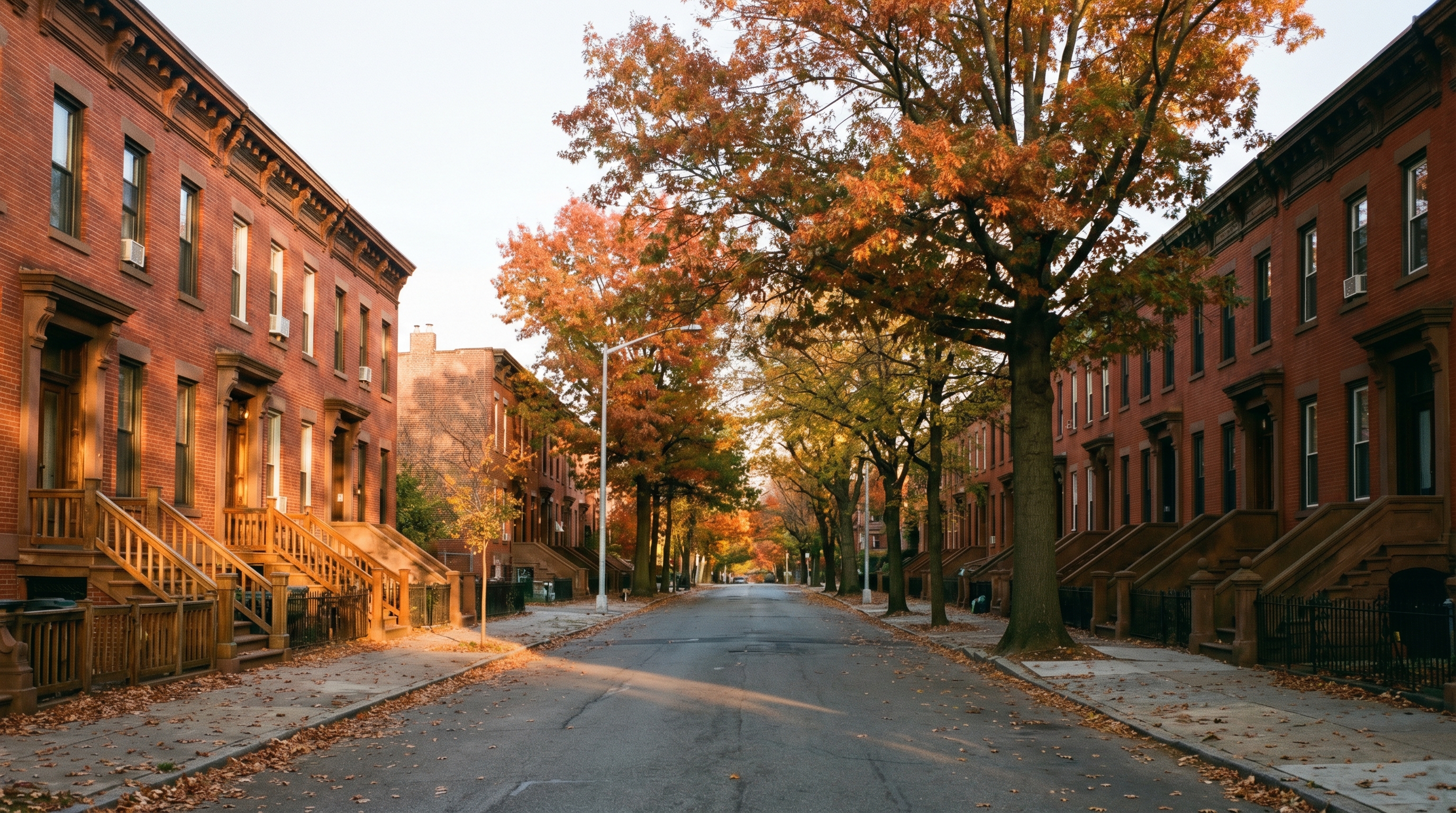
The housing stock here carries more than a century of urban life on every surface
Ocean Hill’s built environment is a study in layered time. The dominant housing type is the attached two-to-three-story brick rowhouse built between 1890 and the 1920s, less ornate than the Stuyvesant Heights brownstones but solidly constructed and visually coherent. These were working-class homes from the beginning, built by speculative developers for families that needed function more than grandeur. Many survive intact: original stoops, original masonry, the modest decorative corbeling and brick details that gave these houses their character without adding significant cost to their construction.
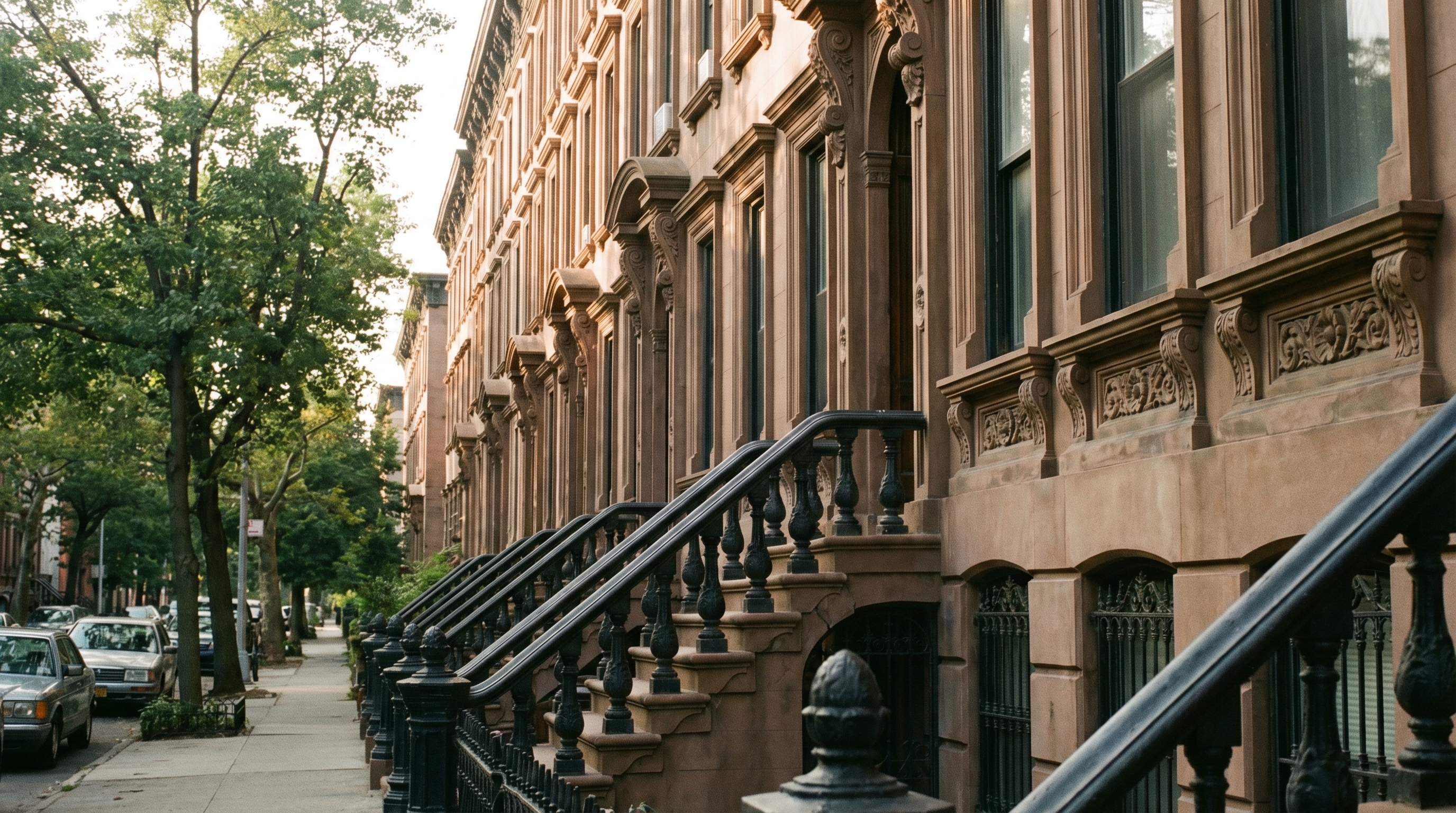
The streets closer to the Stuyvesant Heights border, particularly Decatur Street and MacDougal Street, carry a different weight. The brownstone rowhouses here are in Italianate, Neo-Grec, and Queen Anne styles with the characteristic high stoops, carved lintels, and cast-iron ironwork. These houses have been waiting to be rediscovered, and they are being rediscovered now. Sale prices on Decatur Street range from $1.4 million to over $2 million for larger examples. Three years ago those numbers were half what they are today.
The neighborhood also contains several large NYCHA public housing developments, four-to-six-story and taller brick towers set back from the street on open grounds. These buildings house a substantial portion of Ocean Hill’s lowest-income residents and represent the urban renewal ideology of the 1950s and 1960s at its most physical. The contrast between the public housing towers and the adjacent rowhouse blocks is one of Ocean Hill’s defining visual tensions. It is also one of the things that makes professional home cleaning in this neighborhood something different from the service you provide in Park Slope or Williamsburg: we clean homes in every part of this neighborhood, in every building type, and the flat rate is the same regardless of which one you are in.
Deep cleaning and move-in work for homes that have absorbed decades of Brooklyn history
Brick rowhouses from 1905 accumulate differently than modern construction. The hardwood floors, often old-growth timber laid before engineered flooring existed, may have a wax finish rather than polyurethane. Water damages wax. Standard all-purpose spray damages wax. The hex tile in the first-floor bathroom and the subway tile in the kitchen require pH-neutral cleaners because acidic products eat grout. The radiators on every floor collect dust between their fins all summer and release it when the steam heat kicks on in October.
Our house cleaning teams carry separate products for hardwood, stone, and tile, and they switch as they move between surfaces. We clean top-down on every multi-floor home so dust from upper floors does not resettle on surfaces we already cleaned. Every radiator, AC unit, and vent cover gets dusted on the way through a room, not worked around. For brownstones that have recently had renovation work, we remove plaster dust and grout haze using methods that will not damage newly finished surfaces. These materials have survived over a hundred years. Our job is to make sure they survive the next hundred too.
For buyers doing move-in cleaning before furniture arrives, the pre-move-in moment on a Decatur Street brownstone is the one time you have access to the whole home without obstacles. We clean inside every cabinet and drawer, scrub all bathroom tile and grout, wipe the window sills and ledges, dust the radiators on every floor, and if the previous owners had pets, we address the floors and baseboards specifically. Many of our move-in customers in Ocean Hill are buying homes that have been in families for decades and have never had a professional clean. Those jobs require more time and more attention than a standard recurring clean, and we schedule accordingly.
Broadway Junction gives you more of New York than almost any other single station in Brooklyn
The neighborhood’s northern boundary is Broadway Junction, where the A, C, J, L, and Z trains converge in a multilevel elevated and underground station complex that is one of the most functionally remarkable transit intersections in the entire New York City subway system. From this single complex, you can reach Lower Manhattan directly in approximately 20 minutes on the J train, West 4th Street in about 25 minutes on the A, and Williamsburg in roughly 20 minutes on the L. No other station in Brooklyn provides this range of connection without a transfer.
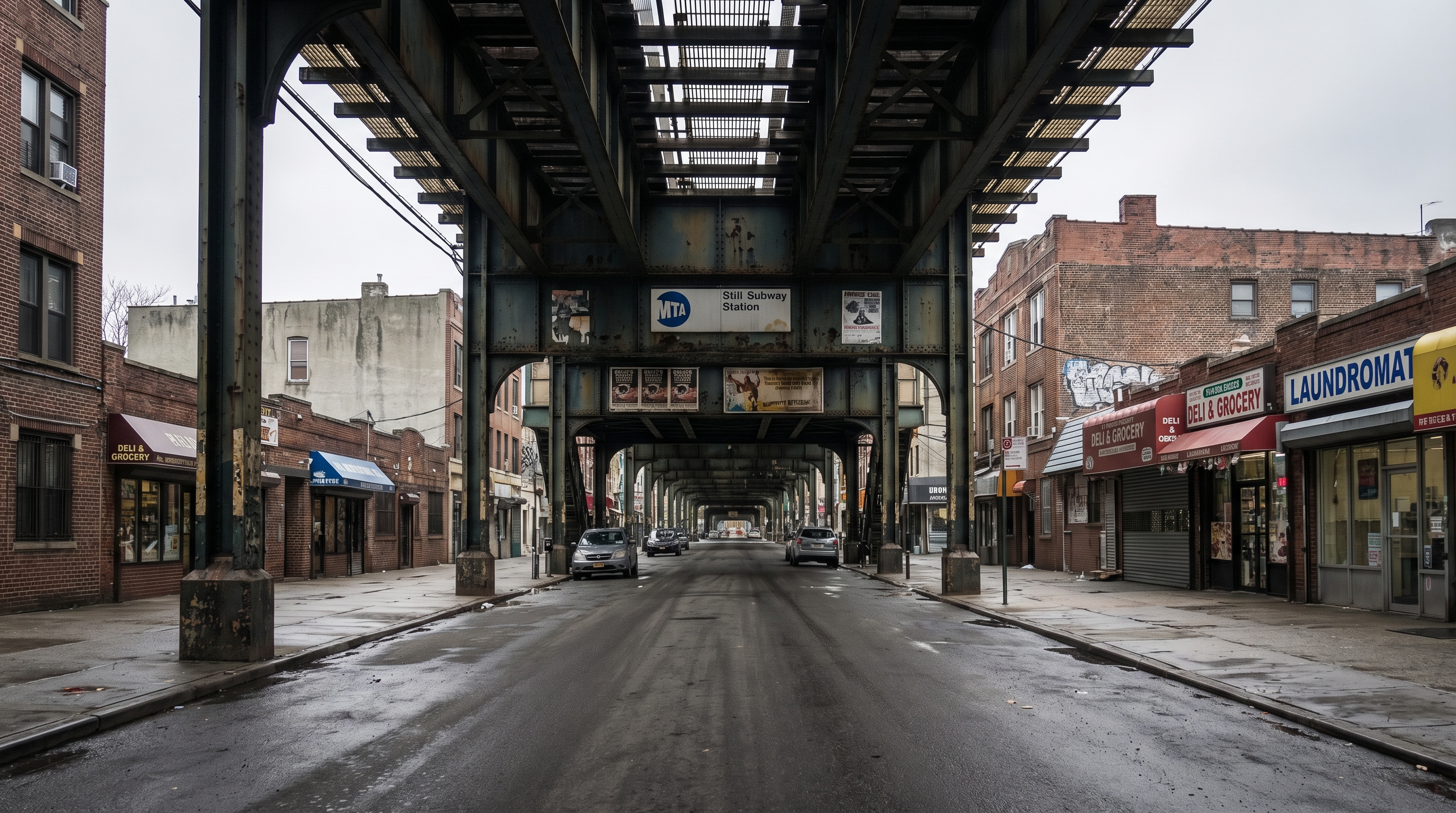
The L train also runs above Rockaway Avenue through the heart of Ocean Hill, with a station at Rockaway Avenue itself that has become the primary entry point for newer residents commuting to Williamsburg-adjacent jobs. The elevated structure that carries the train casts a characteristic pattern of light and shadow on the commercial strip below, making Rockaway Avenue one of the most visually distinct streets in central Brooklyn. The relationship between the elevated infrastructure and the street life beneath it is the visual grammar of this part of the neighborhood.
The J train at Chauncey Street reaches the Williamsburg Bridge approach in minutes. The A train provides express service that makes Downtown Brooklyn closer than it looks on the map. For a neighborhood that has historically been described as far east, the transit access at Broadway Junction is genuinely exceptional.
The 1968 Ocean Hill-Brownsville crisis shaped the neighborhood and the city around it
Ocean Hill became nationally significant in 1968 in one of the most consequential and divisive conflicts in New York City’s history. The Ocean Hill-Brownsville Demonstration School District had been created in 1967 as an experiment in community control of public schools, a response to the consistent failure of the city’s school system to educate Black and Puerto Rican children. Parents and community members were given control over their local schools.
In the spring of 1968, the majority-Black community school board, led by administrator Rhody McCoy, transferred 19 white teachers and administrators it determined were working against the goals of community control. The United Federation of Teachers responded with a series of strikes that kept 1.1 million New York City students out of school for 36 days. The conflict fractured the alliance between Black Americans and Jewish Americans that had powered the civil rights coalition in New York. It reshaped the city’s politics, its school governance structure, and its racial dynamics for decades.
The school buildings that were the subject of that battle are still standing and still operating. The Brutalist-era concrete facade of Intermediate School 55 is a standing artifact of that history. St. Paul Community Baptist Church, which under Reverend Johnny Ray Youngblood became one of the most powerful community development institutions in the city, exists in part because of what the 1968 community demonstrated about the power and necessity of local organization. The neighborhood carries this history not as a memorial but as a living inheritance that shapes how its institutions operate today.
Apartment cleaning for a neighborhood that runs on recurring service, not one-time visits
Ocean Hill has a significant proportion of renters, in rent-stabilized apartments in low-rise prewar buildings, in public housing, and in the newer condo construction that has been arriving on formerly vacant lots. Renters in this neighborhood tend to stay. The rent-stabilized tenants have been in their apartments for years, sometimes for decades, and the apartments reflect that: they are lived-in, layered, and often in buildings that have not had significant capital investment in some time.
For apartment cleaning in these buildings, recurring service is more practical than occasional deep cleans because it prevents the buildup that makes infrequent cleaning feel overwhelming. We do every-two-week and monthly recurring service throughout Ocean Hill and the broader Ocean Hill-Brownsville district. The same cleaner comes each time. The route becomes familiar. The apartment gets maintained at a level that does not require an eight-hour intervention every time.
For deep cleaning in apartments that have not been professionally cleaned in some time, we work through the full sequence: kitchen appliances inside and out, bathroom tile and grout, baseboards, window sills and ledges, ceiling fans and light fixtures, and behind furniture. These jobs take longer and we price them accordingly. After the first deep clean, recurring maintenance keeps the apartment at that level without requiring the same time investment each visit.
We also handle move-out cleaning for tenants leaving and landlords preparing units for new occupants. In a neighborhood where apartments turn over less frequently than in more transient parts of Brooklyn, the move-out clean is often the first professional clean a unit has seen in years. We do those jobs thoroughly.
What the neighborhood is becoming and what it is keeping
Ocean Hill is gentrifying, clearly and measurably. The brownstones on Decatur Street are attracting buyers priced out of Bed-Stuy, Crown Heights, and Bushwick. New coffee shops have appeared on Atlantic Avenue. The L train connection to Williamsburg brings a wave of young professionals willing to live further east in exchange for affordability. Median home prices have been rising in a neighborhood where they stayed flat for a decade.
What is different here from the story in Crown Heights or Clinton Hill is the institutional presence that survived the hard decades. St. Paul Community Baptist Church did not leave. The block associations that maintained the rowhouse streets through the 1980s are still organized. The community memory of 1968 is kept alive in the neighborhood schools and churches in ways that give residents a particular sense of their collective history and a particular experience of having organized successfully before. These institutions will shape the terms of Ocean Hill’s transition in ways that neighborhoods without this kind of organizational continuity cannot.
We serve the whole neighborhood as it is now: longtime tenants in rent-stabilized buildings, new buyers on Decatur Street, families in public housing, and everyone else. We have cleaned over 100,000 homes across New York City and the flat rate is the same whether you are in a brownstone or a tower.
Book your cleaning and see your exact price before you commit to anything. We also serve nearby Bed-Stuy, Crown Heights, Bushwick, and Cypress Hills.