
The road beneath Kings Highway has been walked, ridden, and driven for longer than Brooklyn has existed as a place. The Canarsee Lenape knew it as Mechawanienck, meaning the ancient pathway, and that name appears in a deed from 1652, one of the oldest documented indigenous place names in the borough. Dutch farmers adopted the trail as their main route between homesteads. British General Lord Cornwallis used it to flank Washington’s Continental Army on August 26, 1776, executing the maneuver that nearly destroyed the American forces at the Battle of Brooklyn. Sixteen years later, President George Washington traveled the same road on a survey of Long Island’s agricultural districts. The name was formalized in 1704 when New York’s colonial legislature designated the route as the King’s Highway in honor of King Charles II, who had granted the English colonial patent over the region four decades earlier.
What distinguishes Kings Highway from other historically significant New York streets is not just the age of the road but the continuity of its use. Today the corridor functions as a working commercial strip serving over 100,000 residents in the surrounding blocks of Homecrest, Midwood, and western Flatlands, offering the practical necessities of daily life in Russian, Cantonese, Arabic, and English, much as it has served successive waves of immigrants for a century.
The housing stock was built in a single generation and has barely changed since
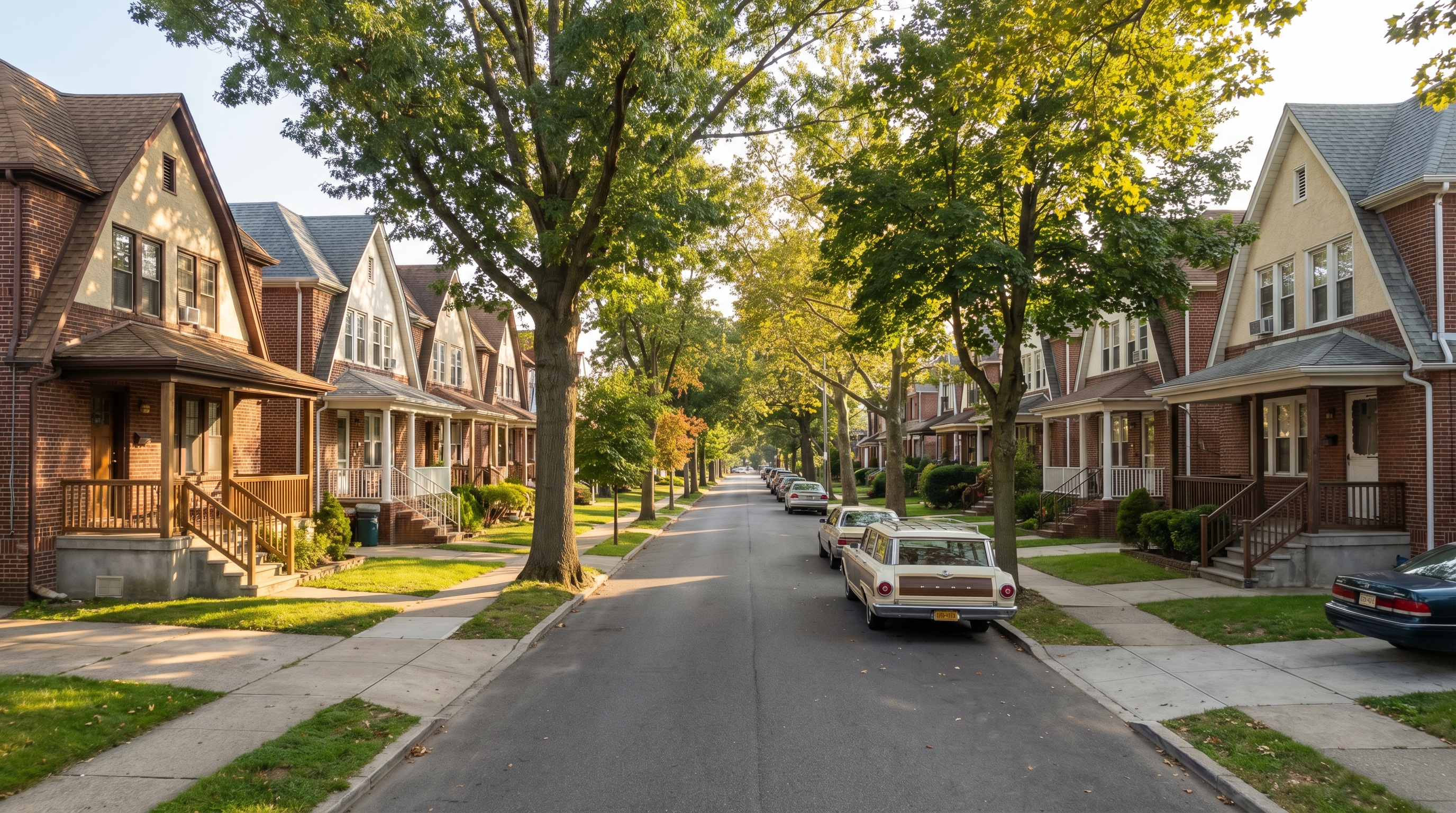
Almost the entire residential character of Kings Highway was established between 1920 and 1950, during the period when Brooklyn’s southern neighborhoods were platted and built out following the subway’s arrival. The B and Q trains reached Kings Highway station in 1920, making the formerly rural terrain of farms and dirt roads suddenly accessible to Brooklyn’s working class. Real estate developers moved fast. Within a decade, the surrounding blocks had been laid out with the semi-detached and detached brick homes that still line every residential street today.
The dominant form is the two-family semi-detached house: brick and stucco construction with a small front lawn, a concrete stoop, a driveway running alongside, and two separate units stacked vertically. One unit per floor, each with its own kitchen and entrance. The owner typically lives in one unit and rents the other, a model of modest self-sufficiency that has sustained families across generations. The homes follow standard Brooklyn patterns of the period: Colonial Revival with gambrel roofs, Dutch Colonial with flared eaves, and flat-roofed Spanish-influenced stucco bungalows that developers marketed as affordable elegance for the working middle class.
Approximately 67% of residential real estate in the core blocks was built before 1939, a greater proportion than in nearly 98% of American neighborhoods. This is not a marketing abstraction. It means that when you open a closet in a Kings Highway home, you are likely opening something installed during the Prohibition era. It means the baseboards, the plaster walls, and the original hardwood floors have survived through the families who bought here when the neighborhood was new, and through the families who inherited the buildings from those families.
Our house cleaning teams carry separate products for hardwood, tile, and stone, and our cleaners distinguish between wax-finished floors that pre-war homes typically have and the polyurethane finishes that became standard after the 1980s. The wrong product on a wax floor lifts the finish and leaves a dull streak that no amount of buffing corrects. We have cleaned enough Kings Highway two-family homes to know what the floors are and how to treat them.
What makes Kings Highway cleaning different from the rest of Brooklyn
The two-family structure of the neighborhood creates cleaning requirements that are different in character from a brownstone neighborhood like Park Slope or a tower-dense area further north. In Kings Highway, the typical client is often an owner-occupant managing two living spaces, not just one. The home they live in and the unit they rent out have different cleaning cadences, different levels of use, and different needs. A long-term tenant in a ground-floor unit may have very different preferences from the upstairs owner who hired us.
We handle this cleanly. Both units can be cleaned on the same visit, priced separately based on their individual square footage, scheduled to work around the tenant’s schedule and the owner’s, and billed in a way that keeps the two engagements distinct. For building owners who run a tight rental business, having one reliable cleaning company handle both units removes the coordination overhead of managing separate vendors.
The shared spaces, entry halls, staircases between floors, and basement laundry rooms are common areas that owners often overlook until a tenant mentions them. We include those as add-on areas within your booking, covering the full footprint of what you own.
A commercial corridor that has functioned continuously for over a hundred years
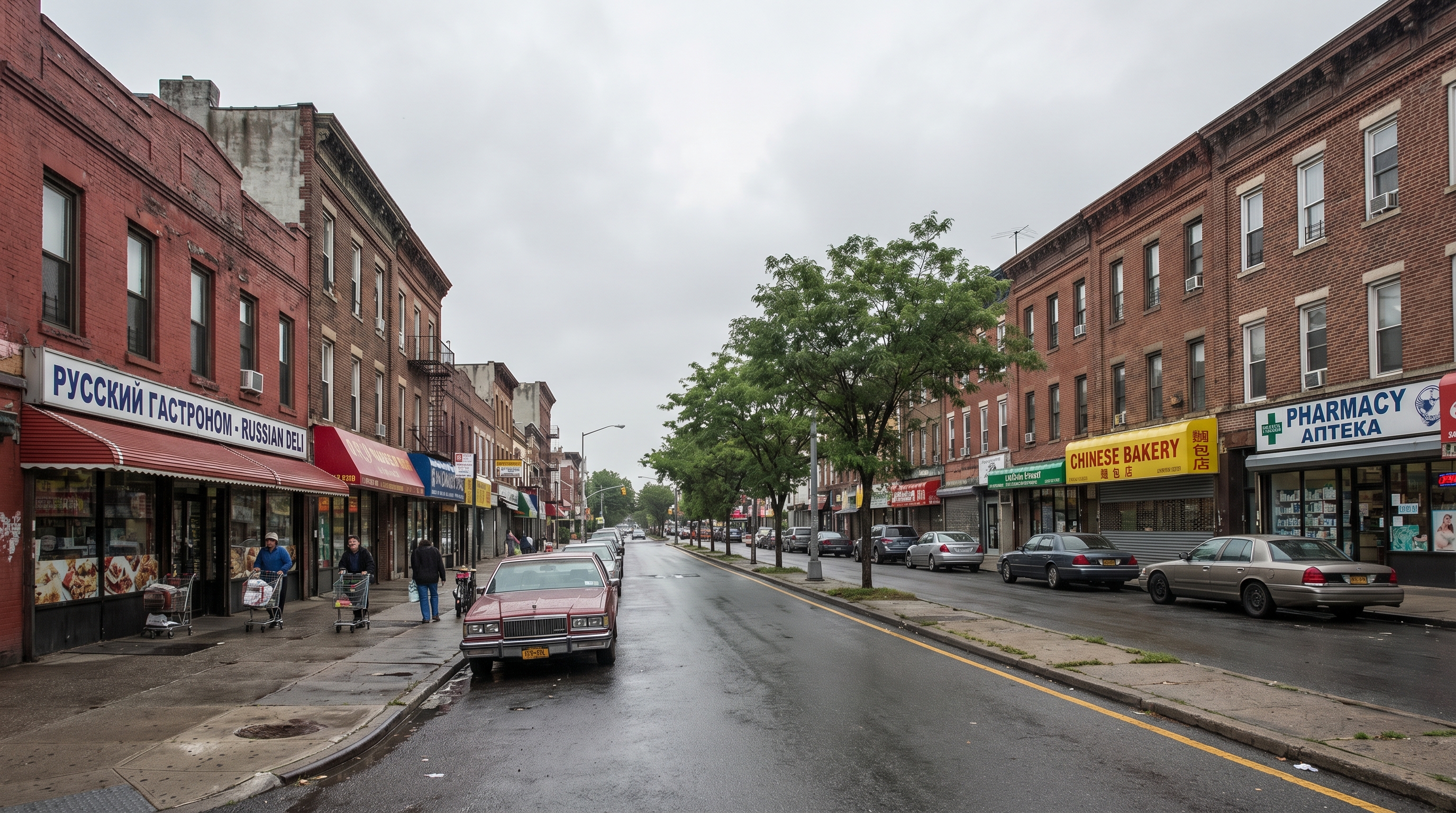
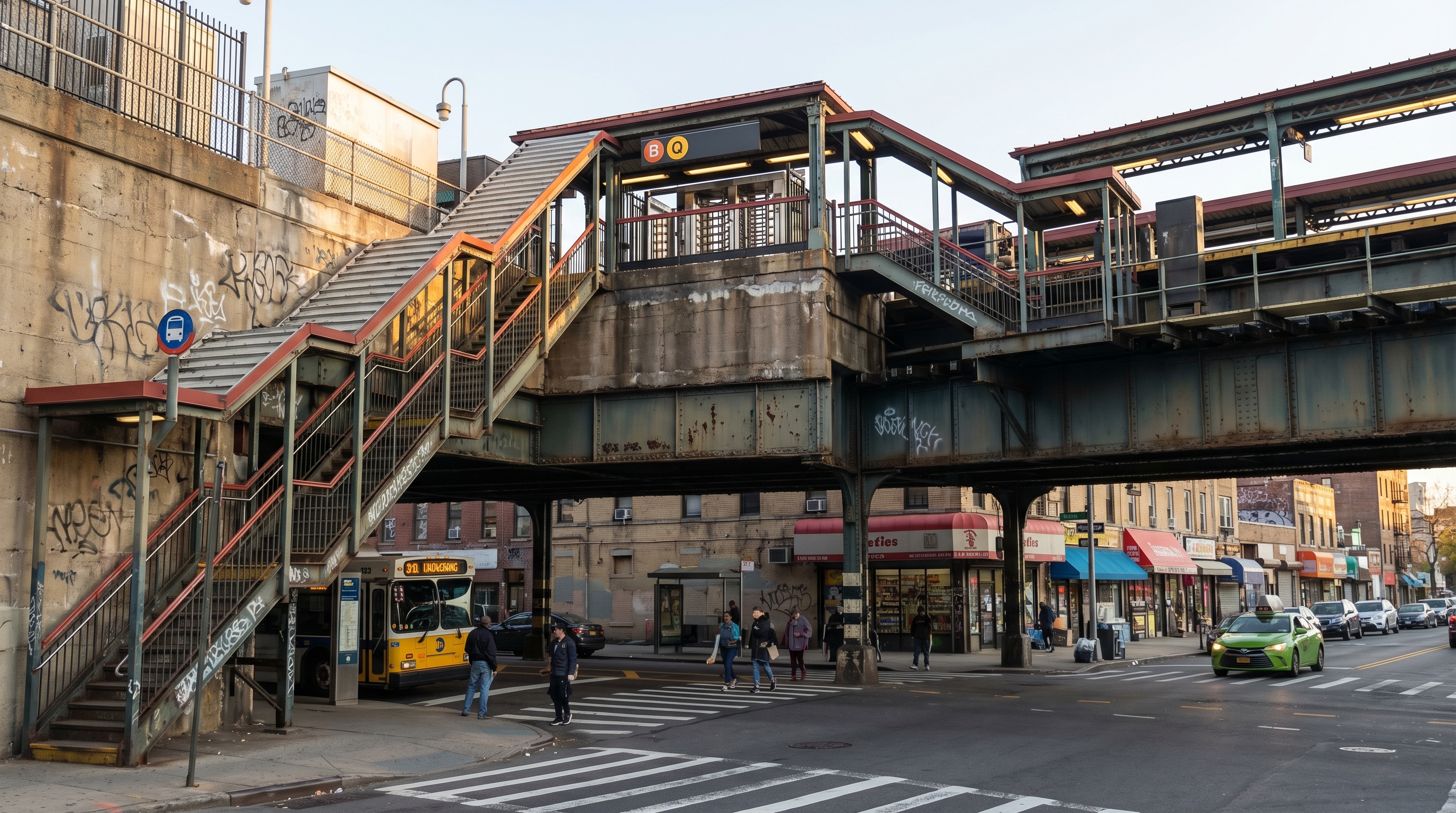
Stand at the corner of Kings Highway and East 16th Street on a weekday morning and you are standing at a convergence point that has been a convergence point, in various forms, for three hundred years. The B train rumbles over its embankment heading north toward Midtown. Women with shopping carts negotiate the crosswalk. Russian is spoken in the deli. Cantonese is spoken at the bakery counter. A bus marked B82 swings east toward Canarsie on the same road that Cornwallis marched his soldiers down in 1776.
The Russian-language world is the most visible cultural layer on the strip. Storefronts in Cyrillic script advertise Eastern European delicacies, fur coats, jewelry, and immigration services. Russian-language newspapers are sold at newsstands. M&I International Foods is the definitive Russian food market on the corridor, stocking smoked fish, Borodinsky bread, and prepared foods that are genuinely hard to find elsewhere in the city.
At the eastern end near Nostrand Avenue, a Chinese-American commercial cluster has taken shape over the past two decades. Cantonese barbecue shops, Hong Kong-style bakeries, and Chinese grocery stores reflect the continued arrival of families from Sunset Park and other parts of Brooklyn who found the southern neighborhoods more affordable and more stable than the neighborhoods closer to Manhattan. This is one of the fastest-growing commercial clusters in southern Brooklyn.
The Sephardic Jewish community maintains a distinct presence in the surrounding blocks, with synagogues, kosher restaurants, and community institutions reflecting the large Syrian and Bukharan Jewish populations that have settled in the Gravesend and Flatlands sections. Turkish and Uzbek restaurants have appeared as Central Asian communities settled nearby. The overall effect, on any given block, is of a place where the business of feeding, clothing, and serving people is carried out in multiple languages without anyone making a point of it.
Deep cleaning for pre-war homes that have not been thoroughly addressed in years
A Kings Highway two-family home that has been lived in by the same family for twenty or thirty years presents a different cleaning scope than a recently renovated apartment. Pre-war trim captures dust in its profiles. Crown molding at eight feet accumulates what weekly cleaning misses. The space behind a cast-iron radiator gathers dust all summer and burns it when the steam heat comes on in October. The basement, which often functions as both laundry room and storage, may not have been addressed in years.
Our deep cleaning service covers all of this: crown molding and baseboards, the tops of every door, the outside of the range hood above the stove, under the stove and refrigerator as far as reach allows, and every surface that standard recurring cleaning touches only lightly. Cabinet interiors are a separate add-on you check off at booking, so the cost shows up on your quote rather than on an invoice afterward. For a first-time cleaning of a home that has not been professionally cleaned recently, the deep clean establishes the baseline. From there, recurring maintenance visits keep the home at that standard rather than having to rebuild it from scratch each time.
Post-renovation cleaning is a request we handle regularly in Kings Highway. Owners who have updated kitchens, refinished floors, or done structural work in their pre-war homes know that contractors leave a specific kind of debris: plaster dust that settles into every surface and joint compound haze that leaves walls slightly filmed. We have cleaned behind enough renovation crews in southern Brooklyn to know what they leave and what it takes to remove it without damaging newly refinished surfaces.
For move-in and move-out cleaning between tenants in a rental unit, we clean the full scope of what a new tenant will encounter: inside all appliances, every cabinet, every closet, all floors and baseboards, and every bathroom surface. Kings Highway has a high owner-occupancy rate compared to most of Brooklyn, but rental turnover still happens, and the standard for handing a unit to a new tenant should be high.
The neighborhood changes slowly, and that is exactly the point
Kings Highway is changing, but at a pace that is slow by Brooklyn standards. The neighborhood’s homeowner base, its distance from the subway-accessible northern neighborhoods preferred by young professionals, and its decidedly unglamorous commercial character have insulated it from the accelerated gentrification that swept through Williamsburg, Crown Heights, and Bed-Stuy.
Long-term ownership across generations is common, particularly among the Russian Jewish and Italian families who have been in the neighborhood since the 1970s and 1980s. The housing stock turns over slowly. New development has been limited to infill projects and the occasional larger apartment building near the commercial corridors, preserving the neighborhood’s prewar residential character.
The Kings Highway Business Improvement District has continued to invest in streetscaping, storefront improvement programs, and maintenance. The corridor retains its core function as a working-class commercial strip serving immigrants and their descendants, and while individual businesses change, the overall character has been remarkably stable over several decades.
The families who bought into this neighborhood when the homes were new, following the subway lines out of more crowded northern Brooklyn and investing their savings in a modest brick semi-detached house with a front lawn, found the soil, it turned out, was good for growing.
What booking looks like
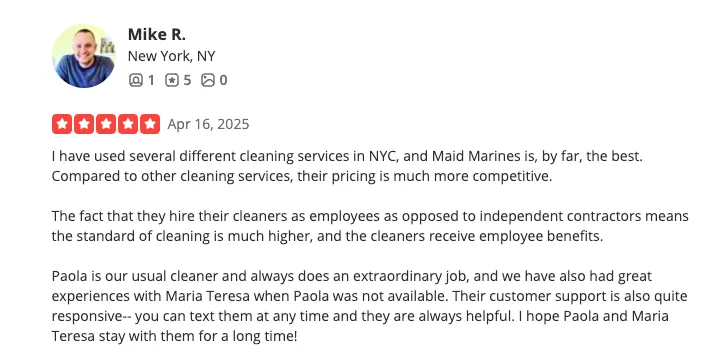
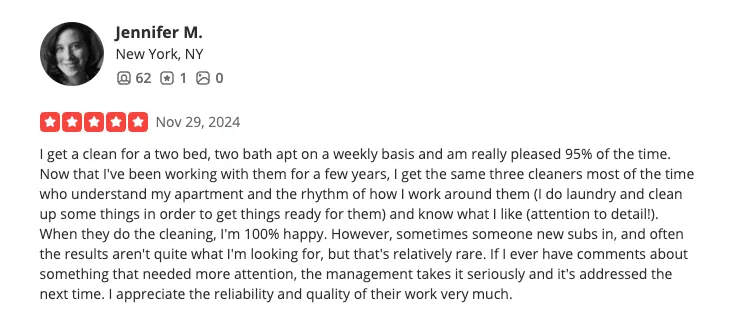
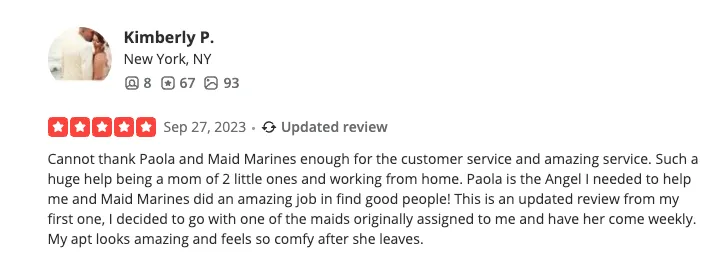
You pick your date and time on our booking page. You see your flat rate before you commit. If you have two units to clean, they are priced separately and handled on the same visit. If your co-op requires insurance paperwork, you tell us once and we handle it from there. Our cleaners are W-2 employees, not gig workers. They carry the right products for original hardwood, plaster walls, and vintage tile, and they know the difference between a wax finish and a polyurethane one.
We also serve nearby Homecrest, Midwood, Gravesend, Brighton Beach, Bensonhurst, Flatbush, and the rest of Brooklyn.