
The name Homecrest was invented by a real estate developer around 1900. T.B. Ackerson, one of Brooklyn’s most prolific residential builders of the era, chose it deliberately to market southern Brooklyn’s newest planned suburb: “Home” for domestic comfort, “Crest” for the slight plateau above the coastal marshlands that gave developers something geographic to point to. The promotional literature is long gone. The name stayed, and so did the brick.
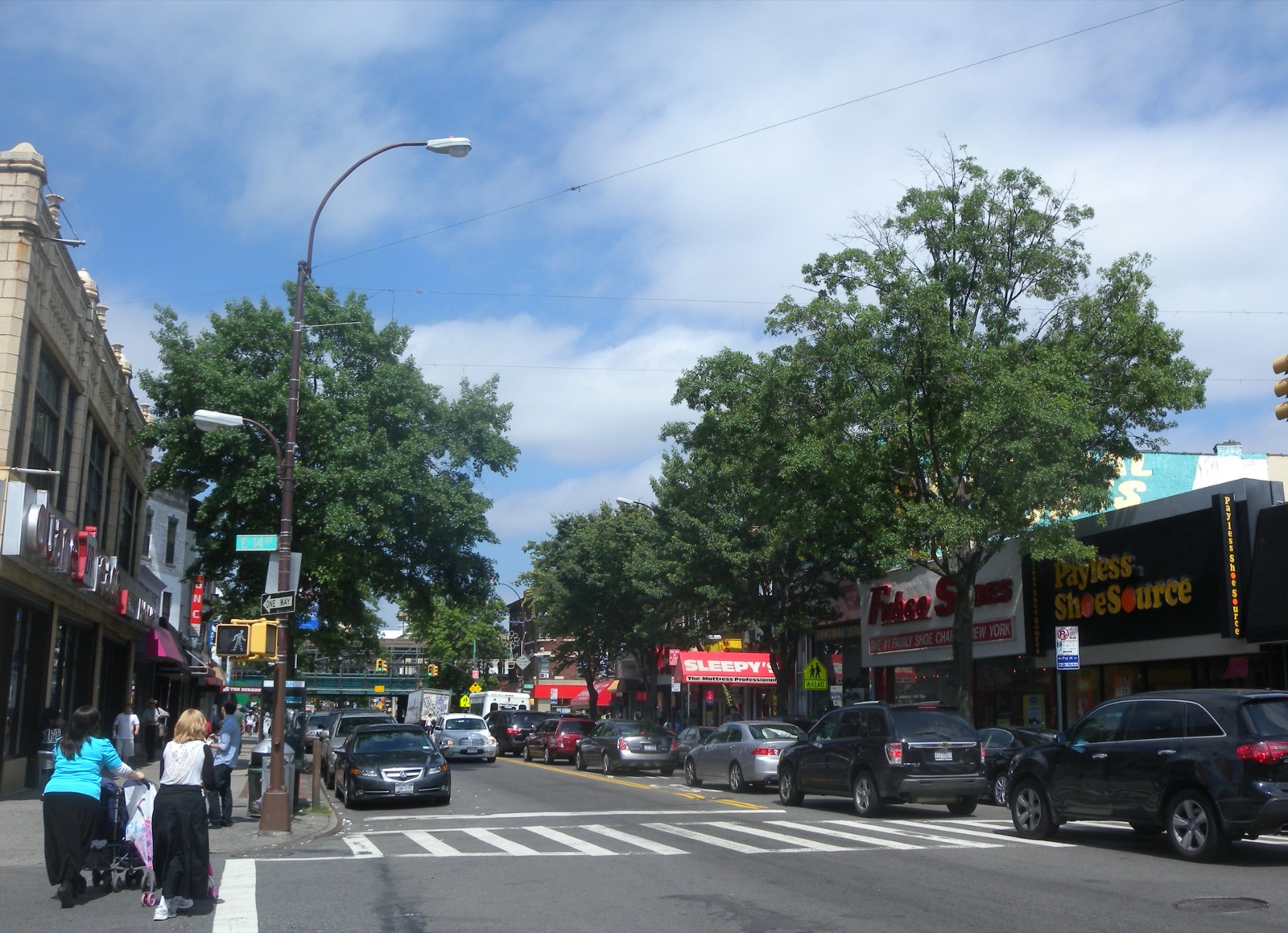
The neighborhood that grew from Ackerson’s marketing campaign turned out to be one of the most physically coherent residential communities in the borough. Between Kings Highway to the north and Avenue U to the south, from Coney Island Avenue to Ocean Avenue, the interior blocks filled with two-family semi-detached brick homes through the 1910s, 1920s, and 1930s. Those buildings are still standing. The consistent scale of two to three stories, the orange and red brick facades, the modest limestone lintels and bracketed cornices, the mature street trees and ornamental stoops — these are the bones that Homecrest was built on, and they are still the dominant physical fact of the neighborhood more than a century later.
Two-family brick homes define how this neighborhood gets cleaned
Homecrest’s defining residential type is the two-family semi-detached brick home, and it shapes everything about what cleaning these spaces actually requires. These are not brownstones with single-family floor-throughs and 14-foot parlor ceilings. They are practical, well-built structures where one family owns the building and often occupies one floor while another family rents the other. The kitchens are compact. The bathrooms are often original or close to it. The hardwood floors in prewar units typically carry a wax finish rather than the polyurethane coating found in renovated buildings, which means they respond badly to excess moisture, steam mops, and most commercial floor cleaners.
Pre-1940 construction accounts for over 60 percent of Homecrest’s housing stock. Original plaster walls, cast-iron radiators that collect dust in their fins all winter, tile grout in bathrooms that has not been touched in decades, and kitchen surfaces that have been repainted rather than replaced — these are the realities of cleaning a home in a neighborhood that was built once and largely kept. Our house cleaning teams carry separate products for hardwood, stone, and tile, and they know which surfaces require what. Wax-finished floors get a barely damp microfiber mop and a pH-neutral wood cleaner. Radiators, AC units, and vent covers get dusted every visit rather than skipped because they are awkward to work around. Grout in original bathrooms gets proper scrubbing without the acid cleaners that would eat through old caulk.
The two-unit structure of most Homecrest homes also means that owners often need cleaning on both floors independently, with separate schedules that account for different tenants and different tolerances for what clean means. We handle that without requiring you to manage the coordination.
Ocean Avenue’s postwar co-ops bring a different set of building requirements
The eastern boundary of Homecrest, along Ocean Avenue, shifts to a different scale and a different era. The six-story brick co-op and apartment buildings here went up primarily in the 1950s and 1960s for the first generation of Soviet and Eastern European immigrant families who were moving into the neighborhood. They are solid, utilitarian mid-century construction — not architecturally distinguished, but well-maintained and home to hundreds of families in buildings that have their own management, their own elevator schedules, and in some cases their own vendor requirements.
Co-ops along Ocean Avenue vary in what they require from cleaning services. Some ask for advance notice before any vendor enters the building. Some require a Certificate of Insurance naming the building as an additional insured. A few ask for vendor information on file before the first appointment. This is not unusual in Brooklyn, and it is not a barrier — but it needs to be handled before the first cleaning, not discovered at the lobby door. When you book with us, tell us your building name and we coordinate everything with management before we arrive. For recurring apartment cleaning, we assign the same team every visit so the doorman recognizes them and building management does not get a new vendor inquiry every two weeks.
Avenue U became one of southern Brooklyn’s most interesting food streets without anyone planning it
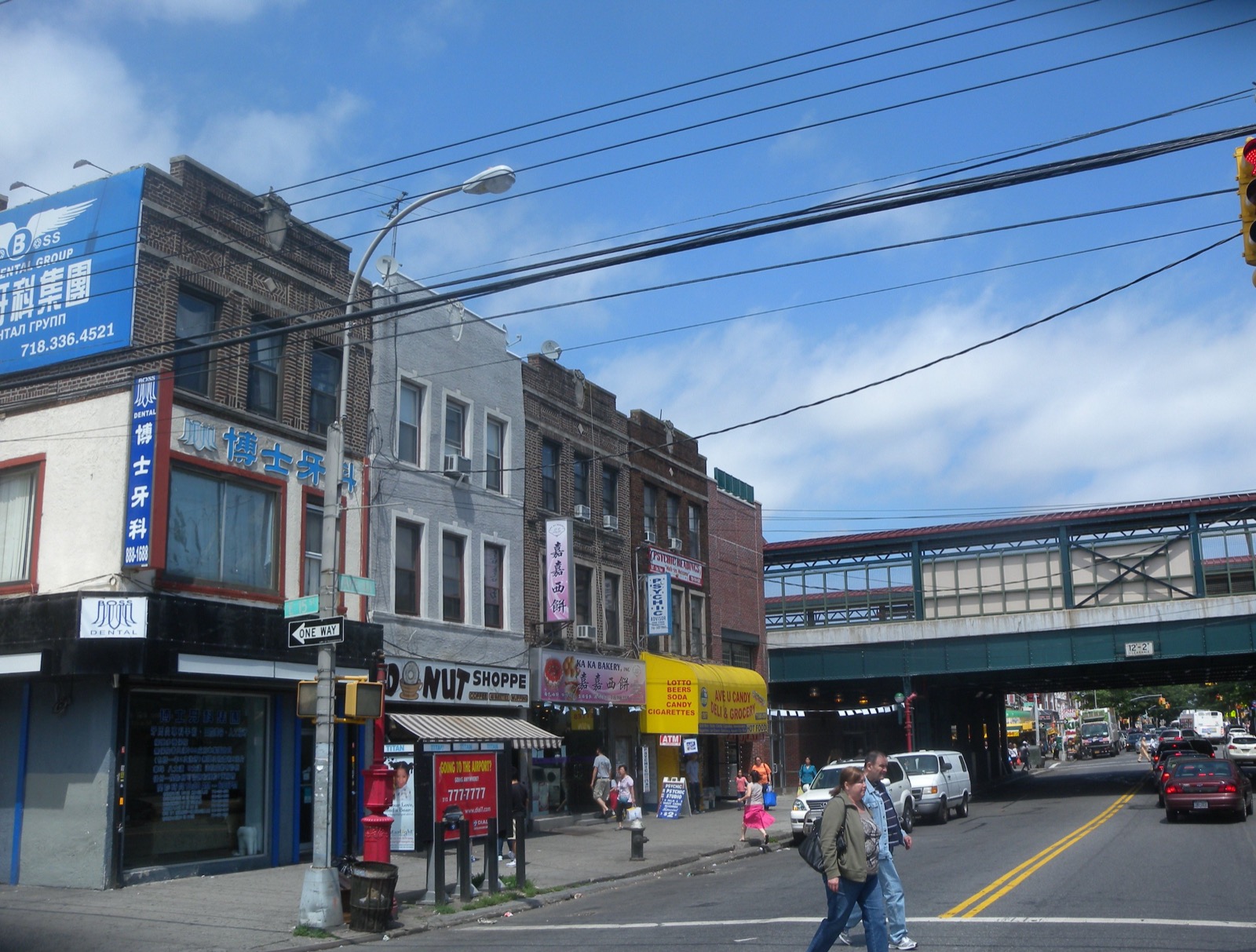
Avenue U forms Homecrest’s southern boundary and has spent the last two decades transforming from a generic Brooklyn shopping strip into one of the most genuinely diverse dining corridors in the borough. The transformation was not planned. It was the product of successive waves of immigration sorting themselves along a two-mile commercial avenue in ways that turned out to be complementary rather than competing.
The Russian and Eastern European Jewish layer came first, in the 1970s and intensified after 1991 with the collapse of the Soviet Union. Russian bakeries selling black bread and pastries, Bukharan restaurants, Georgian cafes with khachapuri and khinkali — this layer remains the defining ambient character of Avenue U and the residential streets behind it. The sound of Russian on the stoops, the mix of Orthodox synagogue life and secular cafe culture, the signage in Russian and Hebrew — these mark Homecrest as a neighborhood where Eastern European Jewish culture established deep roots and stayed.
The Chinese and Southeast Asian layer arrived more gradually through the 1990s and 2000s and has continued deepening. The small Chinatown between Ocean and Coney Island Avenues is one of New York City’s least documented and most authentic Chinese commercial districts — not a planned ethnic enclave like Flushing or Sunset Park’s Eighth Avenue, but a street-by-street accumulation of Cantonese barbecue shops, Hong Kong-style bakeries, and Vietnamese pho restaurants that grew from where families actually settled. Makan House, serving Malaysian food, draws diners from across Brooklyn who would not otherwise have a reason to make the trip. The Q train from Midtown to Avenue U is forty-five minutes, and the food is worth it.
Your Saturday afternoon belongs at one of these places. The cleaning is our job.
What a proper deep clean looks like in a 1925 semi-detached brick house
A deep cleaning in a Homecrest prewar home requires a different approach from what works in a modern apartment. Crown molding on nine-foot ceilings collects dust differently than smooth drywall. The gap behind a cast-iron radiator in a ground-floor bedroom is six inches deep and the last time it was properly cleaned may have been further back than either of us wants to calculate. Original bathroom tile with original grout lines requires real scrubbing and the right cleaning products — not acid, which degrades old caulk, and not the fast-dry commercial sprays that leave a film on porous surfaces.
We clean top-down in every home so that dust never settles on already-cleaned surfaces below. Decorative plaster features get a soft brush, not a wet cloth that pushes grime into the relief. Inside cabinets, the backs of kitchen shelves, the tracks on older windows that have never been replaced — these are the accumulation zones that a standard cleaning skips and that a proper deep clean addresses. In Homecrest’s housing stock, where many homes have been continuously occupied for decades without a full-scale cleaning, the first deep clean often reveals what the space is actually capable of looking like.
We also handle move-in and move-out cleaning for the rental units that are a significant part of Homecrest’s two-family housing stock. When a tenant leaves and the next one is two weeks away, the unit needs to be cleaned to a standard that shows the space at its best — including inside the oven, under the stove and refrigerator as far as reach allows, and inside every cabinet. That is a different standard from recurring maintenance cleaning, and we price it accordingly.
A neighborhood built for middle-class stability that has delivered exactly that for 120 years
What makes Homecrest unusual in the context of Brooklyn’s last decade is the absence of the transformation narrative. There is no Williamsburg-style displacement story here, no Park Slope super-gentrification, no wave of artisan coffee shops replacing bodegas. The neighborhood is home to roughly 44,000 people in a remarkably intact prewar residential grid, served by the B and Q trains at Kings Highway and Avenue U, and it has maintained a 50-50 split between renters and owner-occupants that is genuinely unusual in a borough where renter majorities dominate almost everywhere else.
The Russian and Ukrainian elder population, the growing Chinese and Southeast Asian families along Avenue U, the longtime owner-occupants in the brick rowhouses on East 12th through East 17th Streets — these communities coexist with the pragmatic tolerance of people who share a commercial street and a subway platform and have more in common than they have separating them. The synagogues are full on Shabbat. The dim sum is full on Sunday morning. The Avenue U shopkeepers keep each other’s hours.
Co-op ownership in Homecrest remains among the most accessible in any transit-connected Brooklyn neighborhood. A one-bedroom in a postwar Ocean Avenue building runs $220,000 to $400,000. That price range has attracted outside attention, and 2025 data showed a 52 percent year-over-year appreciation in the neighborhood’s median sale price — a signal that more buyers are finding what longtime residents already know. For now, Homecrest continues doing what it has always done: working, without making a show of it.
What booking with us looks like
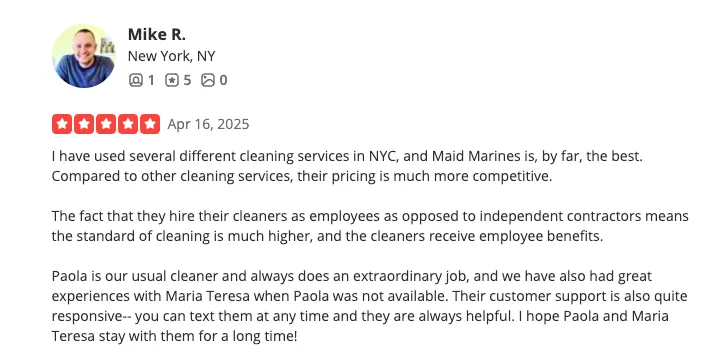
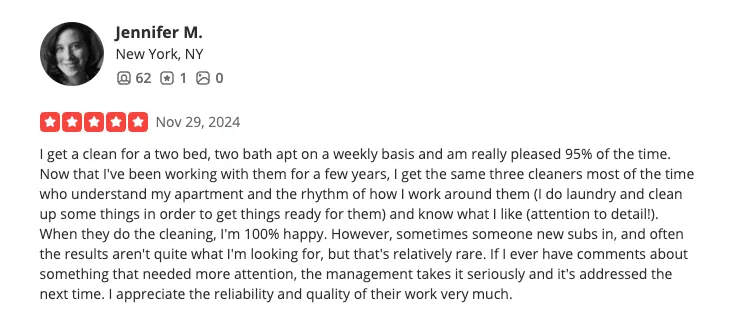
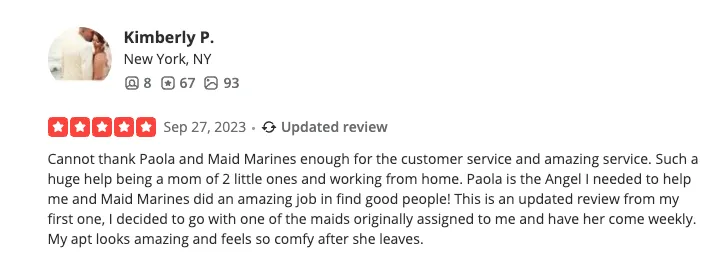
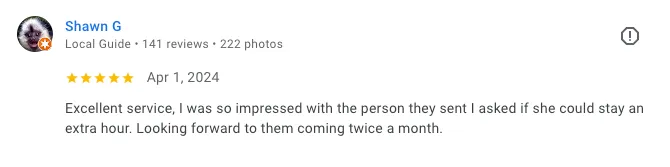
You book on our booking page, see your flat-rate price before committing, and tell us anything specific about your home. We have cleaned over 100,000 homes across New York City and we know what the brick semi-detached homes and Ocean Avenue co-ops of Homecrest actually need. Our cleaners are W-2 employees, not gig workers. They are vetted, insured, and they arrive with the right products for prewar hardwood, original tile, and postwar laminate alike.
We also serve nearby Midwood, Bensonhurst, Brighton Beach, Gravesend, Flatbush, and the rest of Brooklyn.