
The name “New Lots” is the most honest place name in New York City. It does not honor a person, promise a future, or celebrate any founding vision. It describes what happened: Dutch colonial administrators divided new parcels of agricultural land on the eastern frontier of Flatbush in the 17th century and called them, plainly, the new lots. That name has survived 350 years because it is literally true, and it survives today on subway signs, bus maps, and a street that runs east from Schenck Avenue toward the Queens border.
New Lots is a sub-neighborhood of the broader East New York district, positioned in the southeastern interior of Brooklyn between Linden Boulevard to the south, Pennsylvania Avenue to the west, Dumont Avenue to the north, and Fountain Avenue to the east. It is not a neighborhood that announces itself. There is no celebrated restaurant drawing visitors from Park Slope, no destination bar making lists. What it has instead is something more durable: a 200-year-old farm church still standing on its original corner, a housing tradition of community self-determination that produced the most studied affordable homeownership program in American urban history, and a population of working-class West Indian and African American families who have built something here despite the full weight of 20th-century disinvestment.

A church built in 1823 tells you everything about how New Lots was built
The New Lots Dutch Reformed Church at 630 New Lots Avenue is the oldest surviving structure in the East New York district. It is a small white-painted clapboard building that looks like it belongs in rural Connecticut rather than urban Brooklyn — a modest gabled country church with a simple steeple, built in 1823 to serve the Dutch, English, and Huguenot farming families who had settled this land. It was one of the first buildings ever designated by the New York City Landmarks Preservation Commission when the agency was established in 1965. It is listed on the National Register of Historic Places. The adjacent cemetery, full of 19th-century headstones bearing Dutch and English family names, dates to the same era.
The church has never moved. It has operated continuously for over 200 years. What has changed is everything around it. The farming community became a working-class immigrant neighborhood. The immigrant neighborhood became a dense Jewish and Italian district. That district was emptied by redlining, blockbusting, and postwar suburban flight. NYCHA towers went up in the 1950s on cleared land. The blocks went dark in the 1970s. Community organizations rebuilt on abandoned lots in the 1980s. Caribbean and African American families moved in and made the neighborhood their own. The church now operates as New Lots Community Church, an AME Zion congregation, serving a community with almost nothing in common with the Dutch farmers who built it except the land they share.
That layering is the physical record of New Lots across four centuries. The church is the thread running through all of it. Cleaning homes in a neighborhood with this kind of history means working in buildings that have accumulated that history in their walls, their tile, their plaster, and their floors.
The housing stock reflects every era of the neighborhood’s development
New Lots contains four distinct housing types, each representing a different chapter of the neighborhood’s history, and each requiring a different approach to cleaning.
The backbone of the private rental market is prewar brick walk-up tenements built between the 1890s and the late 1930s, when the arrival of the IRT subway in 1922 transformed what had been a remote farming district into a viable residential community for city workers. These are narrow-lot buildings, four to six stories, with fire escapes on the front facade, railroad-style apartments, and shared entry halls. The materials throughout are from a construction era that valued durability: hex tile in bathrooms, plaster walls, cast-iron radiators, and hardwood floors that have absorbed a century of use. Many of these apartments are rent-stabilized, and the population in them is often longtime: families who have been in the same unit for decades.
Two- and three-family attached houses occupy the side streets. These buildings represent the neighborhood’s homeownership tier, and the families in them often span multiple generations. A grandmother occupies one floor while her daughter’s family is upstairs, with a rental unit below helping to carry the mortgage. The stoops on these streets are where the neighborhood’s daily social life happens.

The Louis Heaton Pink Houses — 22 eight-story NYCHA towers completed in September 1959 — are the neighborhood’s most visible architecture and account for a substantial share of its total housing stock. Approximately 1,500 apartments house around 3,800 residents. Named for Louis Heaton Pink, the civic reformer who helped create NYCHA and spent his career arguing that government had an obligation to provide decent housing for the poor, the Pink Houses define the visual character of central New Lots: towers widely spaced in open grass and asphalt courtyards, with a specific internal street life in the spaces between the buildings. Our apartment cleaning teams serve the Pink Houses regularly — the apartment footprints are manageable, and the families in them keep the same standards as anyone else who takes pride in their home.
The Nehemiah rowhouses built by East Brooklyn Congregations starting in 1983 occupy the fourth category: simple two-story brick single-family homes on blocks that were abandoned or demolished during the neighborhood’s worst decades. These houses look modest, but what they represent is extraordinary. The Nehemiah Program is one of the most studied examples of community-led urban renewal in American history, and it began here, on the abandoned lots of New Lots and East New York, when a faith-based coalition decided that if the market and the city would not build, the community would build itself.
Cleaning prewar tenements requires different products on every floor
A prewar walk-up in New Lots is not a uniform surface. The bathroom was tiled in the 1920s or 1930s with hex tile and grout that cannot tolerate acid-based cleaners without etching or discoloring. The kitchen floor may be original linoleum or a later vinyl overlay. The walls are plaster, not drywall, and softer under pressure. The radiators are cast iron, and they collect dust between their fins over the course of a heating season, releasing that dust as a fine haze when the steam kicks on in October. The hardwood in the living room and bedrooms is old-growth wood from before the mid-20th century — harder than anything milled today, but often finished with wax rather than polyurethane, which means water and harsh products will damage rather than clean it.
Our house cleaning teams carry separate products for different surface types and switch as they move through a prewar apartment. Tile gets a pH-neutral cleaner. The plaster walls get a barely damp wipe on any scuffs, not a scrub. The radiators and the vent covers above them get dusted rather than stepped around. The wood floors get a cleaning approach calibrated to whether they are waxed or sealed. These details matter in buildings that have survived a century, and they are why we clean differently in a prewar New Lots apartment than in a modern building in a newer part of Brooklyn.
The 3 train terminus and what it says about the neighborhood
The New Lots Avenue station of the 3 train is the eastern terminus of the IRT Eastern Parkway Line. It is an elevated outdoor station on New Lots Avenue east of Schenck Avenue, and the turnaround loop of track used to reverse the train is visible from the street below. Standing on this platform, you are at the symbolic far eastern edge of one of Manhattan’s core subway lines, the line that runs through Crown Heights, Eastern Parkway, Borough Hall, Wall Street. That line ends here.
The subway arrived in 1922, which is also when the neighborhood as we know it began to take shape. The extension of the IRT to New Lots Avenue was the decisive moment of transformation from farmland to urban district, and the station has been the neighborhood’s primary connection to the rest of New York for over a century. The L train at New Lots Avenue provides a second connection toward Bushwick, Williamsburg, and 14th Street in Manhattan. Transit-accessible working-class neighborhoods like New Lots represent a large share of the over 100,000 homes we have cleaned across New York City — multi-unit buildings where families juggle work and childcare and schedules, and where a reliable cleaning service is not a luxury but a practical necessity.

Move-in cleaning for a neighborhood that turns over quietly
New Lots does not have the dramatic real estate turnover of a gentrifying neighborhood. It is stable, affordable by Brooklyn standards, and the population that has lived here for decades has strong roots. But apartments and houses do change hands. Nehemiah rowhouses sell for $350,000 to $500,000. Two-family homes go for $350,000 to $550,000. Prewar rental apartments turn over when longtime tenants move on.
A proper move-in cleaning for an apartment in a prewar New Lots building means reaching places that have not been cleaned in years. Cabinet interiors, the inside of the oven, behind the refrigerator, the back of closet shelves, the tops of kitchen cabinets that no regular cleaning ever reaches. In a two-story Nehemiah rowhouse moving from one owner to the next, it means every room on both floors, every bathroom fixture, every closet. We schedule move-in cleans for the day before your furniture arrives so you move into a clean space rather than cleaning around boxes.
A deep cleaning handles the same territory in a home you have lived in for years. For families who have been in the same apartment for a decade or more without ever doing a comprehensive clean, the difference is visible in the first hour: grout lines that are no longer grey, baseboards that are no longer dusty, light fixtures that give actual light. We cover the same New Lots blocks we always have, and the work is the same whether the apartment is in the Pink Houses or a prewar walk-up on Vermont Street.
What booking looks like for a New Lots home
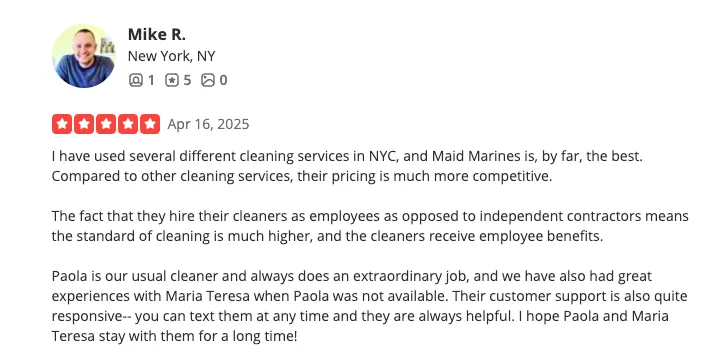
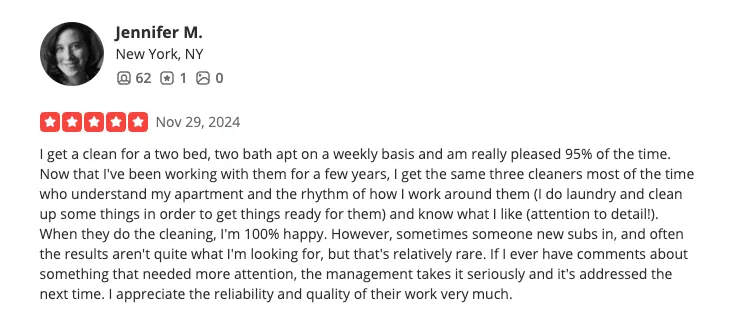
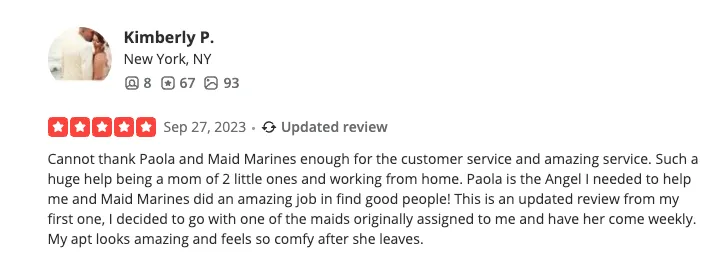
You go to our booking page, select the size of your home, and see a flat-rate price before you commit to anything. There are no upcharges for outer Brooklyn, no travel fees, no surprises on arrival. Our cleaners are W-2 employees, not gig workers. They are vetted, insured, and they bring everything they need.
For recurring appointments, we assign the same cleaner or team to your home. They learn the layout, learn your preferences, and learn what you care about. Consistency of service matters in a neighborhood where the same families have been in the same buildings for years.
We also serve neighboring Bed-Stuy, Brownsville, East New York, and Canarsie, and the rest of Brooklyn.