
Cypress Hills sits on a glacial ridge in eastern Brooklyn, higher than anything for miles around. The elevation is real and the neighborhood takes its name from it, or rather from the cypress trees that once grew on those slopes before the cemetery was established and the trees eventually disappeared. What remains is the ridge itself, the park along its northern edge, 225 acres of carefully tended ground, and a working-class Dominican and Bangladeshi neighborhood of two-family brick rowhouses that has been through a full cycle of prosperity, decline, and recovery without losing its character.
This is a neighborhood of houses rather than towers. The residential streets between Fulton Street and Jamaica Avenue are lined with attached brick and wood-frame rowhouses from the 1880s through the 1930s, the same low-rise human-scale fabric that defines the best parts of eastern Brooklyn. Front gardens, corner stores, block associations, and a concentration of faith communities per residential block that is among the highest in the borough. On Sunday mornings the sidewalks outside Blessed Sacrament and a dozen evangelical and Pentecostal congregations fill with families in their best clothes, and the sound of services carries into the street.
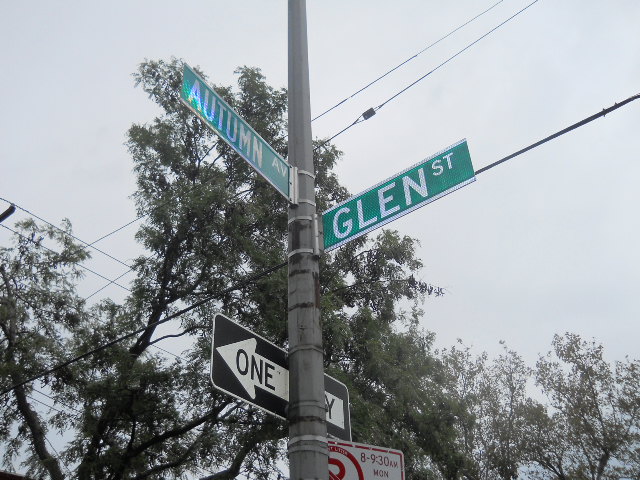
The houses here were built for working families and they still are
The oldest surviving residential fabric in Cypress Hills dates to the 1880s and 1890s, when improved transit made the neighborhood accessible to Brooklyn’s expanding working class. Wood-frame and brick rowhouses filled in the blocks between the commercial corridors, built to the two-family configuration that became standard throughout eastern Brooklyn. Ground floor and upper floor apartments sharing a common stoop, owner-occupied on one level and rented on the other. This model remains the dominant housing type in the neighborhood today, and it remains the pathway through which immigrant families build equity in New York City.
The 1920s and 1930s added a layer of slightly more substantial brick construction, three to four stories of orange-red brick with more restrained ornamental detail. These buildings form the majority of the housing stock and house the majority of the neighborhood’s approximately 75,000 residents. Dominican families represent the largest single ancestry group at roughly 24 percent of the population. Puerto Rican ancestry accounts for about 19 percent. South American roots, primarily Ecuadorian, Guyanese, and Trinidadian, add another 13 percent. The Bangladeshi community, established since the 1990s, has become large enough that Bengali is widely spoken and Bengali-owned businesses have reshaped several commercial blocks.
The homeownership rate in Cypress Hills is higher than in many comparable Brooklyn neighborhoods precisely because of the prevalence of two-family homes. Immigrant families purchase these properties as combined residence and investment, offsetting costs through rental income from the unit below or above. The result is a neighborhood with deep roots and strong institutional attachment to place.
What 130-year-old rowhouses actually need in the way of cleaning
A two-family rowhouse built in 1893 has specific demands that a cleaning service accustomed to modern construction will not anticipate. The hardwood floors are typically old-growth, harder than anything milled today, but they are often finished with wax rather than polyurethane. Water will damage a wax finish. Standard mop-and-bucket cleaning will ruin it. The plaster walls require a different approach than modern drywall. The cast-iron radiators collect dust between their fins through the summer and burn it off in a cloud when the steam heat kicks on in October. Kitchen tiles from the 1930s have grout that cannot tolerate acid cleaners.
Our house cleaning teams come to Cypress Hills equipped for what is actually in these homes. Old-growth hardwood gets a barely damp microfiber mop with a cleaner formulated for wax finishes. Plaster walls get a dry wipe where possible. Radiators get attention between the fins, not just across the top. Bathroom tile grout gets a pH-neutral scrub. These details matter because the homes that have survived 130 years of continuous occupation deserve to survive the next generation too.
When a Cypress Hills family needs a first clean after years of deferred maintenance, or after a rental tenant has moved out, the work is substantial. We have cleaned over 100,000 homes across New York City, including a significant number of eastern Brooklyn rowhouses where the kitchen grease has accumulated since before the current tenant moved in and the bathroom tile has not seen a real scrub in years. A deep cleaning in this context means starting from behind and working forward, which takes longer than maintenance cleaning but produces a result that holds up under a regular recurring schedule.
The cemetery that named the neighborhood and the park above it
The institution at the center of Cypress Hills’s history and identity is not a school or a shopping street or a transit line. It is a cemetery. Cypress Hills Cemetery, founded in 1848 on 225 acres of rolling wooded land along the Brooklyn-Queens border, was the first non-sectarian cemetery in New York City and one of the earliest examples of the rural cemetery movement in the region. The founders named it for the cypress trees growing on the slopes. The neighborhood that grew up around it took the same name.
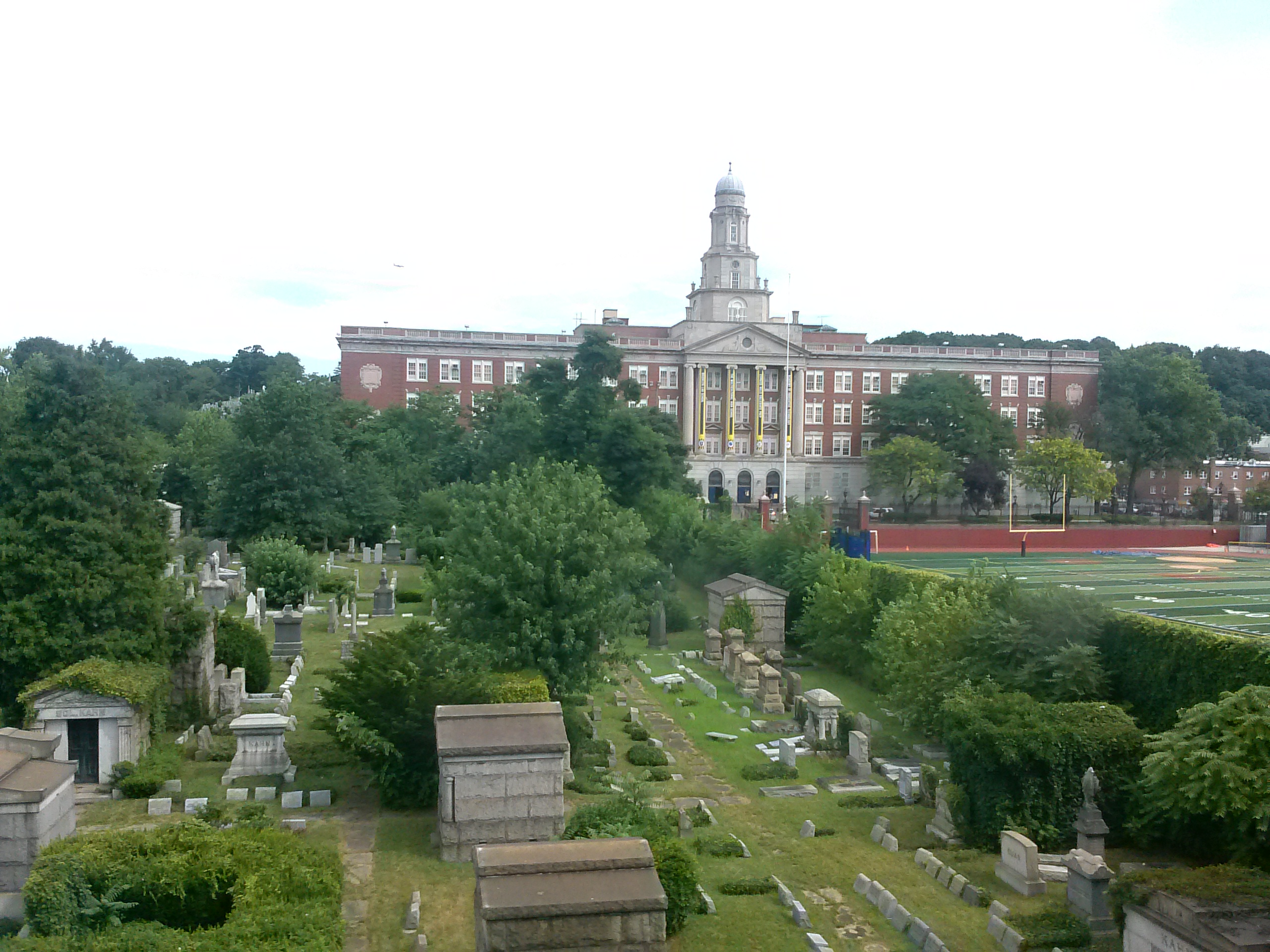
The cemetery contains the graves of Jackie Robinson, Mae West, Piet Mondrian, and Arturo Alfonso Schomburg, a roster that could anchor any institution in the country. Within the cemetery grounds, the Cypress Hills National Cemetery, established in 1862, is the only US National Cemetery in New York City and predates Arlington National Cemetery by two years. Union soldiers and 478 Confederate soldiers are buried here intermingled, because the keeper processed bodies as they arrived without separating them by side. Twenty-four Medal of Honor recipients are interred in this section.
The cemetery is not separate from the neighborhood life around it. You walk past its gates on Jamaica Avenue on your way to the J train. Its trees are visible from Fulton Street. The Cypress Hills Abbey, a three-story mausoleum completed in 1931, and the Memorial Abbey from 1936 define a significant piece of the neighborhood’s institutional architecture. Walking through the grounds on a weekday morning is one of the quieter and more composed experiences available in eastern Brooklyn.
Highland Park sits on the same glacial ridge above the cemetery’s northern edge. The 105-acre park includes the Ridgewood Reservoir, a Civil War-era water supply infrastructure converted to wildlife habitat after the city decommissioned it in 1959. The three reservoir basins have been rewilding for 65 years and now constitute one of the most significant freshwater bird habitats in the borough. The Highland Park Bandshell, a WPA-era outdoor performance space, anchors the park’s community programming through the warm months. On summer weekends the meadows fill with Caribbean and Dominican families for picnics, birthday celebrations, and the full outdoor social culture of a neighborhood that uses its parks rather than merely tolerates them.
The commercial life on Fulton Street and what it says about who lives here
Fulton Street is the neighborhood’s main commercial artery, and what it offers is the full range of the neighborhood’s immigrant communities expressed in the form of restaurants, markets, and service businesses. Dominican cuisine defines the flavor of the strip: mangu, sancocho, pollo guisado, and rice and beans in a dozen variations, served at places where the daily lunch special is written on a whiteboard and the service is swift. Caribbean food in the broader sense runs alongside it, Jamaican jerk, Trinidadian roti, Guyanese curry. Bangladeshi and South Asian restaurants and halal markets have grown substantially over the past two decades, and Bengali sweets shops appear between taqueries and dollar stores.
There are no Michelin-starred restaurants in Cypress Hills. There are places where you can eat extraordinarily well for twelve dollars. The Cypress Hills LDC Community Kitchen Incubator at 276 Chestnut Street provides affordable licensed commercial kitchen access for neighborhood food entrepreneurs and has produced several catering operations and small businesses that have expanded across Brooklyn. This is a neighborhood that invests in food entrepreneurship as an economic strategy, not a gentrification signal.
Jamaica Avenue runs along the neighborhood’s northern border with the J and Z trains elevated above it, casting dappled shadows over the commercial corridor and producing the rhythmic rumble that residents stop hearing after a week. The elevated structure gives this corridor the same visual and acoustic character that defines the best parts of elevated-train Brooklyn: the columns, the shadows, the street life adapting to the rhythm of the service above.
Moving in or moving out in a neighborhood where homes change hands within families
The two-family rowhouse market in Cypress Hills has a particular character. These properties change hands within immigrant communities at a different pace than in gentrifying neighborhoods, and when they do change hands, it is often within extended family networks or to other immigrant families buying for the first time. The combination of owner-occupied and rental units within a single building means that move-in and move-out cleaning often needs to address one floor at a time while the other floor remains occupied.
Our move-in and move-out cleaning teams handle these transitions regularly. An incoming tenant in a ground-floor unit needs the space fully cleaned before they arrive. An outgoing tenant needs the unit restored to the condition required for a security deposit return. We clean kitchens where previous tenants have cooked daily for years, bathrooms where the tile grout has accumulated mineral buildup, and closets and corners where the previous occupants’ presence still registers. We work around the occupied floor above or below without disruption.
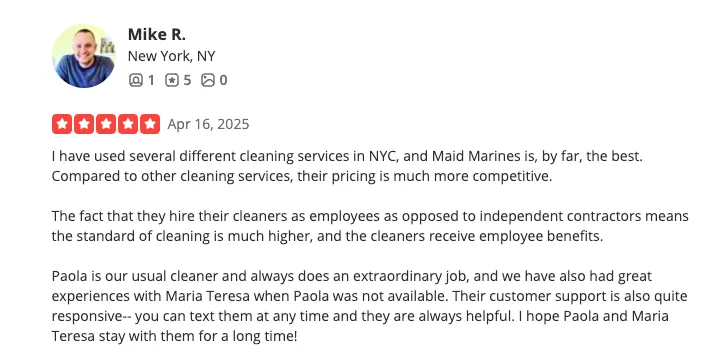
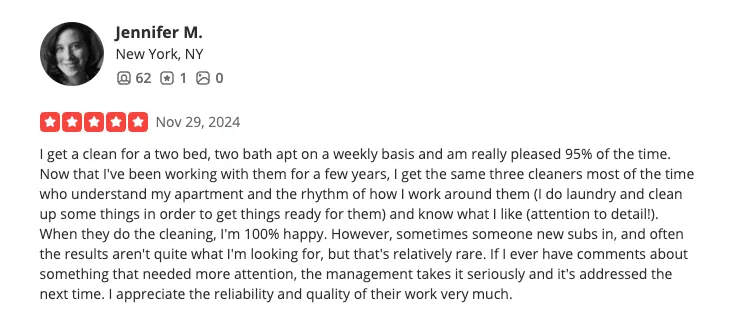
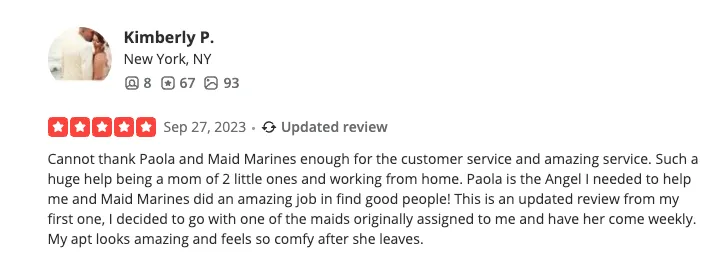
For apartment cleaning on a recurring basis, we build consistency into the schedule. The same team returns each visit, learns the home’s specific needs, and tracks what has been cleaned and what needs extra attention. In a neighborhood where many households work early shifts and value reliability above all else, showing up on time with the right products for the specific home is the minimum expectation, and we meet it.
What the Cypress Hills Local Development Corporation built and why it matters
The Cypress Hills Local Development Corporation is one of the most active and nationally recognized community development organizations in Brooklyn, founded in response to the disinvestment of the 1970s and 1980s and grown into a multi-service organization that runs workforce development programs, affordable housing initiatives, a community kitchen incubator, and youth programs. The organization’s presence gives Cypress Hills an institutional capacity for self-advocacy that most comparable neighborhoods lack.
The CHLDC’s work means that when development pressure arrives from the East New York rezoning of 2016 and the speculative activity it generated, the neighborhood has an organized institutional voice to shape what happens rather than simply absorb it. The commercial corridors have seen incremental retail turnover but no boutique-retail transformation. The housing stock remains working-class and owner-occupied at a higher rate than surrounding neighborhoods. The community kitchen continues producing food entrepreneurs.
This is a neighborhood that knows what it is and works to protect it, and the cleaning teams we send here understand that. You can book online and see your flat-rate price before you commit to anything. We also serve nearby Bed-Stuy and the rest of Brooklyn.