
Hamilton Heights is the neighborhood where Alexander Hamilton built the only home he ever owned, where the entire leadership of the NAACP lived in the same apartment building, and where ten Nobel laureates attended a free public university on a campus made from the bedrock underneath it. It occupies a ridge of Manhattan schist between 135th Street and 155th Street on the west side of upper Manhattan, and it has been accumulating layers of American history since before the country existed. The row houses that line Convent Avenue and Hamilton Terrace today were built between 1895 and 1910 and have been protected by a landmarks designation since 1974, making this one of the largest intact collections of late Victorian residential architecture in New York City.
The housing stock here is what makes Hamilton Heights different to clean. A three-story brownstone with original plaster molding, a carved limestone stoop, and hardwood floors from the McKinley administration requires a different approach than a glass-and-steel condo in Hudson Yards. The prewar apartment buildings along Amsterdam Avenue and Broadway have their own set of challenges. And the Sugar Hill doorman buildings on Edgecombe Avenue, where W.E.B. Du Bois and Thurgood Marshall once lived, carry a history that you can feel in the lobby plasterwork and the crown molding in the hallways.
But before we get into the cleaning specifics, this neighborhood deserves a proper introduction. Most New Yorkers know Hamilton Heights as “that area near City College.” That undersells it considerably.
Alexander Hamilton built his country estate here in 1802 and lived in it for exactly two years before Aaron Burr killed him
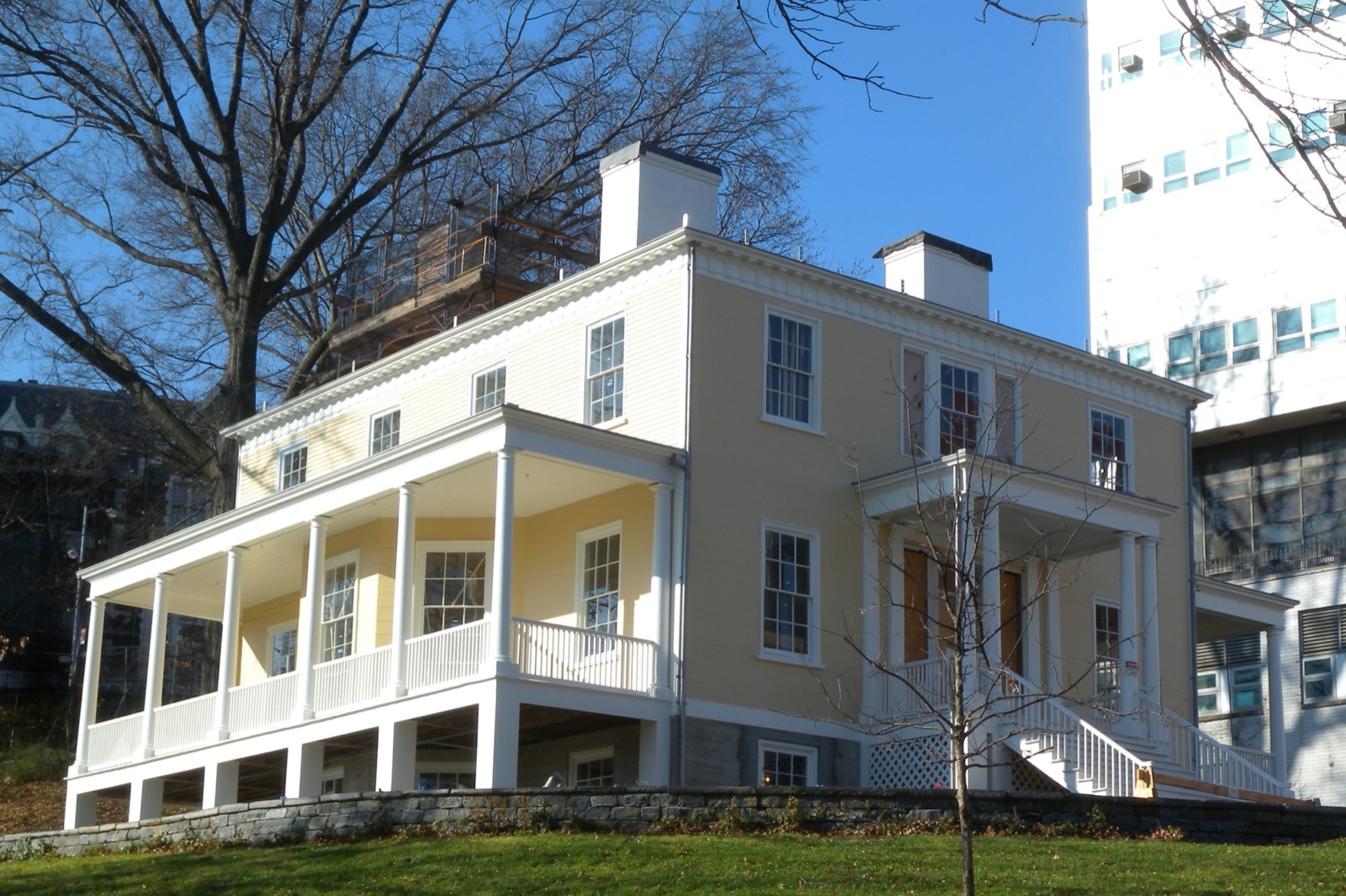
In 1800, Alexander Hamilton commissioned architect John McComb Jr. to design a country house on his 35-acre estate near what is now West 143rd Street and Convent Avenue. He called it The Grange, after the Hamilton family’s ancestral property in Ayrshire, Scotland. It was a Federal-style house with an octagonal room at each end, a wide porch facing the Hudson River, and gardens that Hamilton, by all accounts, genuinely loved tending. It was completed in 1802. He was the first Secretary of the Treasury, the architect of the American financial system, the author of 51 of the 85 Federalist Papers, and in the summer of 1804 he walked down from this hilltop to the waterfront, rowed across the Hudson to Weehawken, New Jersey, and was shot by Vice President Aaron Burr in the most consequential duel in American history.
Hamilton died the next day. He was 47 or 49, depending on which birth year you accept. The Grange passed through several owners over the next century. In 1889, St. Luke’s Episcopal Church bought the property and moved the house 500 feet south to make way for the street grid. It sat wedged between apartment buildings on Convent Avenue for over a hundred years. In 2008, the National Park Service relocated it again, on a wheeled platform, to its current position in St. Nicholas Park at Convent Avenue and 141st Street, where it operates as Hamilton Grange National Memorial. Free admission. You can see the desk where he wrote his final letters.
The neighborhood took his name, and the name stuck because the estate was the most notable feature of the area for decades before the city caught up to it. “Hamilton Heights” appeared in common use by the late 19th century, and the elevated topography of the Manhattan schist ridge justified the second half. This is one of the highest natural points on the island.
The row houses on Convent Avenue date to 1895 and the cleaning approach changes block by block
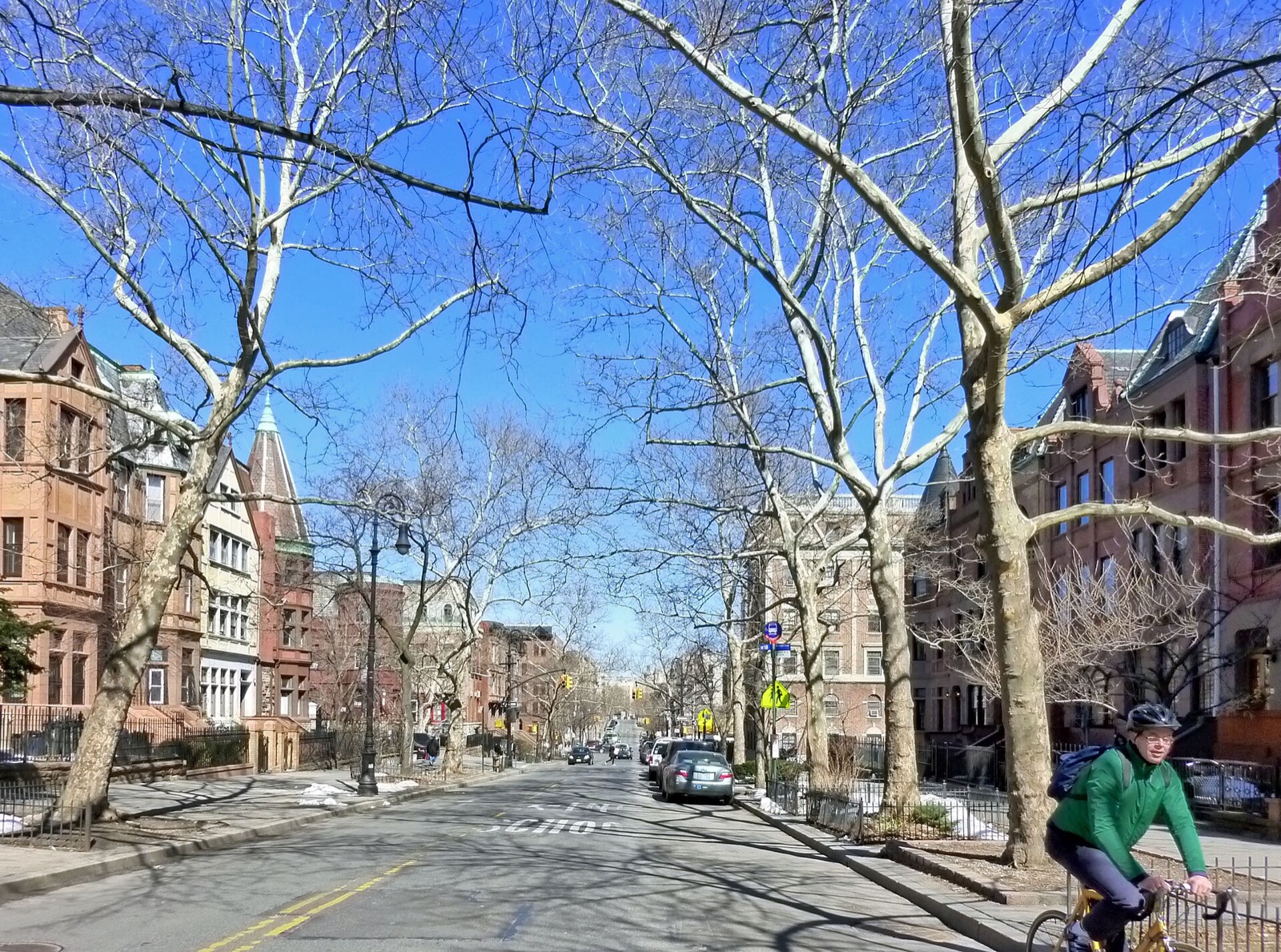
The residential development that defines Hamilton Heights today happened fast. The completion of the IRT subway lines in 1904 connected these blocks to midtown Manhattan, and developers responded by building out the entire neighborhood in about fifteen years. Architects including Clarence True, William H. Dewey, and James E. Ware designed rows of Romanesque Revival, Queen Anne, Renaissance Revival, and Beaux-Arts row houses along Convent Avenue, Hamilton Terrace, and the numbered cross streets.
These are three- and four-story limestone and brownstone houses with carved stoops, decorative iron railings, elaborate cornices, bay windows, original plaster walls with ornamental molding, hardwood floors, and tile fireplace surrounds. The interior woodwork in many of these houses is original, which means it was installed by craftsmen who have been dead for a century and whose skills have not been replicated since. That is not poetry. That is a cleaning constraint.
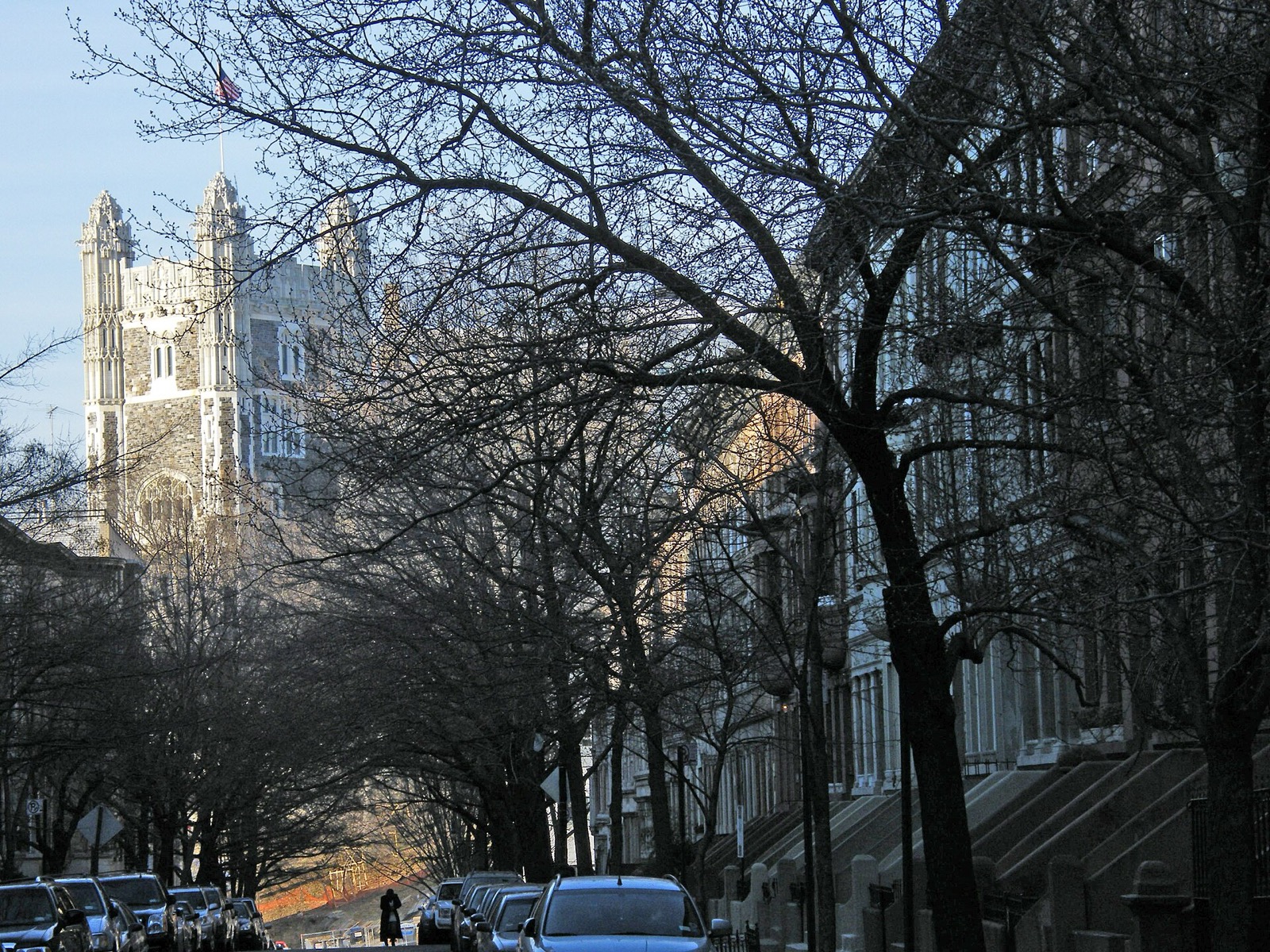
Water on unsealed plaster leaves marks that do not come out. Silicone-based furniture polish on original woodwork builds up into a cloudy film over years. Abrasive pads on century-old hardwood scratch through the finish permanently. The carved limestone stoops that front every row house on Convent Avenue will etch if you clean them with anything acidic. We use dry microfiber on all woodwork, pH-neutral solutions on the floors, and we treat every plaster surface as irreplaceable, because it is.
The Hamilton Heights Historic District was designated by the NYC Landmarks Preservation Commission in 1974, and an extension covering the Sugar Hill area was added later. Over 200 buildings are covered. That designation protected these streetscapes from the demolition that erased comparable blocks in other parts of the city, and it means any exterior alterations require LPC approval. The interiors are not regulated in the same way, but the residents who live in landmarked brownstones tend to care about what happens to their plaster and millwork. We do too.
A typical cleaning in a Hamilton Heights brownstone covers two or three floors, takes three to four hours with a two-person team, and requires the kind of surface knowledge that only comes from cleaning prewar homes consistently. We send the same team back each visit so they learn the house once and remember it.
Sugar Hill was the most prestigious address available to Black Americans in 20th-century New York
The eastern edge of Hamilton Heights, along St. Nicholas Avenue and Edgecombe Avenue, earned the name Sugar Hill in the 1920s. The name was slang for “the sweet life.” It meant you had made it. And the reason it meant that is the reason so much of New York’s racial history reads the way it does. Wealthy Black New Yorkers were systematically excluded from every other desirable residential address in the city. Sugar Hill was one of the few places where quality housing was available to Black families with money.
The result was a concentration of talent that has no parallel. At 409 Edgecombe Avenue, a large prewar apartment building on the bluff overlooking Highbridge Park, the tenant list at various points included W.E.B. Du Bois, Thurgood Marshall, and Walter White. Du Bois was the most influential Black intellectual of the 20th century. Marshall was the NAACP Legal Defense Fund director who argued Brown v. Board of Education before the Supreme Court and later became the first Black Supreme Court Justice. White was the NAACP Executive Secretary. All three lived in the same building simultaneously during the 1940s.
Down the street at 555 Edgecombe Avenue, Count Basie and Cab Calloway had apartments. Duke Ellington lived at 935 St. Nicholas Avenue. Lena Horne lived in the neighborhood. Adam Clayton Powell Jr., the first Black member of Congress from New York, lived on Sugar Hill. These were not occasional residents passing through. They were neighbors. They lived on the same blocks, rode the same elevators, and ate at the same restaurants.
The irony is the same one that sits at the heart of the Addisleigh Park story in St. Albans. Racist housing policy compressed Black excellence into the few places that were accessible. Sugar Hill is simultaneously a monument to injustice and to the community that thrived despite it. The buildings are still there. 409 and 555 Edgecombe are both NYC landmarks now.
City College anchors the neighborhood with the most dramatic public university campus in New York
City College of New York was founded in 1847 as the Free Academy, a tuition-free institution for the children of immigrants and working-class New Yorkers. In 1907, architect George B. Post completed the Collegiate Gothic campus at Convent Avenue and 138th Street, and he built it from the neighborhood’s own bedrock. The dark, mica-flecked Manhattan schist that forms the ridge Hamilton Heights sits on was quarried during the IRT subway construction a few years earlier, and Post used that stone for the campus buildings. Pointed arches, crenellated parapets, gargoyles, and octagonal towers rose from the very rock they stood on.
CCNY became one of the most academically rigorous free public universities in the country. Its graduates include Jonas Salk, who developed the polio vaccine. Colin Powell, who became Chairman of the Joint Chiefs and Secretary of State. Andy Grove, who co-founded Intel. Edward Koch, who became mayor. Ten Nobel laureates in total, most of them the children of immigrants who could not have afforded tuition anywhere else. The nickname was “the Harvard of the Poor,” and for decades the comparison was not an exaggeration.
The campus gives Hamilton Heights something that most Manhattan neighborhoods lack: a permanent population of students and faculty that turns over continuously but never disappears. As long as City College charges public university tuition and accepts students from every zip code, the neighborhood will have first-generation college students on its stoops, professors walking to campus along Convent Avenue, and the steady undercurrent of aspiration that has defined the area for over a century.
For cleaning purposes, the CCNY population means a steady supply of young professionals and graduate students renting the avenue apartments on Amsterdam and Broadway. These are straightforward apartment cleaning jobs. No doorman, no COI paperwork. Keys or a lockbox and a clean apartment when you get home.
Prewar apartment buildings on the avenues have their own set of cleaning challenges
The row houses get the attention, but most Hamilton Heights residents live in the six- to twelve-story prewar apartment buildings that line Amsterdam Avenue, Broadway, and St. Nicholas Avenue. These were built between 1905 and 1930, and they have the standard features of upper Manhattan prewar construction. Lobby ornamentation that has been painted over a dozen times. Brick cornices. Plaster walls. Cast-iron steam radiators. Hardwood floors that range from well-maintained to decades overdue for refinishing. Kitchens and bathrooms that have been renovated at various points with varying levels of care.
The cast-iron radiators are the cleaning detail that comes up most in prewar Hamilton Heights apartments. These radiators have fins that pack with dust over years, and every October when the steam heat kicks on, that dust burns off and fills the apartment with a scorched-lint smell that lasts for a week. We dust the covers and the vent grilles every visit and take the dust out of the room around them, which is what a cleaning company can honestly do about it. The cast iron itself belongs to a radiator specialist, not to us. If nothing in the apartment has been reset in years, a deep clean on the first visit is still the right call.
The kitchens in Hamilton Heights reflect the neighborhood’s Dominican and Caribbean cooking culture. Amsterdam Avenue between 135th and 155th is lined with Dominican restaurants, bakeries, and grocery stores, and the home cooking in the residential blocks is just as serious. Rotisserie chicken, rice and beans, tostones, slow-braised stews. These kitchens produce real food daily, and the grease films on range hoods, cabinet faces, backsplashes, and the ceiling above the stove are the evidence. We degrease every kitchen surface within six feet of the stove, wipe the hood down on the outside, and pull the drip trays. If you want the oven interior handled, add a deep clean.
Hamilton Heights is a neighborhood where the cooking is a point of pride and the kitchen should be too. That is what recurring house cleaning is for.
Brownstone renovations and move-ins are a growing part of the Hamilton Heights cleaning market
The brownstone rehabilitation trend that has been accelerating since 2010 has made Hamilton Heights one of the most active renovation markets in upper Manhattan. Investors and owner-occupants are purchasing row houses that spent decades as subdivided single-room-occupancy buildings and restoring them to single- or two-family use. That restoration process generates plaster dust, construction debris, and the kind of deep grime that settles into every surface, every cabinet, and every window track.
Our move-in and move-out cleaning handles the full post-renovation reset. We work room by room, top to bottom, and clean every surface the next occupant will touch or open. Inside cabinets, behind radiators, window tracks, baseboards, appliance interiors. A brownstone renovation cleanup in Hamilton Heights typically takes four to five hours with a two-person team, depending on the number of floors and the state of the construction aftermath.
For tenants moving in or out of the avenue apartments, the standard move-in clean covers the same scope at a smaller scale. These are efficient jobs. No elaborate building logistics, no elevator scheduling, no COI requirements for most buildings. Just keys, a time, and an apartment that is ready for the next chapter.
What booking looks like for Hamilton Heights residents
You pick your date and time on our booking page. You see your flat-rate price before you commit. If your brownstone has original plaster molding or other surfaces that need careful handling, tell us once and we note it permanently on your account. If you need multiple floors cleaned in one visit, we set it up correctly on the first call.
Our cleaners are W-2 employees, not gig workers. They are vetted, insured, and they arrive with the right products for your specific home. We serve Hamilton Heights and upper Manhattan, including nearby neighborhoods like the Upper West Side and Hell’s Kitchen. Our teams use the A, B, C, and D express trains to 145th Street or the 1 train to 137th Street. Typical arrival from our base is 25 to 35 minutes.
The brownstones on Convent Avenue have survived 130 years of New York City. They have outlasted wars, financial collapses, decades of disinvestment, and a real estate market that tried to tear them down before the landmarks designation saved them. They deserve cleaners who understand what they are working with. That is what we do.