
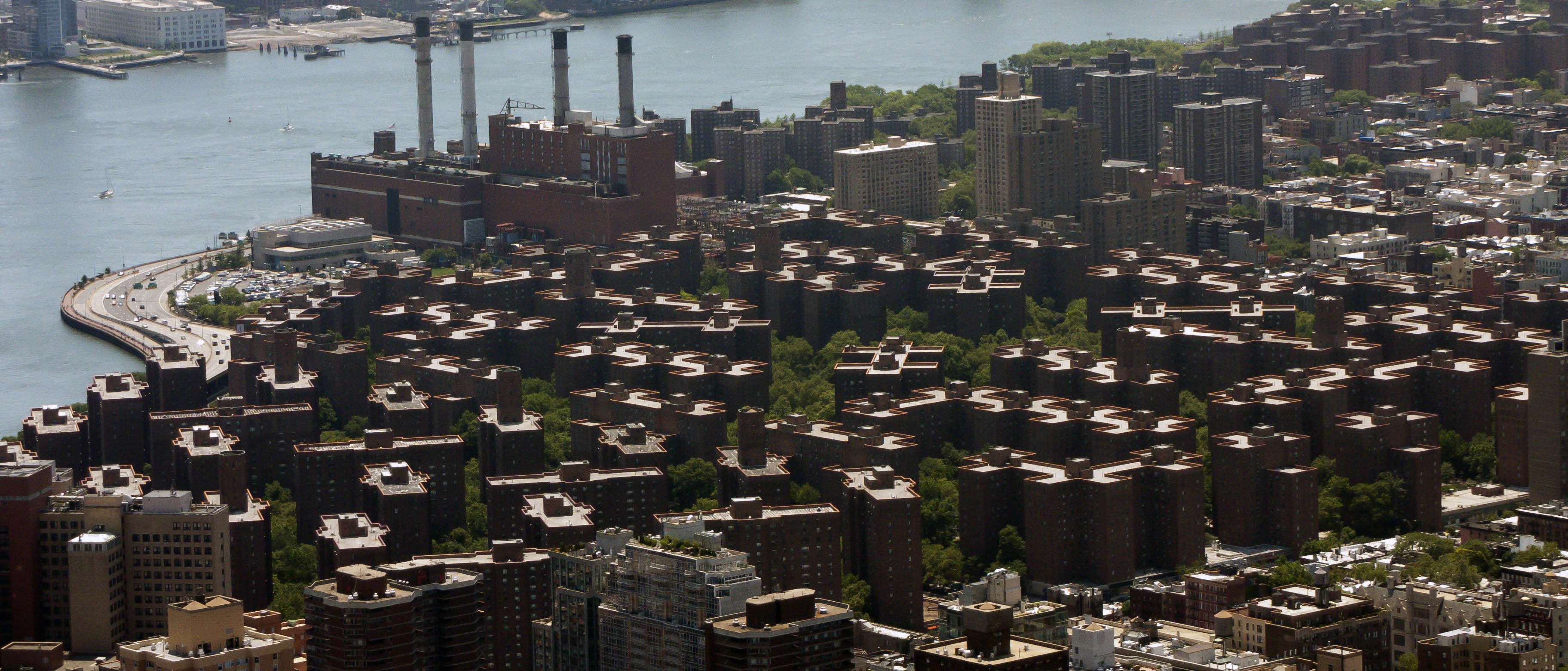
The land where Peter Cooper Village now stands was, for most of the 19th century and the first half of the 20th, one of the roughest industrial districts in Manhattan. The Gashouse District took its name from the massive cylindrical gas storage tanks that Consolidated Edison operated along the East River between roughly 14th and 23rd Streets. Some of those tanks were over 200 feet tall. They dominated the skyline, made the surrounding air smell of coal gas, and attracted the kind of neighborhood that forms around heavy industry: factories, stockyards, ironworks, and tenement buildings filled with working-class immigrants. The street gangs that operated here were notorious enough that a 1930s baseball team named itself after the district.
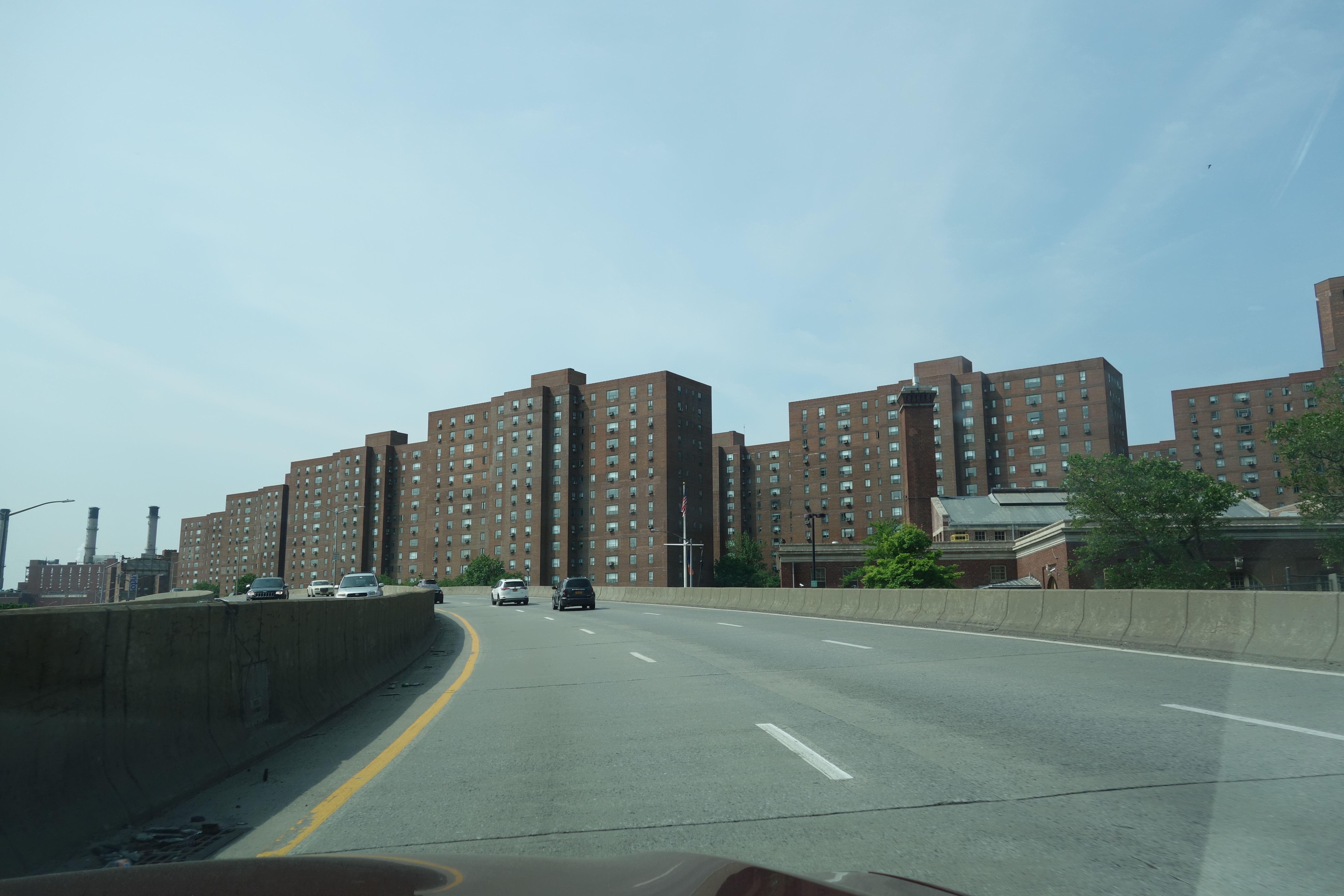
In 1943, the Metropolitan Life Insurance Company announced it would tear all of that down and build something that had almost never been attempted in Manhattan. With backing from Robert Moses and condemnation authority from the state government, MetLife cleared the entire site and constructed a planned residential community for returning World War II veterans and their families. The northern portion, between 20th and 23rd Streets, became Peter Cooper Village. Twenty-one red-brick towers, each 13 stories tall, arranged in a superblock pattern with no through-streets and roughly 80 percent of the land devoted to open green space. The southern portion became Stuyvesant Town. Together they formed the largest residential complex on the island of Manhattan, and they still are.
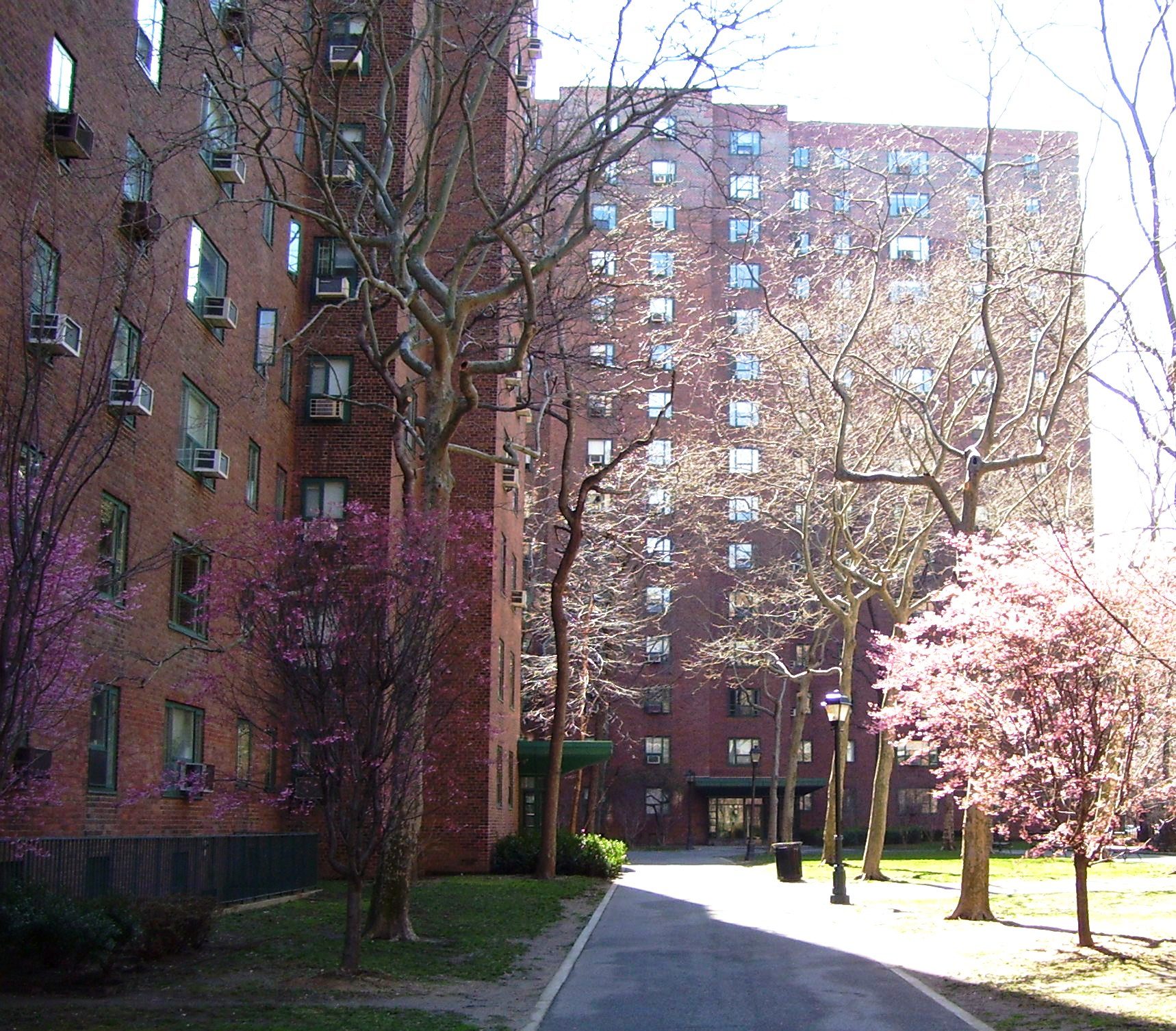
That 80 percent figure is the number that defines this place. In a borough where every square foot is contested and monetized, Peter Cooper Village devotes four-fifths of its land to lawns, gardens, playgrounds, and tree-lined pedestrian walkways. The design philosophy came from the garden city planning movement of the 1940s. Superblocks that eliminate car traffic. Pedestrian paths instead of streets. Abundant greenery surrounding residential towers. It was an experiment in humane urban design. Walk into the complex from First Avenue and you cross from Manhattan into something that feels, in the best moments, like a small campus town.
Peter Cooper Village is named for the man who built America’s first steam locomotive and founded a free college
Peter Cooper was born in lower Manhattan in 1791. He became wealthy as an inventor, manufacturer, and businessman. In 1830, he designed and built the Tom Thumb, the first American steam locomotive, a small machine that demonstrated the viability of steam-powered transportation in the United States. He founded the Canton Iron Works, helped lay the first transatlantic telegraph cable with Cyrus Field, and then used his fortune to do something that his peers in the Gilded Age considered radical. In 1859, he founded Cooper Union for the Advancement of Science and Art, a free college offering education to all citizens regardless of race, sex, or wealth. The “regardless” part was the radical part.
MetLife named the upscale portion of their development after Cooper in recognition of his legacy as a benefactor to working New Yorkers. The complex was originally designed for middle-class families, in keeping with Cooper’s belief that ordinary people deserved dignified lives. That ethos held for decades. From the 1950s through the early 2000s, Peter Cooper Village functioned as one of the most stable, affordable, and community-oriented residential enclaves in Manhattan. The residents were teachers, nurses, civil servants, firefighters, and white-collar workers who valued safe streets, large apartments, generous green space, and rents they could actually afford. The waitlist was years long.
The 1949 housing discrimination case that launched the national fair housing movement started here
When MetLife opened Stuyvesant Town and Peter Cooper Village in the late 1940s, the company enforced an explicit policy of racial segregation. They refused to rent to Black applicants. This was a private housing development built with government support on land acquired through public condemnation authority, and it openly discriminated based on race.
The response was one of the first major civil rights battles over housing in New York City’s history. The NAACP, the American Jewish Congress, the Citizens’ Housing Council, and other advocacy groups protested publicly. City Councilman Stanley Isaacs and State Assemblyman Charles Abrams introduced legislation to prohibit discrimination in publicly assisted housing. Black activists staged apartment sit-ins at the complex.
The watershed case was Dorsey v. Stuyvesant Town Corp. in 1949. The court upheld MetLife’s right to discriminate as a private company. The ruling is now regarded as a landmark in the history of housing discrimination law, not because it was just, but because it galvanized the advocacy that eventually produced the Fair Housing Act of 1968. The racial integration of Peter Cooper Village did not effectively occur until that federal law was passed and enforced. The neighborhood’s history includes the lawns and the bricks and the trees, but it also includes this fight. You cannot separate the two.
The $5.4 billion deal that failed and the tenant victory that followed
In 2006, the real estate firm Tishman Speyer, partnered with BlackRock, purchased the combined Stuyvesant Town and Peter Cooper Village complex from MetLife for $5.4 billion. At the time, it was the largest single real estate transaction in American history. Their business plan depended on converting thousands of rent-stabilized apartments to market-rate units by pushing out long-term tenants through aggressive enforcement of occupancy rules.
The tenants pushed back. The Stuyvesant Town-Peter Cooper Village Tenants Association became one of the most effective tenant organizations in New York City’s history. In 2009, the New York Court of Appeals ruled in Roberts v. Tishman Speyer that the owners had illegally deregulated apartments while receiving J-51 tax benefits, which required maintaining rent stabilization. Tishman Speyer defaulted on the mortgage in 2010 and walked away. The deal became a cautionary tale studied in real estate and business school courses. It was one of the most dramatic real estate collapses of the financial crisis era.
In 2015, the Blackstone Group purchased the complex for $5.3 billion. As a condition of the sale, Blackstone agreed to a landmark affordability deal. Five thousand apartments across the combined complex would remain at permanently affordable rents. Existing stabilized tenants would be protected. The agreement was the result of years of tenant organizing and was hailed as one of the most significant tenant victories in the city’s history.
That organizing spirit still runs through the community. Peter Cooper Village is not a neighborhood where residents are passive about the management of their home. They fought MetLife over discrimination, fought Tishman Speyer over deregulation, and negotiated affordability protections with Blackstone. The Tenants Association remains active. The community is engaged in a way that most Manhattan residential complexes are not.
The generational shift is slowly changing who lives here and what their apartments look like
The most significant change happening in Peter Cooper Village right now is gradual generational turnover. The original postwar residents and their children who occupied stabilized units for decades are aging. As these long-term tenants pass away or move, their apartments convert to market rate. The income profile of the complex is shifting. Long-term stabilized tenants often have lower fixed incomes. The newer market-rate residents tend to be upper-income professionals in their 20s through 40s who work in Midtown or the Financial District.
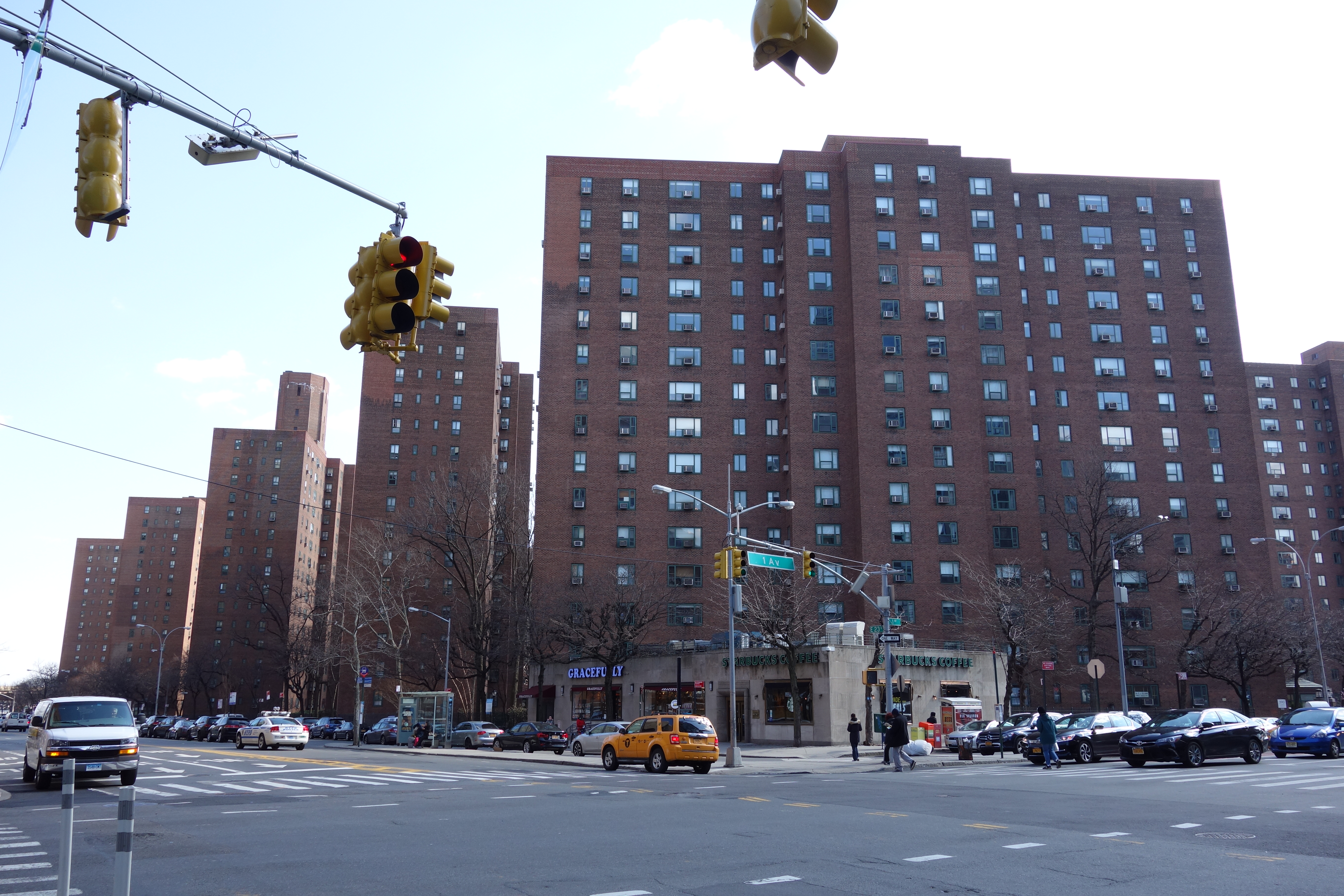
Under Blackstone’s ownership, amenity spaces have been added or upgraded. Fitness centers, a dog run, package rooms, outdoor event programming at the Oval, ground-floor retail along First Avenue, and renovated lobbies in several buildings. A retail strip on First Avenue now includes a Starbucks and several food vendors. These additions have improved quality of life but they have also repositioned the complex as a more explicit luxury product for the market-rate half of the population.
That split creates two very different cleaning jobs within the same complex. The stabilized apartments tend to have original finishes, decades of wear, and residents who have been there long enough that their home has absorbed a lifetime of use. The market-rate apartments tend to have updated kitchens and bathrooms, newer flooring, and residents who expect the kind of cleaning service that matches a freshly renovated space. We handle both. The approach just changes depending on the unit.
Postwar apartments in Peter Cooper Village are larger than almost anything built in Manhattan since the 1940s
The apartments in Peter Cooper Village were designed in 1947 to house veteran families. The space standards of that era were significantly more generous than what developers build today. A two-bedroom unit here can run 1,100 to 1,200 square feet. A three-bedroom goes up to 1,400. For comparison, a two-bedroom apartment in a building constructed in the 2000s or 2010s in Manhattan typically measures 750 to 900 square feet. The difference is not subtle. These are apartments where the living room actually fits a couch and a dining table and a bookcase and there is still floor space left.
That size matters for cleaning. A larger apartment means more surface area, more floor to mop, more countertops, more windows, more baseboards, more closet shelving to dust. Our teams allocate time based on the actual square footage of the unit, not just the bedroom count. When you book through our booking page, the flat-rate price reflects the real size of your Peter Cooper Village apartment.
The interior finishes vary depending on when the unit was last renovated. Some apartments, particularly long-tenancy rent-stabilized units, still have original hardwood floors, plaster walls, and the kind of casework that has not been manufactured since the 1950s. Others, especially the market-rate units that have turned over in the last decade, have been updated with new kitchens, bathrooms, and flooring. The cleaning approach adjusts to the surfaces. Original hardwood with a decades-old finish gets a pH-neutral solution and a flat microfiber mop. Newer engineered flooring and quartz countertops get a different product set. We ask about your unit’s finishes when you book and note them permanently on your account.
Rent-stabilized apartments with decades of tenure need a different kind of first cleaning
About half of Peter Cooper Village’s 2,495 apartments remain under rent stabilization. Some of these tenants have been in the same unit for 20, 30, or even 50 years. Under New York State succession rules, leases can pass to immediate family members, so there are apartments where the lease has been in the same family since the original 1947 opening.
That kind of tenure means the apartment has absorbed decades of living. Hardwood floors with layers of wax buildup that has not been stripped since the last refinish. Cast-iron radiator fins packed with dust that burns off every October when the steam heat kicks on, filling the apartment with that scorched-lint smell for a week. Kitchen cabinets with grease that surface wiping has never fully reached. Baseboards with years of accumulated grime. Closets that have not been emptied in a generation.
The first cleaning in an apartment like this is always a deep clean. Our team works room by room, top to bottom, and resets every surface. Ceiling fans, light fixtures, shelving, behind furniture, baseboards, and the door tops. If you want the cabinet interiors emptied and wiped, that is an extra line on the booking. After that initial visit, recurring apartment cleaning on a biweekly or monthly schedule keeps it maintained. The difference between the first visit and the second visit in a long-tenancy Peter Cooper Village apartment is dramatic. That is the point.
For tenants moving in or out, especially in the market-rate units where turnover is more frequent, our move-in and move-out cleaning handles the full reset. Inside cabinets, appliance interiors, baseboards, window tracks, bathroom tile grout, and every surface the next occupant will open or touch.
The Oval is one of the best outdoor gathering spaces on the east side of Manhattan
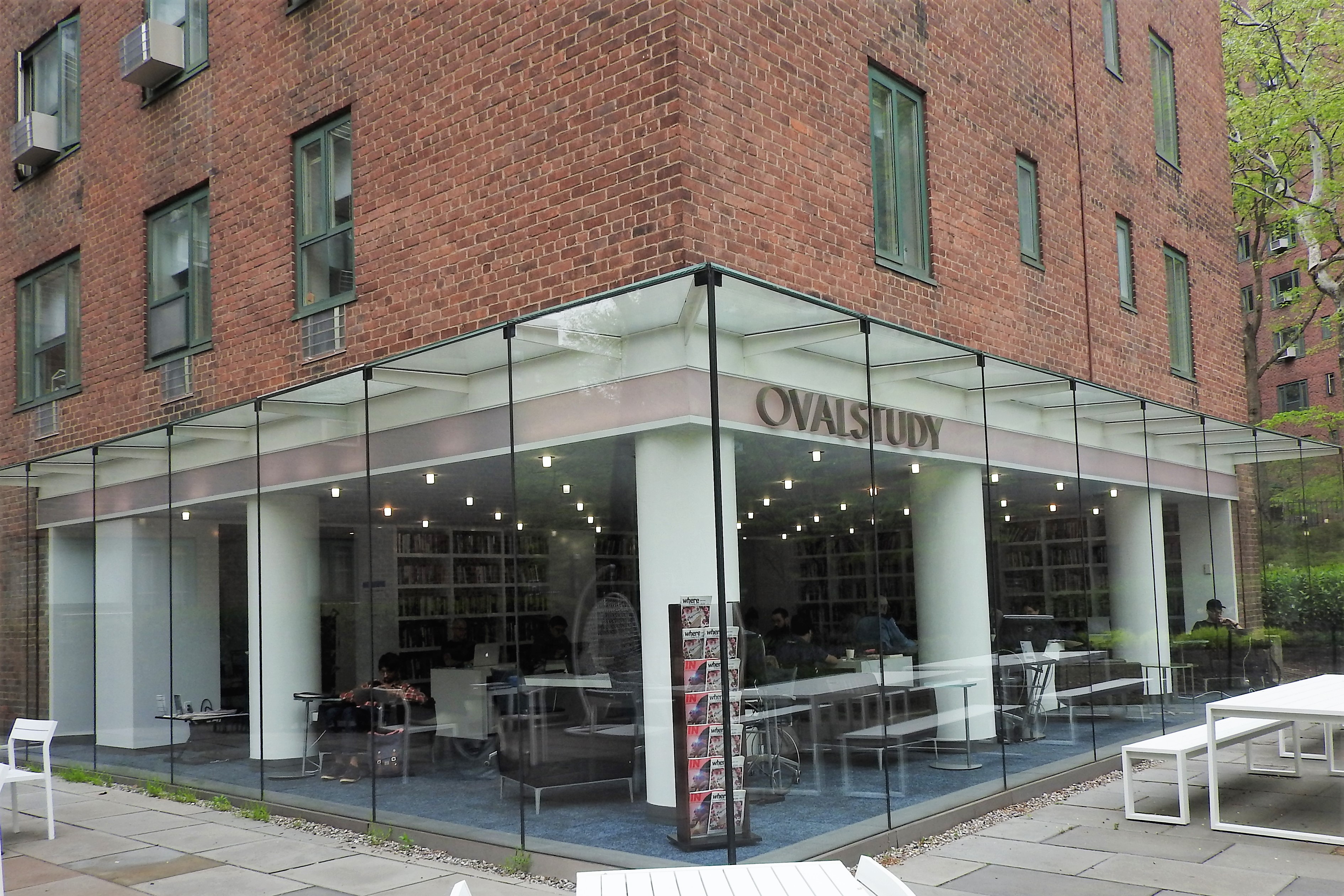
At the center of the combined Peter Cooper Village and Stuyvesant Town superblock sits the Oval, a large oval green with mature trees, benches, and seasonal plantings. It is the communal living room of the complex. Summer concerts, a seasonal farmers market, weekend gatherings, dog walks, and daily use by residents of all ages. Children play on the open grass. Elderly residents sit with newspapers on the benches. The design works as intended.
The farmers market on the Oval draws not just complex residents but shoppers from the surrounding neighborhood. It is a rare case of a private development’s open space functioning as a genuine community resource. The programming has expanded in recent years with outdoor events, holiday celebrations, and concerts through the summer months.
The internal walkways and pathways that connect the 21 buildings feel more like a college campus than a Manhattan apartment complex. Mature trees line the paths. Gardens and plantings border the lawns. There is almost no car traffic inside the superblock. On a weekday morning you might see a 35-year-old lawyer walking to the subway past a 75-year-old retired teacher who has lived in the same apartment for forty years. That mix of generations and the quiet that the superblock design preserves from the noise of First Avenue and the FDR Drive are what residents most frequently describe when they explain why they stay.
Transit from Peter Cooper Village connects you to most of Manhattan in twenty minutes
The L train at 14th Street and First Avenue is the most important connection for residents on the southern end of the complex. It gets you to Union Square in one stop, then to the west side or Brooklyn. The Union Square station at 14th Street is one of the most connected transit hubs in the city, with the 4, 5, 6, L, N, Q, R, and W trains all accessible within a ten-minute walk of the complex.
On the northern edge, the 6 train at 23rd Street on Lexington Avenue runs direct to Midtown and uptown. The M15 and M15 SBS buses run along First Avenue at the complex’s western boundary, connecting south to the Financial District and north to the Upper East Side. The M23 crosstown bus on 23rd Street runs to Penn Station, Chelsea, and the west side.
Our cleaning teams typically use the L or 6 train to reach Peter Cooper Village. The First Avenue bus is a backup. The complex’s position between two major subway stations means scheduling is straightforward and we arrive on time.
What booking looks like for Peter Cooper Village residents
You pick your date and time on our booking page. You see your flat-rate price before you commit. If your apartment has original hardwood or plaster that needs careful products, note it once and we adjust our approach permanently. If your building has a specific front desk procedure or vendor check-in process, tell us when you book and we store it on your account.
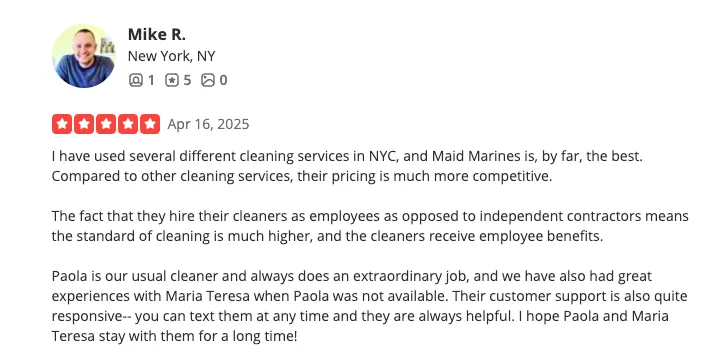
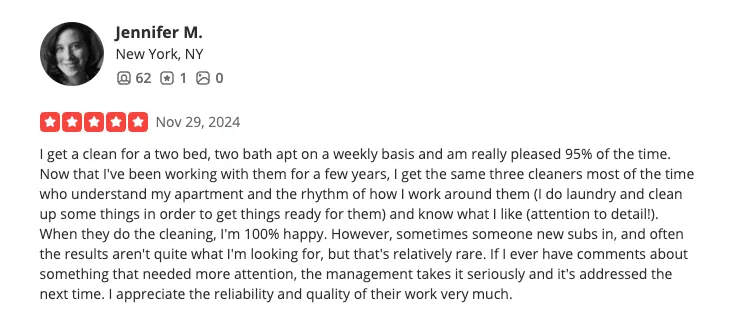
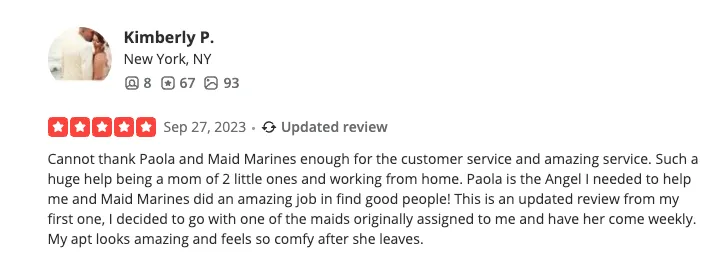
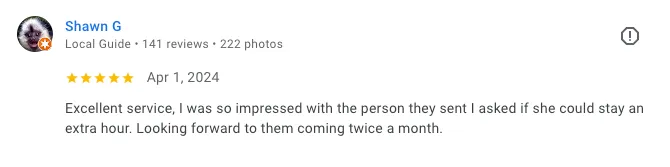
Our cleaners are W-2 employees, not gig workers. They are vetted, insured, and they show up with the right products for your specific apartment. The same team comes back each visit because these units have details worth learning once and remembering.
We serve Peter Cooper Village and the surrounding neighborhoods, including Gramercy Park and Kips Bay. Residents also book us for deep cleaning before the holidays or after renovation work, recurring apartment cleaning on a schedule that works around your commute, and house cleaning for the larger three-bedroom units that need a full-home approach.