
Rose Hill sits in a part of Manhattan where three different neighborhoods are quietly arguing over where one ends and another begins. The blocks between 23rd and 32nd Streets, from Madison Avenue to Third Avenue, are claimed by Gramercy Park to the south, Murray Hill to the north, Kips Bay to the east, and the NoMad luxury corridor to the west. Rose Hill is the name that belongs to the land itself, dating back to 1747, and it describes a neighborhood that has been absorbing layers of history, culture, and architectural change for nearly three centuries without ever quite becoming famous for any single one of them.
The cleaning job here changes depending on which block you are on. A prewar co-op on Lexington Avenue with original plaster walls and steam radiators needs a fundamentally different approach than a luxury condo tower on East 29th Street with engineered hardwood and floor-to-ceiling glass. A brownstone walk-up on East 30th Street with 170 years of settlement in the walls is not the same job as a modern rental above a Curry Hill restaurant. Rose Hill is compact, maybe 30 square blocks, but the range of surfaces and building types within those blocks is wider than neighborhoods twice its size.
A Loyalist farmer named his Manhattan estate after a property in Scotland and lost it to a revolution
The name Rose Hill comes from John Watts, a British merchant who purchased roughly 131 acres of Manhattan land in 1747, stretching from what is now 21st Street to 30th Street, from Broadway to the East River. Watts named the property Rose Hill Farm after an estate his family owned in Scotland. The hilly terrain of this part of Manhattan, quite different from the flatter land to the south, made the name appropriate. The small hills that gave the neighborhood its character have long since been leveled by two centuries of grading and construction, but in the 1740s this was elevated, well-drained land that the Lenape people had used for agriculture long before any European arrived.
Watts was a powerful man in colonial New York. He served as a justice of the Supreme Court of New York and sat on the Governor’s Council. When the Revolution came, he chose the Crown. He and his family remained in New York during the British occupation, and when the war ended in 1783, the Confiscation Act stripped Loyalists of their property. Watts lost the 131 acres of Rose Hill. He fled to England and never returned. The farm was subdivided and sold. The Commissioners’ Plan of 1811, which imposed the rectangular street grid on Manhattan from Houston Street northward, laid its numbered streets and avenues directly over the old estate. The farm dissolved into urban lots, and the city grew over it.
By the 1840s and 1850s, brownstone rowhouses were filling the side streets. Four- and five-story brick and brownstone buildings housed the middle class of mid-19th-century Manhattan. Lawyers, merchants, tradespeople. The avenues attracted hotels and commercial buildings. Rose Hill was a settled, moderately prosperous residential district, and some of those rowhouses survive today on East 28th, 29th, 30th, and 31st Streets. They are not as celebrated as the landmark rowhouses of Gramercy Park a few blocks south, but they provide the street-level scale and architectural continuity that keeps the neighborhood from feeling like it was built all at once.
The 1913 Armory Show changed American art forever and it happened in a National Guard drill hall on Lexington Avenue
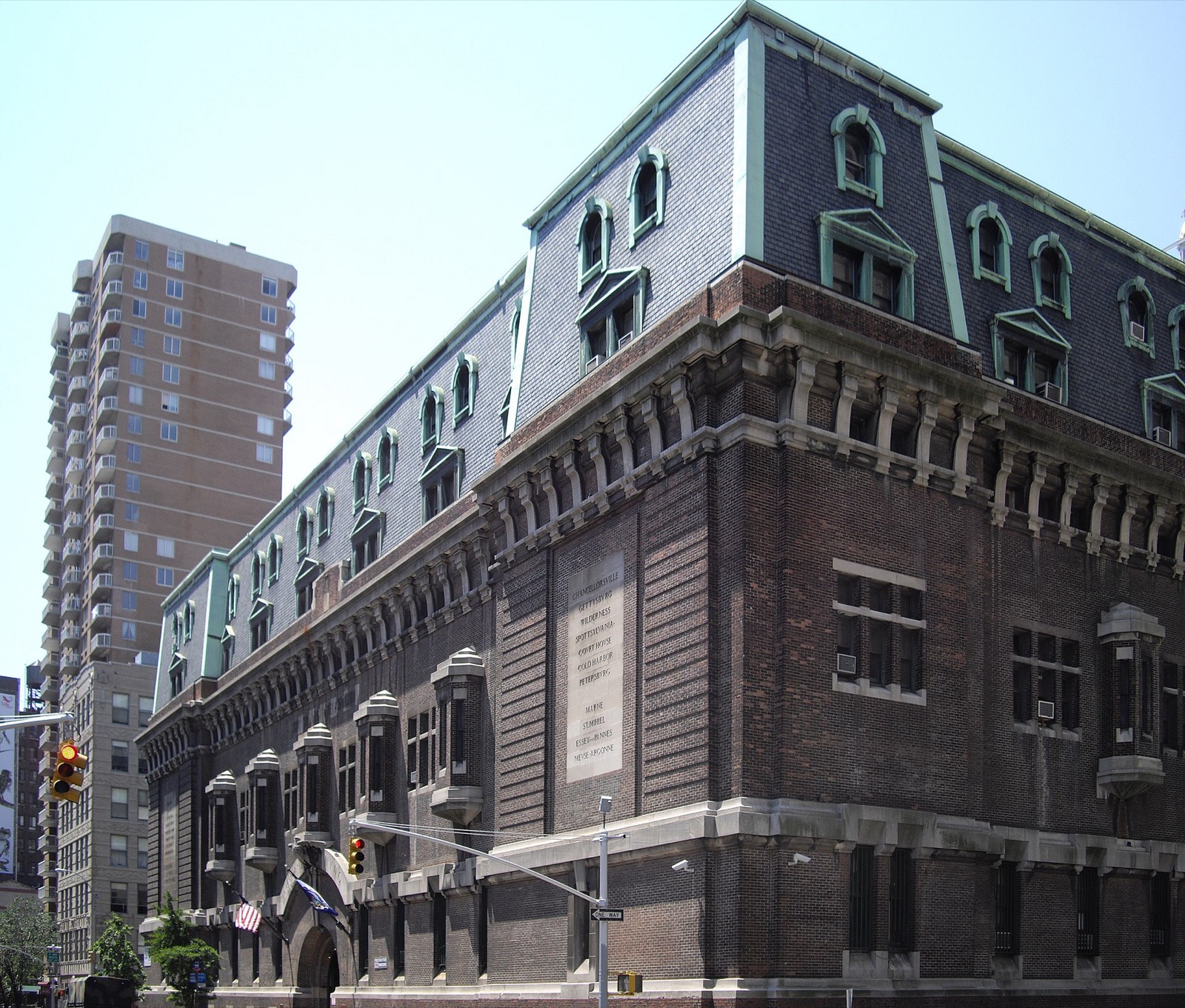
The 69th Regiment Armory was completed in 1906 at Lexington Avenue and 26th Street. Designed by Richard Howland Hunt and Joseph Howland Hunt, sons of Richard Morris Hunt, it is a Beaux-Arts fortress with a barrel-vaulted drill shed of 200 by 300 feet inside. The regiment that called it home, the Fighting 69th, was an Irish-American unit of the New York Army National Guard that would fight with distinction in every major American conflict from the Civil War through Iraq. Their chaplain in World War I, Father Francis Duffy, became the most decorated clergyman in American military history. His statue stands in Duffy Square in Times Square today.
But the building’s most consequential moment had nothing to do with the military. In February 1913, the armory hosted the International Exhibition of Modern Art, organized by American artists Arthur B. Davies, Walt Kuhn, and Walter Pach. The show filled the vast drill floor with over 1,300 works of art. For the first time, American audiences saw Cubism, Futurism, Fauvism, and the European avant-garde at scale. Over 300,000 people walked through the exhibition in a single month.
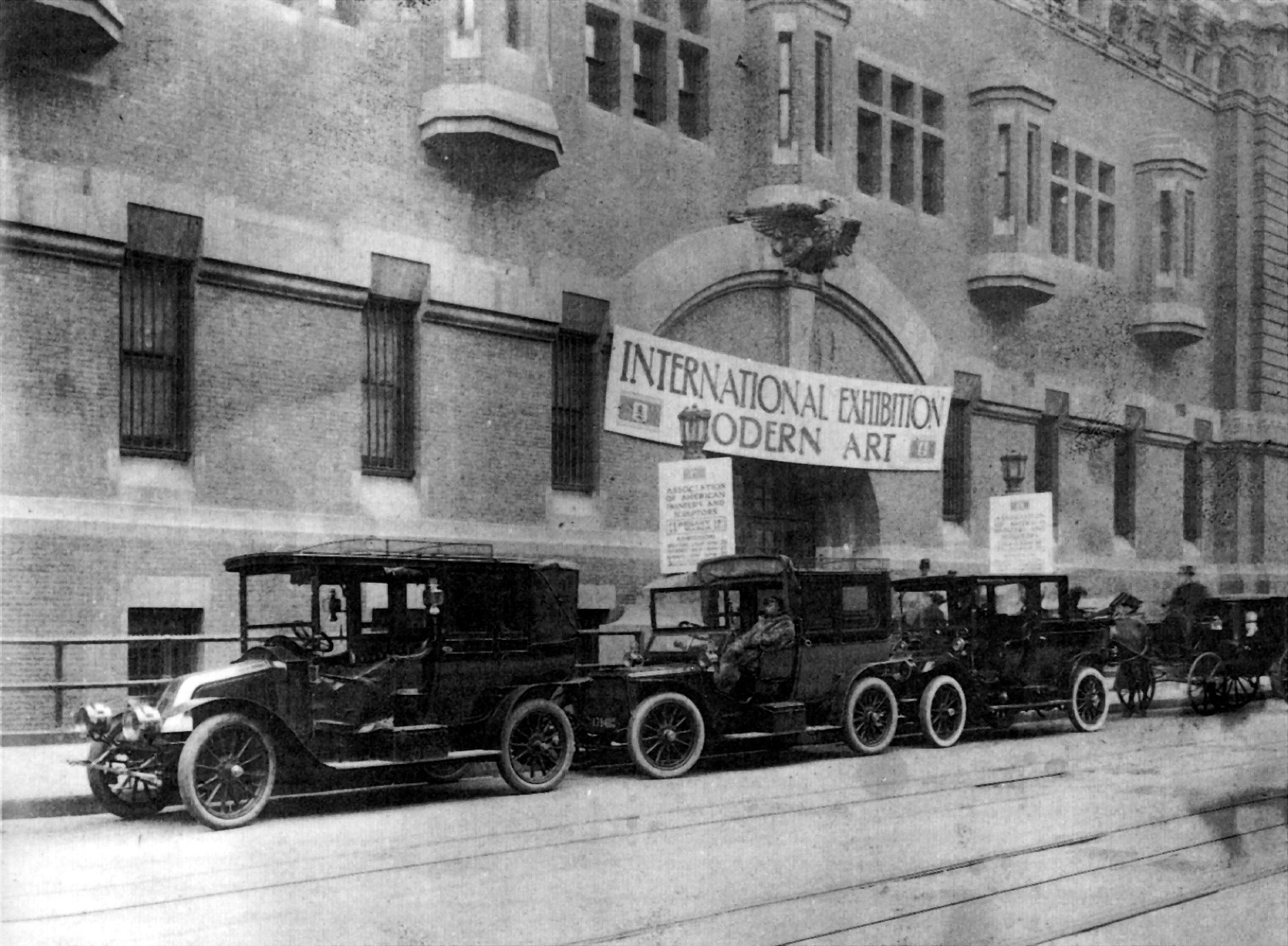
Marcel Duchamp’s Nude Descending a Staircase, No. 2 was the exhibition’s flashpoint. Newspaper critics mocked it as an “explosion in a shingle factory.” Theodore Roosevelt attended and declared he could not make heads or tails of it. The Art Students League of New York burned a canvas in protest. The public stood in line to see it. The painting sold on the first day. The Armory Show permanently altered the course of American art and cultural history. It happened in this building, on this block, in a neighborhood that most New Yorkers today could not locate on a map.
The armory is still there. It is still used for National Guard training. Sometimes military vehicles are parked on the sidewalk outside. The drill floor where 300,000 Americans first encountered a Cubist painting is on the other side of the wall. It is one of the strangest juxtapositions in the city.
Baruch College built one of the most inventive university campuses in New York on a single Manhattan block
The southern and central portion of Rose Hill is defined by Baruch College, a school that began as the City College School of Business and Civic Administration in 1919 and was eventually named for Bernard M. Baruch, the financier and presidential advisor who believed in the economic mobility that public education provides. Baruch is one of the most selective public universities in the country. Its Zicklin School of Business regularly appears in top national rankings. Tuition is under $10,000 a year.
The student body is approximately 37 percent Asian, 28 percent Hispanic, 18 percent White, and 13 percent Black. It is one of the most ethnically and economically diverse student populations at any selective university in the United States, and its graduates consistently rank among the highest in the country for economic mobility and return on investment. The school brings roughly 15,000 students into the neighborhood daily, filling its subway stations, cafes, and sidewalks with an energy that is distinctive to this part of Manhattan.
In 2001, the college opened the Newman Vertical Campus at 55 Lexington Avenue, designed by Kohn Pedersen Fox. Rather than spreading outward across blocks it could not afford to acquire, Baruch stacked its campus vertically. A 17-story building containing a 740-seat theater, gymnasium, basketball courts, swimming pool, tennis courts, classrooms, research labs, and administrative offices on a single footprint. It is one of the most inventive solutions to urban campus architecture in the city, and its glass-and-steel facade is a visual landmark on Lexington Avenue.
Milton Glaser designed the most recognized logo in the world from a studio in Rose Hill
Graphic designer Milton Glaser established his studio in a Beaux-Arts building on the eastern edge of the neighborhood, a structure originally built as the headquarters of the Tammany Central Association. From this building, Glaser created the “I Love NY” logo in 1977. He sketched it on the back of an envelope during a taxi ride, donated it to the state with no fee, and retained no intellectual property rights. It became the most widely copied tourism logo in history. Millions of T-shirts, mugs, bumper stickers, and souvenirs followed. He received no royalties from any of them.
Glaser also co-founded New York Magazine and produced some of the most influential graphic design of the 20th century. His studio remained in Rose Hill until his death in 2020 at the age of 91. The building where he worked for decades is an example of the institutional repurposing that characterizes much of the neighborhood. A political clubhouse became an artist’s studio. The architecture stayed the same. The use changed completely.
Curry Hill is the South Asian food corridor that anchors Lexington Avenue
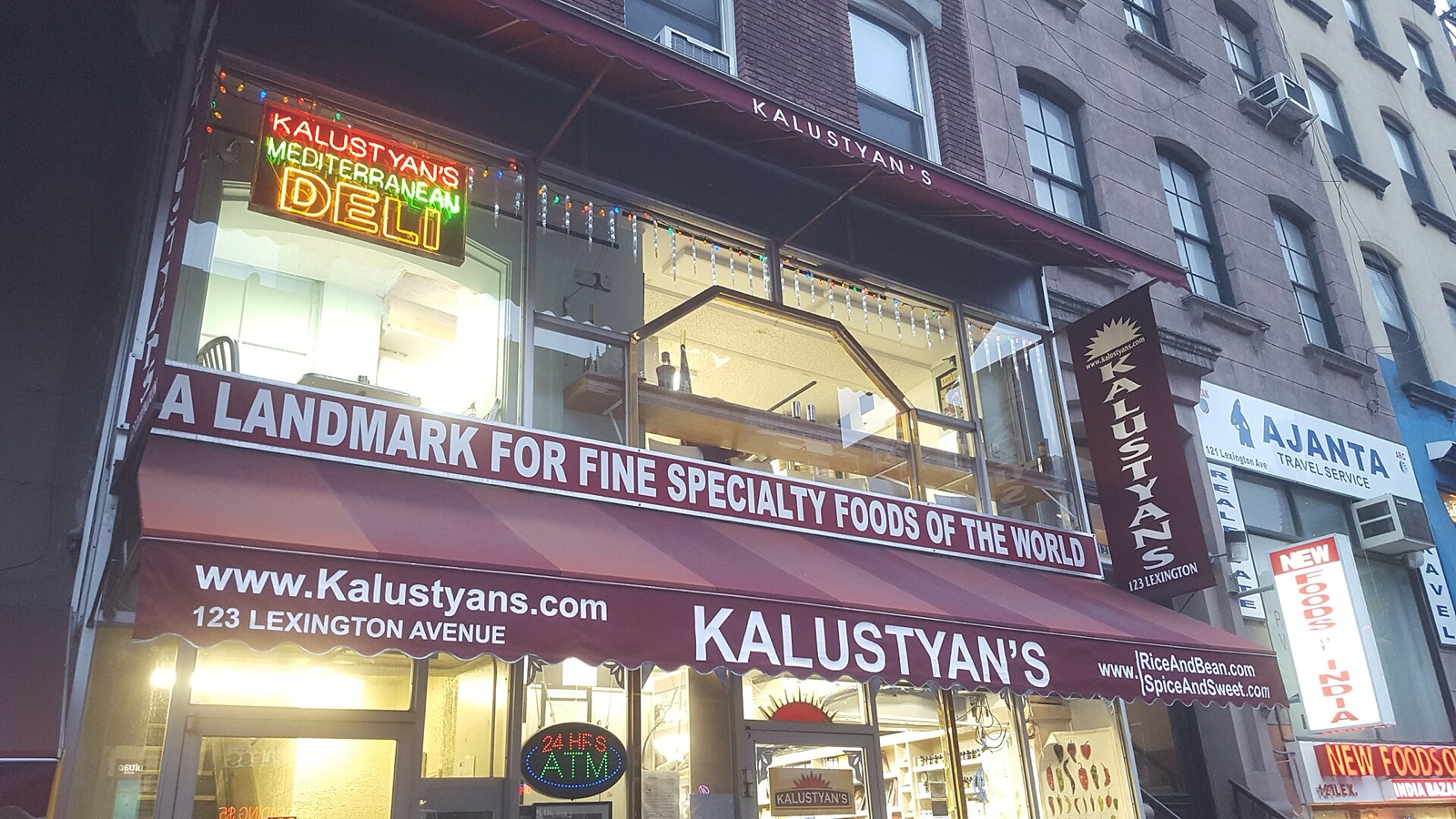
The stretch of Lexington Avenue from roughly 25th to 30th Street is called Curry Hill, and it is one of the most concentrated restaurant and food corridors in Manhattan. The anchor is Kalustyan’s at 123 Lexington Avenue, a specialty food store of extraordinary depth that has supplied New York’s South Asian community and professional chefs since 1944. The bins of ajwain, sumac, dried chiles, fenugreek, and preserved lemons occupy a space that feels like it contains the entire spice trade in one storefront. The hot bar upstairs serves prepared food. It is, by wide consensus, the greatest specialty food store in New York City.
Saravanaa Bhavan on Lexington serves South Indian vegetarian food from the Chennai chain’s New York flagship. Tamil families fill the restaurant on weekend mornings for dosa and filter coffee. Chote Nawab serves Mughlai biryani that is the corridor’s standard-bearer. HanGawi on East 32nd Street, a Michelin-starred Korean vegetarian restaurant where you remove your shoes and sit on floor cushions, is one of the most distinctive dining experiences in the city. Franchia, its sister restaurant, is a Korean vegan teahouse a few blocks away.
The cooking culture on this corridor is serious, and it leaves a mark on the kitchens of residents who cook in the same tradition at home. Turmeric stains countertops, cumin and frying oil leave films on range hoods and cabinet faces, and grease builds up on backsplash tile and the ceiling above the stove in ways that a standard wipe-down will never touch. This is one of those neighborhoods where the kitchen cleaning is genuinely different from what you encounter elsewhere in Manhattan.
Prewar co-ops in Rose Hill carry cleaning challenges that newer buildings do not have
The dominant housing type in Rose Hill is the prewar mid-rise apartment building. These are typically 8- to 12-story brick elevator buildings from the 1920s through the 1940s, with terrazzo lobbies, thick plaster walls, generous floor plans, and the characteristic dense silence of interwar construction. Many have been converted to co-operatives. Others remain rentals. They represent roughly half the housing stock in the neighborhood.
The cleaning challenges in these buildings are specific. The plaster walls and decorative molding that give prewar apartments their character are also fragile. Water on unsealed plaster leaves marks that do not come out. Abrasive cleaning on decorative molding chips the surface. The cast-iron steam radiators that heat these buildings trap dust in their fins all summer and burn it off when the heat kicks on in October, producing the scorched-lint smell that every prewar apartment dweller in New York knows. A cleaning crew can take the dust off the covers, the grilles and the floor around the unit; what is sealed inside the cast iron is a heating contractor’s job, and knowing which is which saves you paying twice.
The hardwood floors in prewar co-ops have usually been refinished multiple times over the decades. The finish may be polyurethane, it may be original shellac, or it may be wax that has been built up in layers for 30 years. Each one needs a different product. We use pH-neutral cleaners as a default and adjust based on what we find on the first visit. We note the floor type, the wall condition, and every surface detail on your account so the team gets it right every time.
The side streets of Rose Hill also retain stretches of older brownstone and brick rowhouses from the mid-19th century. These 4- to 5-story walk-ups are the neighborhood’s most affordable housing and its most human-scale architecture. There is also a remarkable anomaly on East 29th Street near Second Avenue. A wooden clapboard house, one of the only surviving wood-frame residential structures in Manhattan south of Harlem. Wood-frame construction was banned in most of Manhattan after a series of catastrophic fires in the 1800s. This one survived everything.
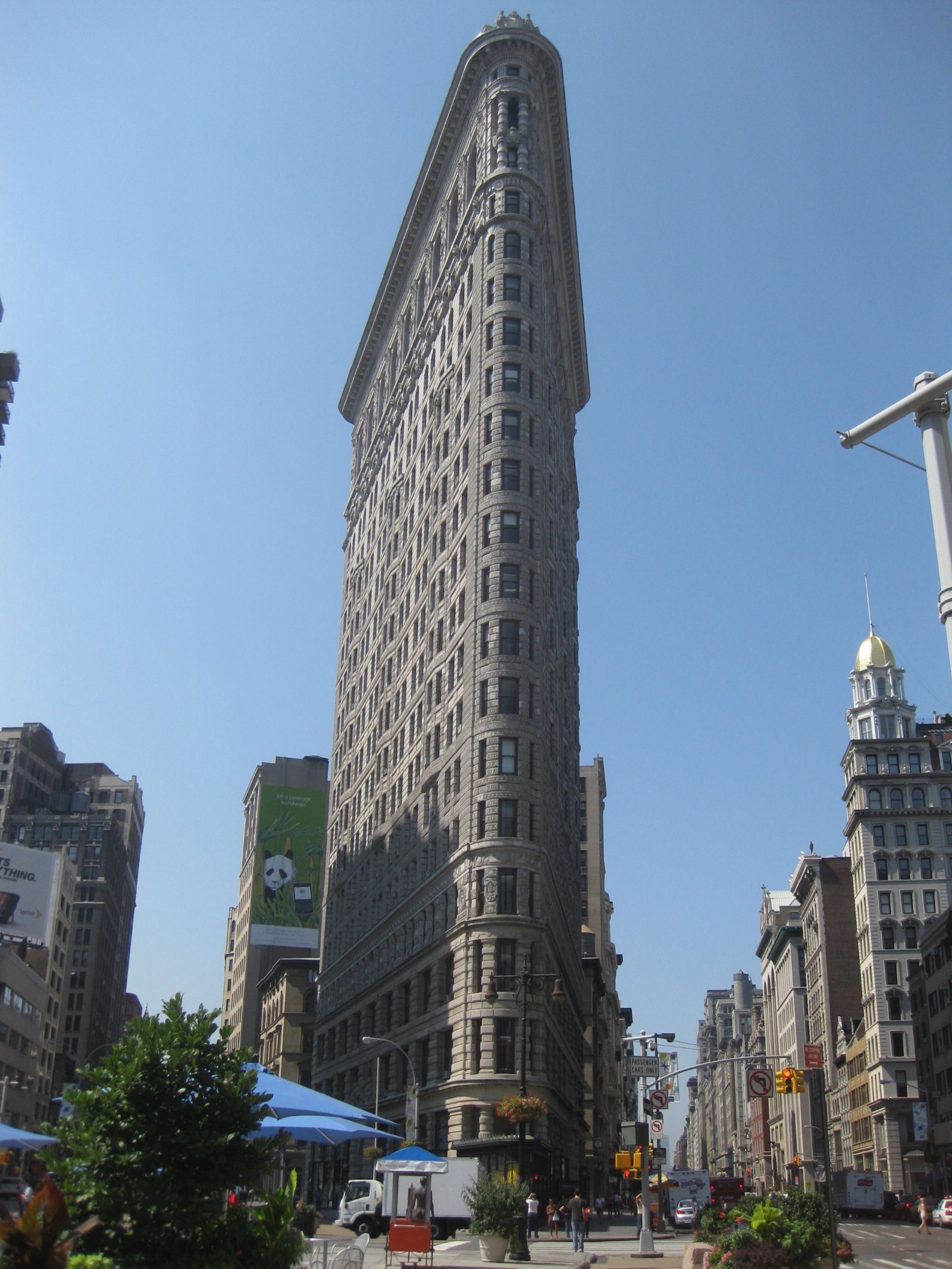
The luxury towers along Park Avenue South need a different cleaning approach entirely
The western edge of Rose Hill, along Park Avenue South, has been reshaped by the NoMad luxury boom. The name NoMad, short for North of Madison Square Park, began as a real estate marketing term and became a neighborhood identity. As boutique hotels, high-end restaurants, and luxury residential towers filled the Park Avenue South corridor between 25th and 30th Streets, the development pressure spilled east into Rose Hill.
The most visible result is the luxury condominium tower at 30 East 29th Street, deliberately named “Rose Hill” by its developers. It features a rooftop pool, fitness center, private lounge, and the full amenity package that defines new Manhattan luxury construction. The finishes inside these units are different from everything else in the neighborhood. Engineered hardwood rather than century-old refinished oak. Quartz countertops rather than original tile. Floor-to-ceiling glass rather than double-hung windows with plaster casings. Stainless steel appliances that show every fingerprint.
We use microfiber on the engineered floors and non-abrasive products on the quartz. The floor-to-ceiling glass is an add-on you pick at booking rather than part of the visit, and when it is on the order we bring a streak-free solution for it. The apartment cleaning approach in a building like this is calibrated to surfaces that are new and uniform rather than old and varied. Both approaches are about understanding what you are working with, but the specifics are different in nearly every detail.
If you are moving into one of these towers, or out of a prewar co-op and into new construction, our move-in and move-out cleaning handles the full reset in both types of building. Inside cabinets, appliance interiors, baseboards, window tracks, and every surface the next occupant will open or touch.
Rose Hill is one of the best-connected neighborhoods in Manhattan for transit
The 6 train at 28th Street and Lexington Avenue is the primary subway stop. It runs directly to Grand Central in three stops and to the Financial District via lower Manhattan. The N, Q, R, and W trains stop at 28th Street and Broadway, one stop from Union Square to the south and Herald Square to the north. The F and M trains are at 23rd Street and Sixth Avenue on the southwestern edge. Madison Square Park, Union Square, and Midtown are all within a 10- to 15-minute walk.
That connectivity means most Rose Hill residents are commuters who leave in the morning and return in the evening. Their apartments are empty during the day. We coordinate with doormen, supers, and building management, or use a lockbox code, and the cleaning happens while you are at work. When you walk in at the end of the day, the apartment is done.
Our teams serving Rose Hill use the 6 and N/Q/R lines. The neighborhood’s central position means we can schedule efficiently and arrive on time regardless of which direction we are coming from. We serve Rose Hill and the surrounding neighborhoods, including Gramercy Park, Kips Bay, Midtown, and Chelsea.
What booking looks like for Rose Hill residents
You pick your date and time on our booking page. You see your flat-rate price before you commit. If your prewar co-op has surfaces that need specific handling, you tell us once and we note it permanently on your account. If your building requires a COI or advance vendor notice, we handle the paperwork before your first appointment. Our cleaners are W-2 employees, not gig workers. They are vetted, insured, and they show up with the right products for your specific building.
Rose Hill is a neighborhood where the cleaning approach changes block by block. The prewar co-op on Lexington with plaster walls and steam radiators is not the same job as the luxury tower on East 29th with quartz counters and floor-to-ceiling glass. The brownstone walk-up on East 30th is not the same as the modern rental above a restaurant on Park Avenue South. We know the difference, and we adjust. That is the entire point of sending the same team to the same building every time. They learn the home once and get it right from then on.
Browse our full list of cleaning services or check availability for house cleaning and deep cleaning in Rose Hill.