
Howard Beach is one of the most geographically peculiar neighborhoods in New York City. It is hemmed by the Belt Parkway to the north, Jamaica Bay on the south and west, and the grounds of Aqueduct Racetrack to the east. The result is a neighborhood that has no casual through traffic, no accidental visitors, and no particular reason for anyone to end up there unless they live there or are going to visit someone who does. That insularity has shaped everything about Howard Beach: its housing stock, its culture, and the specific cleaning challenges that come from living at the edge of a salt bay on filled marshland in a tight grid of attached brick homes.
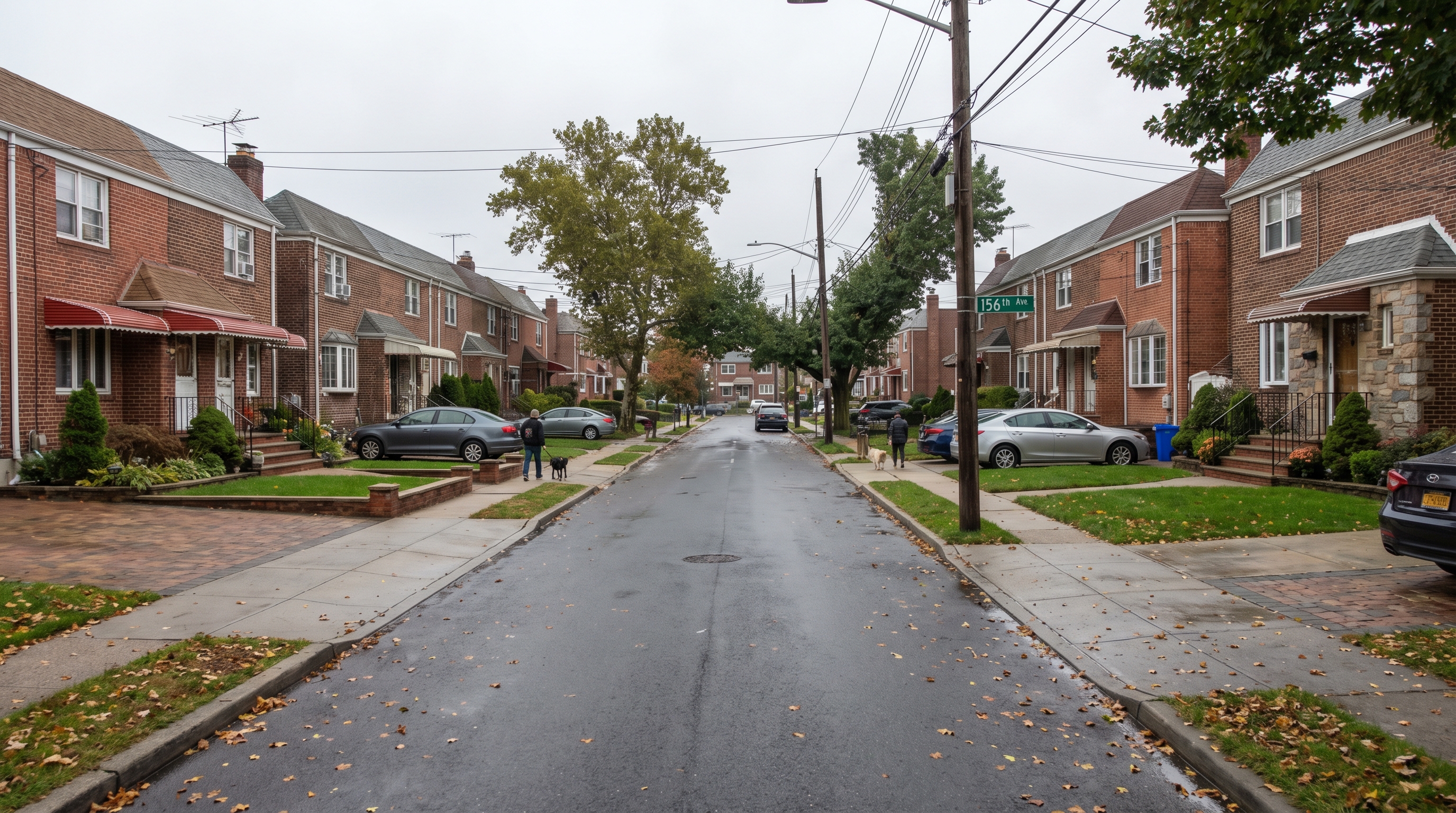
The homes here are overwhelmingly owner-occupied, built primarily in the 1950s and 1960s to house Italian-American families moving out of Brooklyn. Two-story attached and semi-detached brick construction on 20-to-25-foot lots, private driveways, modest front yards, rear yards that in some cases back up to tidal water. These are not large homes. They are meticulously maintained homes, passed down within families or sold to neighbors, kept up by owners who have every financial and personal reason to take care of the investment. A cleaning service that does not understand the specific character of these houses will clean them wrong.
The brick row houses of New Howard Beach have particular cleaning demands that rental apartments do not
The defining housing type in Howard Beach is the attached brick row house, and it presents a specific set of cleaning concerns that you do not encounter in Manhattan high-rises or Brooklyn brownstones. Most of these homes have ceramic tile through the kitchen and bathrooms, hardwood or parquet in the living areas, and finished basements that function as family rooms or additional bedrooms. The basements are below grade in a neighborhood that sits at or near sea level, which means moisture is a recurring issue. The kitchens on the main floor are typically the most intensively used rooms in the house.
Our house cleaning teams work top-down through two-story homes, starting with the bedrooms and bathrooms upstairs before moving to the main living floor and then the basement if it is included. Kitchen cleaning in these homes requires attention to the range hood, which in homes with heavy Italian-American cooking collects a grease film faster than any other surface in the house. Tile grout on countertops and backsplashes in homes within a few blocks of Jamaica Bay also accumulates a salt-mineral film from the air that standard cleaning products do not lift effectively. We use a pH-neutral grout cleaner that addresses the mineral buildup without etching the surface.
The finished basements common in Howard Beach are often the lowest-maintenance rooms in the house, but they are also the most vulnerable to moisture accumulation and the odors that follow. A thorough basement cleaning every few months, combined with attention to the utility spaces and laundry area, keeps the lower level from developing the musty character that salt-air neighborhoods tend toward.
Homes rebuilt after Hurricane Sandy have concrete base levels that need a different approach
A significant portion of Howard Beach homes were damaged or destroyed by the 2012 storm surge from Jamaica Bay, which pushed four to six feet of water through residential streets. Hundreds of homes were rebuilt elevated on concrete piers, with the original living levels raised several feet above grade. The new construction often features poured concrete or durable tile at the ground level, serving as garage or utility space, with the kitchen, living areas, and bedrooms on the raised second and third floors.
These post-Sandy elevated homes present some considerations worth noting. The ground-level utility space, often left unfinished, collects a specific kind of grime from the combination of vehicle exhaust, salt air intrusion, and water that pools in the base area after storms. If you want that level cleaned, we treat it as a utility-grade space with appropriate products. The living floors above are cleaned to residential standard. The transition between the two levels, particularly the stairwell connecting them, tends to accumulate tracked debris and benefits from focused attention on each visit.
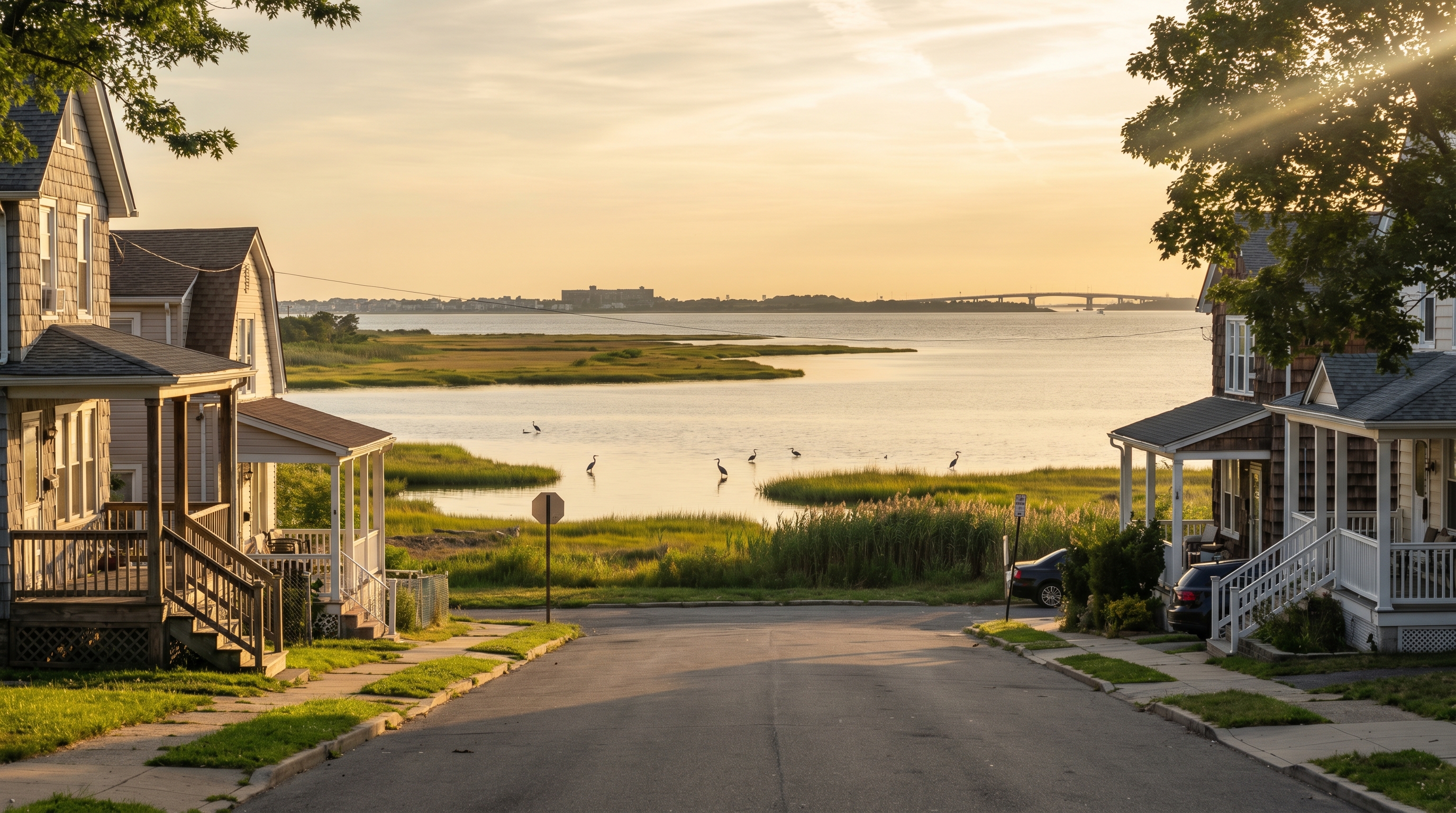
For homes with dock access along Hawtree Creek or the bay, the entry points from the water to the house, specifically the rear door, mudroom, or dock-level entrance, are the highest-traffic dirt zones. Bringing in salt, sand, and the occasional fish odor from a day on the water is part of life here. We focus cleaning effort on those transition zones on every visit.
Deep cleaning for a housing stock where homes stay in families for decades
Howard Beach has one of the higher homeownership rates in Queens. Homes that have been in the same family for two or three generations often carry a level of settled grime in fixed-position furniture spaces, behind large appliances, along baseboards, and inside cabinets that a standard recurring cleaning visit does not reach. A proper deep cleaning in an older Howard Beach row house means getting under the stove and fridge as far as we can reach, addressing the grout in bathrooms that has darkened over years, and reaching crown molding and window wells that regular cleaning cycles skip. The inside of the kitchen cabinets is a separate add-on, priced on the quote before you confirm.
We have cleaned homes in south Queens that had never had a professional deep clean, where the interior surfaces were in excellent condition but had accumulated years of kitchen grease, dust, and mineral film that concealed the quality underneath. The Italian-American homeownership culture in Howard Beach typically means the visible surfaces are kept up. The less-visible surfaces, behind the refrigerator, under the stove, inside the range hood, are where the deferred maintenance lives.
Move-in and move-out cleaning is a recurring request in Howard Beach as homes change hands through estate sales and family transfers. These are typically full-house cleanings that need to return the home to a condition that reflects the care it received over decades. We handle the full scope including appliances and basements, and the windows are an add-on you can put on the same booking.
Your cleaning takes about three hours, which is long enough to walk the West Pond Trail and come back
The Jamaica Bay Wildlife Refuge is accessible from Howard Beach without a car. The West Pond Trail is a 1.6-mile loop through tidal marsh, upland shrub, and open water that takes an easy hour at a walking pace. In spring and fall the shorebird concentrations are remarkable. In summer the marsh vegetation closes in and the trail becomes quieter and more enclosed. In winter you have it largely to yourself with clear sight lines across the bay.
The trail is the best use of a cleaning appointment window if you are interested in the outdoors. It puts you back at your door within two to three hours with no crowds and no commute. The wildlife refuge is one of the more underused amenities in New York City, largely because Howard Beach is not the kind of neighborhood that draws day-trippers, and the refuge benefits from that privacy.
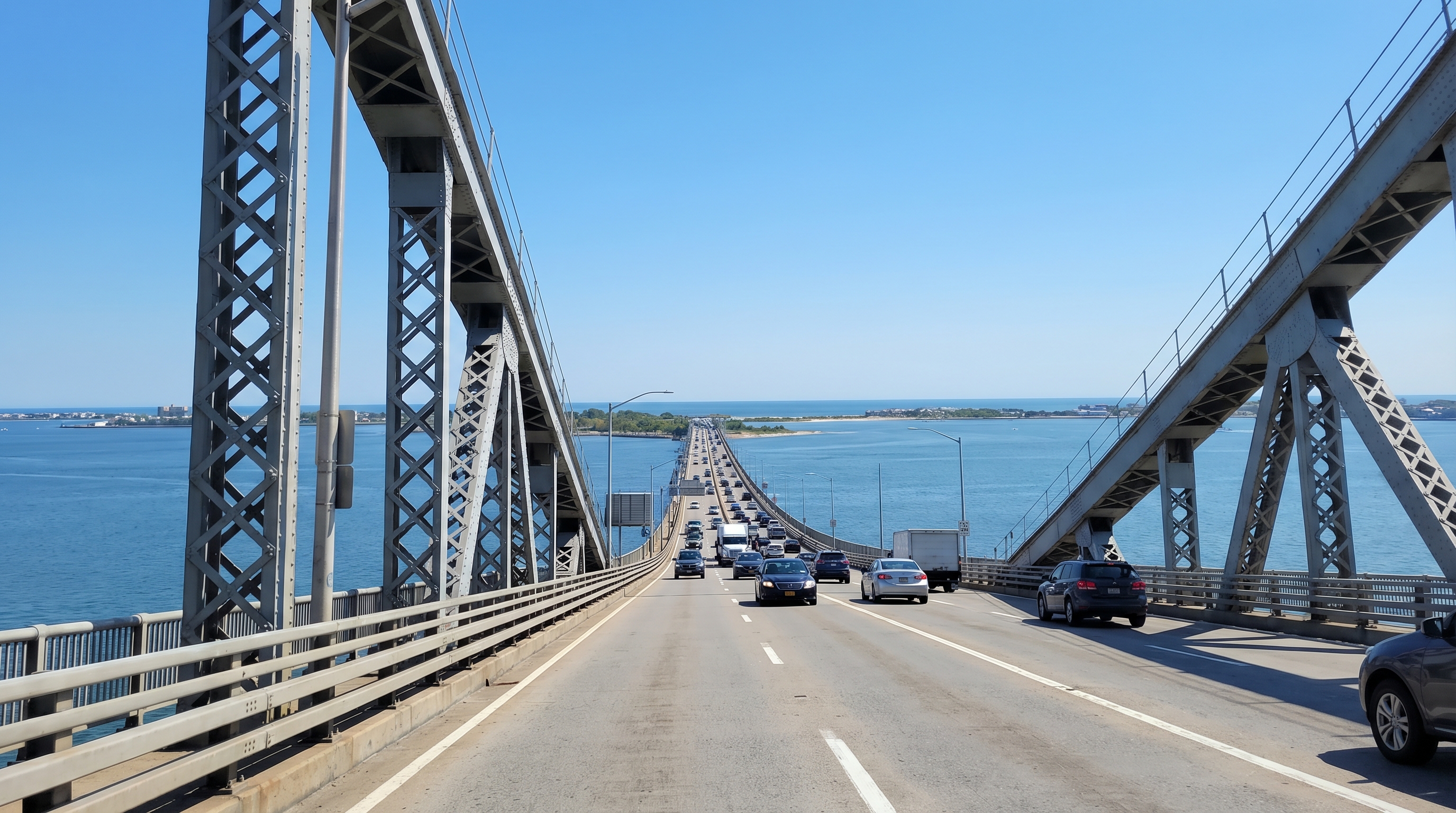
Coleman Square on Cross Bay Boulevard is the other option. The Italian-American delis and pastry shops in the commercial district around the A train station have been operating in the same locations for decades. An espresso and a cannolo while your home is being cleaned is a reasonable use of a Tuesday morning. Several of the pizzerias have been in business since the 1960s and have no interest in updating their format, which is a point in their favor.
Getting a cleaning crew to Howard Beach on a recurring schedule
Our teams reach Howard Beach from the A train at the Howard Beach-JFK Airport station, the same stop that connects the neighborhood to the AirTrain for JFK. The station is at 159th Avenue and Cross Bay Boulevard, which puts it within walking distance of most addresses in New Howard Beach. Old Howard Beach, particularly the blocks around Hawtree Creek, requires a short additional transit connection or a team that drives, which we accommodate.
We are insured and bonded, and can furnish a Certificate of Insurance for any building that requires one. Howard Beach is overwhelmingly owner-occupied so that requirement is rare, but co-op buildings along Cross Bay Boulevard occasionally have vendor documentation requirements. Tell us your building specifics when you book and we handle the paperwork before the first visit.
We serve Howard Beach as part of our broader Queens service area, which includes over 100,000 homes across the borough. Nearby neighborhoods we also cover include Forest Hills, Hollis, and St. Albans.