
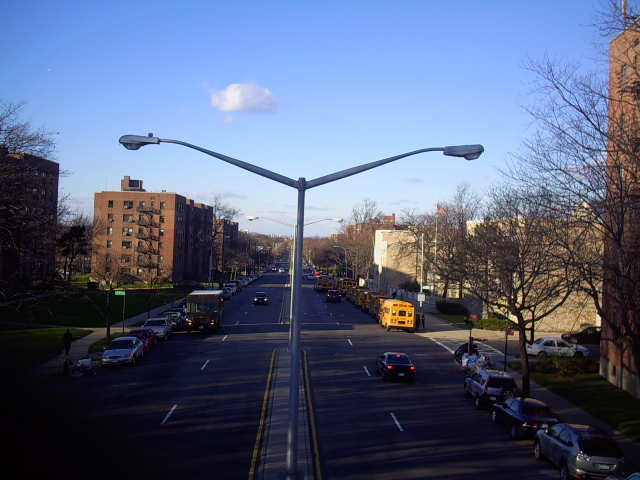
Oakland Gardens is a neighborhood that tells the truth about itself. The name comes from the oak forest that covered this land before the houses were built, and the oaks are still here. Mature red oaks and maples shade virtually every residential block, 60 and 70 years old now, the direct descendants of the trees that gave developers something accurate to put on a marketing brochure in 1948. In a borough where real estate marketing has always tended toward optimism, Oakland Gardens made a claim that turned out to be literally true.
The neighborhood was built in approximately one decade. Veterans returning from World War II used GI Bill mortgages to buy into a vision of suburban order in northeastern Queens, and developers delivered it almost entirely between 1945 and 1960. Colonial Revival homes with symmetrical facades and attached garages. Cape Cod cottages with steep gable roofs and dormers. Ranch houses spreading wide on 40-by-100-foot lots. Split-levels that made the most of modest land. Block after block of the same architectural family, on the same lot dimensions, under the same oak canopy that the original forest provided. The construction timeline is why the neighborhood looks the way it does. It was built all at once, and then it stopped.
What happened after that construction was complete is a different story, and it is the one that explains who lives here today.
Sixty years of homeownership culture built this neighborhood and then rebuilt it
The original buyers were Italian, Jewish, and Irish families who understood exactly what they were purchasing. Not a glamorous address. Not a neighborhood with a cultural identity or a restaurant scene or an arts district. A house with a yard, a garage, a good school district, and a manageable bus ride to work. A place to own something solid and raise children in relative quiet. Oakland Gardens delivered that deal honestly for two generations.
The demographic transformation that began in the late 1980s did not disrupt that deal. It repeated it. Chinese and Korean American families arriving in New York looked at northeastern Queens and saw the same fundamentals the original buyers had seen: detached homes in a good school district with a bus connection to Flushing’s commercial network and housing prices that were lower than comparable Manhattan-adjacent neighborhoods because there was no subway. They bought in. The transition was rapid but not traumatic. A neighborhood designed for suburban middle-class families was purchased by a new generation of suburban middle-class families who happened to speak Mandarin instead of Italian.
Today Oakland Gardens is among the most ethnically Chinese residential neighborhoods in New York City outside of Flushing and Manhattan’s Chinatown. Mandarin Chinese has become a working language for much of the neighborhood’s commercial life. The school PTA communications go out in English and Chinese. The bubble tea cafes and Chinese bakeries on Springfield Boulevard are calibrated for a Chinese American residential audience that knows the food, not a novelty market serving visitors. The Korean barbecue restaurants on Union Turnpike are doing the same thing for the neighborhood’s significant Korean American community.
The Colonial Revival houses have not changed. The trees are bigger. The restaurants are better.
The housing stock is a textbook case for what postwar America built and what postwar America cleaned
Understanding the homes here matters if you are going to clean them correctly. Oakland Gardens’ housing stock is one of the most architecturally consistent residential neighborhoods in Queens, and that consistency comes with specific cleaning challenges that vary by house type and by what the decades have done to the original construction.
The Cape Cod cottages, built between 1945 and 1955, were the most modest of the postwar types. A 1.5-story structure with a steep gable roof, dormers in the attic space, and a simple rectangular footprint running 1,000 to 1,400 square feet. Many have been expanded over the decades with converted garages, rear additions, and dormer enlargements that changed the original floor plan substantially. These homes frequently have a mix of original surfaces, including hardwood floors from the late 1940s that may still carry their original wax finish, alongside modern renovation layers added in different eras with different materials. Cleaning a Cape Cod in Oakland Gardens means reading the house carefully and adjusting for what you find.
The Colonial Revival homes, which are the most common type, run 1,400 to 2,000 square feet across two stories with a symmetrical facade, attached one-car garage, and a rear yard. The 1950s hardwood floors in these homes are typically old-growth, harder than anything milled today, and often finished with wax rather than polyurethane. Water on a wax finish will raise the grain and leave permanent marks. The radiators, which are common in the postwar two-story Colonials with steam heat, trap dust in their fins through the spring and summer, and that dust burns off as a scorched smell when the heat comes on in October. These are details that a thorough cleaning service addresses and a careless one ignores.
The split-levels, which are particularly common on Oakland Gardens’ eastern blocks near Alley Pond Park, present a cleaning dynamic that is genuinely different from the two-story Colonials. The half-floor offsets mean there is no single cleaning route from top to bottom. Each half-level is its own contained space, and dust migration between levels happens differently than in a standard two-story layout. Our house cleaning teams working in Oakland Gardens are accustomed to split-level floor plans and know how to work through them systematically without leaving any level unfinished.
Alley Pond Park is bigger than Prospect Park and most New Yorkers have never heard of it
The 655-acre park that forms Oakland Gardens’ entire northern and eastern boundary is one of the great overlooked green spaces in New York City. Most people outside northeastern Queens have heard of Prospect Park. Almost no one outside the neighborhood has heard of Alley Pond. The comparison is not close: at 655 acres, Alley Pond is significantly larger than Prospect Park’s 585 acres, and its ecological diversity, from freshwater wetland to upland forest to tidal creek, makes it something that Prospect Park, for all its beauty, is not.
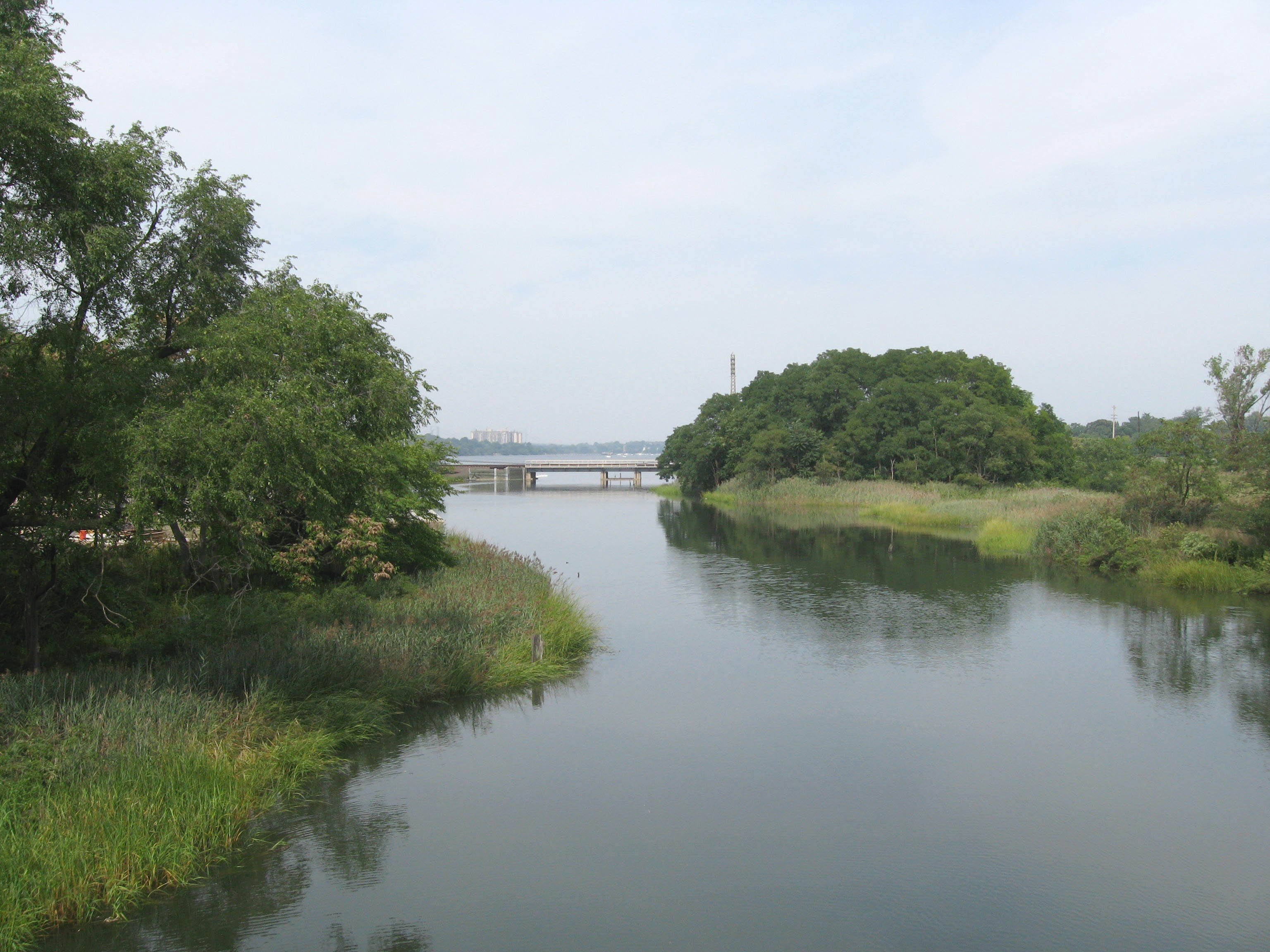
The park contains one of the oldest continuously occupied archaeological sites in New York City. The Matinecock people and their ancestors used the freshwater springs around Alley Creek for at least 8,000 years before Europeans arrived. The middens found in the park, ancient food deposits left by seasonal encampments, date back to a period that predates the city, the state, and the country by several millennia.
It also contains the Queens Giant, a tulip tree estimated at 350 to 400 years old. The oldest living organism in New York City. It was growing before the neighborhood was a forest, before the borough was a borough, before there was a city to belong to. Finding it requires a short walk from the Northern Boulevard entrance. The walk takes about 20 minutes round-trip and is one of the more quietly extraordinary things you can do on a free morning in Queens.
The park’s boundary defines Oakland Gardens’ outer edges and accounts for the neighborhood’s unusually dense tree canopy. The mature oaks along the residential streets are not just the preserved remnants of the original forest that gave the neighborhood its name. They are companions to a 655-acre park of old-growth forest that has been growing at Oakland Gardens’ doorstep since before the first European landed in the harbor.
Cleaning a multigenerational household in a 1950s Queens Colonial requires a specific understanding
Oakland Gardens’ Chinese American community has a strong multigenerational household culture. It is common for parents, adult children, and grandparents to share a single Colonial Revival on a 40-by-100-foot lot, with the basement finished as additional living space and the upstairs divided among three generations of family. This is not a new phenomenon in the neighborhood. The original Italian and Irish families did something similar. But the practical reality of cleaning a multigenerational home has its own specific requirements that a standard cleaning service does not always understand.
Grandparents who prefer to remain in a particular room while cleaning happens elsewhere in the house need a team that works around them without disruption. Infants and toddlers need non-toxic, fragrance-free products on every surface they might touch. Cooking habits in multigenerational Chinese American households involve serious use of the stove, wok stations that generate high-heat oil spray, and range hoods that accumulate grease at a rate that a once-a-year cleaning does not address. We bring commercial-grade degreasers to the kitchen surfaces within six feet of the stove on every deep clean, including the outside of the range hood and the wall tile that the wok spray reaches.
The homes in Oakland Gardens that have been owned by the same family for 30 or 40 years have also absorbed decades of living in ways that matter to the cleaning job. Wax buildup on hardwood floors accumulates over time and eventually yellows in high-traffic areas. Radiator fins pack with dust through the spring and summer. The areas under furniture that has not moved in years collect the kind of debris that a quick surface cleaning misses entirely. Our deep cleaning service starts with these areas and works outward, resetting a home that has been occupied with serious intent by people who have lived in it fully.
The school district is the reason Oakland Gardens’ real estate market behaves differently from transit rules
Every conventional piece of wisdom about New York City real estate says that subway access drives value. Oakland Gardens has no subway. The nearest train is a Q27 bus ride to the 7 at Flushing Main Street, which puts Midtown Manhattan at approximately 55 to 70 minutes door-to-door. By that standard, the neighborhood should be priced like a transit disadvantage. It is not.
The reason is Francis Lewis High School, consistently ranked among the top 20 percent of New York City high schools, and the feeder elementary schools that send students there. Chinese and Korean American families who have seen the school quality from the outside and the specialized high school admission rates from within are willing to pay a premium for a detached home in the Francis Lewis district that has no equivalent in any subway-accessible neighborhood at the same price point. The median home sale price in Oakland Gardens runs $750,000 to $950,000. The wait for inventory is measured in days. Homes come onto the market and are under contract before the listing has time to settle.
This dynamic matters to a house cleaning service because it tells you something about the people who live here. Oakland Gardens residents have made a deliberate choice. They are not here because this was the only neighborhood they could afford. They are here because they evaluated the options and decided that school quality and homeownership on a single-family lot was worth the transit trade-off. These are families who take their homes seriously. They have invested in a particular vision of stability and they want their homes to reflect that investment.
We have cleaned over 100,000 homes across New York City. The homes in Oakland Gardens belong to a specific category: owner-occupied, multigenerational, maintained with care, and lived in fully. They require a cleaning team that pays attention, shows up consistently, and treats the surfaces with the same seriousness the owners do.
What booking looks like in a neighborhood without a subway
You pick your date and time on our booking page. You see your flat-rate price before you commit. If your Colonial Revival has a finished basement and three floors, the price reflects the actual scope of that home. If you are in a Cape Cod that has been expanded with a garage conversion and a rear addition, you tell us the square footage and the number of bedrooms and bathrooms, and the price is honest about what that job involves.
Our teams serving Oakland Gardens drive or take the Q27 from Flushing. Many of our cleaners live in northeastern Queens. The neighborhood’s distance from the subway does not affect our availability, our punctuality, or our pricing. We arrive when we say we will, with the right products for a postwar single-family home in northeastern Queens, and we clean it properly.
For homes in the Francis Lewis feeder zone where families are planning to stay for the long term, recurring cleaning is the most practical arrangement. You choose the frequency, every week, every two weeks, or monthly. We assign the same cleaner or team to your home on every visit so they learn the house, learn the surfaces, and learn what your household cares about most. That consistency is what separates a cleaning service from a cleaning event.
We also serve nearby Forest Hills, Jamaica, Hollis, and the rest of Queens.