
South Ozone Park sits between Rockaway Boulevard and the Van Wyck Expressway in one of the most genuinely complex corners of Queens, and the homes that line its interior streets reflect a hundred years of working-class New York compressed into attached brick rows and two-family houses. The original Italian-American and Irish-American families who built these blocks in the 1920s and 1930s were followed by Guyanese, Trinidadian, Jamaican, Bangladeshi, and South Asian families who bought the same homes, raised children in them, and turned the ground-floor apartments of two-families into the investment engine of a different generation of immigrant homeownership. The housing stock has barely changed. The people who love it have changed completely.
We have cleaned over 100,000 homes across New York City, and the south Queens row house is one of the most specific cleaning environments we work in. Two floors, an often-finished basement, a small rear yard, a kitchen that runs hot from serious cooking, and floors that mix original hardwood upstairs with vinyl or tile below. Getting it right requires knowing the difference between surfaces. Getting it wrong leaves marks that last.
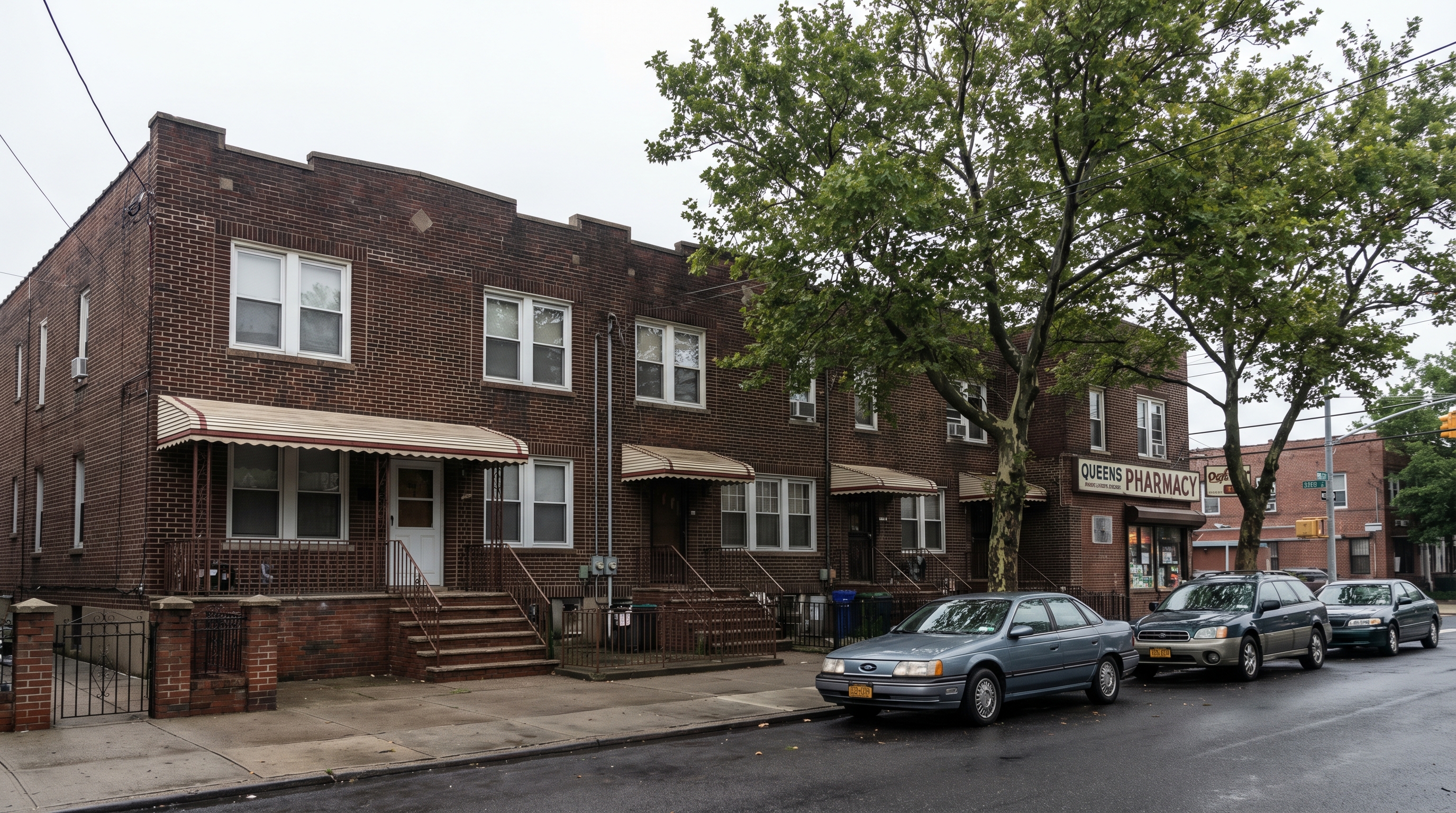
The housing stock on 104th and 106th Avenues is exactly as specific as it looks
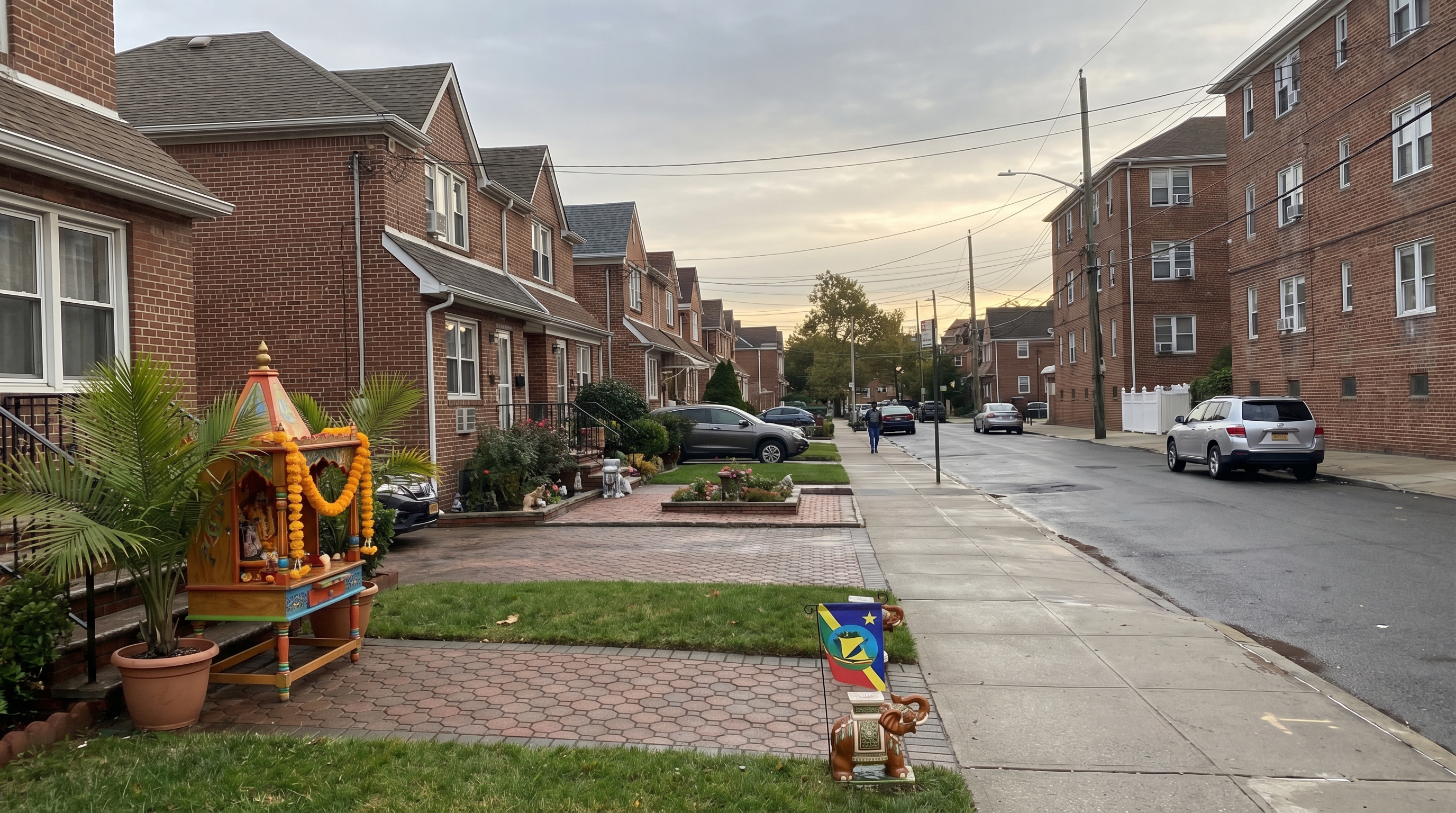
The interior residential blocks of South Ozone Park were built on a grid between Rockaway Boulevard and Linden Boulevard, and the attached brick row houses that line 104th Avenue, 106th Avenue, and 107th Avenue were all built within roughly the same 30-year window. Two stories, dark brick, ground-floor stoop, small backyard, private driveway where the lot allowed it. The footprints are consistent enough that you can walk a full block and know roughly what each interior looks like: entry hall leading to the living room, kitchen at the rear, two or three bedrooms above, a finished or semi-finished basement that does real work as a laundry room, storage area, or secondary living space.
The cleaning challenges in these homes follow directly from the layout. The basement collects the household’s residual: laundry dust, storage overflow, seasonal items that accumulate grime. The kitchen, in most of the South Ozone Park homes we service, is a working kitchen in the full sense. Caribbean and South Asian cooking at the household level involves regular use of oil for frying, stewing, and sauteing, and that oil builds up on the range hood, the backsplash, and the upper cabinet faces faster than it does in households where cooking is less intensive. Standard all-purpose cleaners do not touch a properly baked grease film. We bring commercial-grade degreasers for kitchens that need them.
The floors upstairs in the older row houses are often original hardwood, narrow-plank, laid in the 1930s or 1940s and refinished at various points since. These floors cannot tolerate a wet mop or a steam cleaner. They need a damp microfiber pad with a pH-neutral hardwood solution, dried immediately. Downstairs in the kitchen and basement, vinyl composition tile or ceramic tile gets the appropriate treatment, which is entirely different. Our house cleaning teams carry separate supplies for each surface and switch as they move through the floors.
Two-family homes in South Ozone Park require a specific kind of planning
The two-family home is the investment vehicle that anchors Caribbean and South Asian homeownership across south Queens, and South Ozone Park has them throughout its residential grid. The model is consistent: the owner-occupying family takes the upper floors and the second unit, usually on the ground floor or in the basement, generates rental income that contributes to the mortgage. In a market where home prices run from $600,000 to $950,000, that rental unit is not incidental. It is the mechanism that makes ownership possible.
For cleaning purposes, this means two units that often have different needs on different schedules. The owner-occupied floor typically benefits from recurring cleaning on a weekly or biweekly schedule. The rental unit needs a thorough move-in and move-out cleaning when tenants turn over, which in a working-class rental market happens with some frequency. We handle both, scheduling them separately or on the same day depending on what works for the owner. A move-out clean in a basement rental unit requires getting the kitchen back to clean, addressing the bathroom, and clearing whatever residue a departing tenant leaves behind. It is a distinct scope from a routine recurring visit, and we price it accordingly.
The two-family home also means that in a shoes-off household, the floors carry different stakes. When children spend time on floors that other people have walked across all day, the mopping technique and the products used matter in ways that are not true for surfaces that stay dry and uncontacted. We address the entry floor at the start of every visit and use products that leave no residue when dry.
Apartment cleaning in the walk-up buildings along Rockaway Boulevard and Linden Boulevard
The four- to six-story walk-up buildings that line Rockaway Boulevard, Linden Boulevard, and Sutphin Boulevard house a large share of the neighborhood’s renters, and the cleaning challenges in a walk-up apartment are distinct from those in the owner-occupied row houses. The apartments tend to be smaller, the layouts more compact, and the kitchens and bathrooms in older buildings sometimes show the wear of successive tenants.
For recurring apartment cleaning, the goal is thoroughness in a compact space with consistent attention to the areas that accumulate fastest: kitchen surfaces around the range, bathroom tile and grout, and floors throughout. Walk-up buildings without elevator access mean our teams carry their supplies up the stairs, which they do on every visit. There is no building access coordination requirement for most Rockaway Boulevard or Linden Boulevard rentals beyond meeting your cleaner at the door or setting up a key arrangement.
For move-in cleaning, the standard we hold is that the apartment should be ready for a new occupant at the level you would want if you were moving in yourself. That means inside the oven, inside the refrigerator, bathroom fixtures cleaned to the grout level, and walls wiped down where the previous tenant left marks. We have done enough apartment turnovers in south Queens walk-ups to know what a departing tenant typically leaves behind, and we handle it without requiring an itemized list.
The neighborhood that invented the name “ozone” as real estate marketing
South Ozone Park inherits its name from a piece of 19th-century real estate mythology. Developer Charles Denton coined the name “Ozone Park” in 1882 to evoke the clean, healthful air of the elevated terrain he was marketing to working-class New Yorkers looking for a way out of the crowded city. “Ozone” was then popularly associated with fresh outdoor air and the health benefits of open spaces. The science was wrong from the start — ground-level ozone is a pollutant, not a benefit — and the irony that the neighborhood now sits under one of the heaviest JFK Airport flight corridors in the city is not lost on longtime residents. A plane passes overhead roughly every 60 to 90 seconds during peak hours. The name stuck anyway, which is its own testament to the staying power of good marketing.
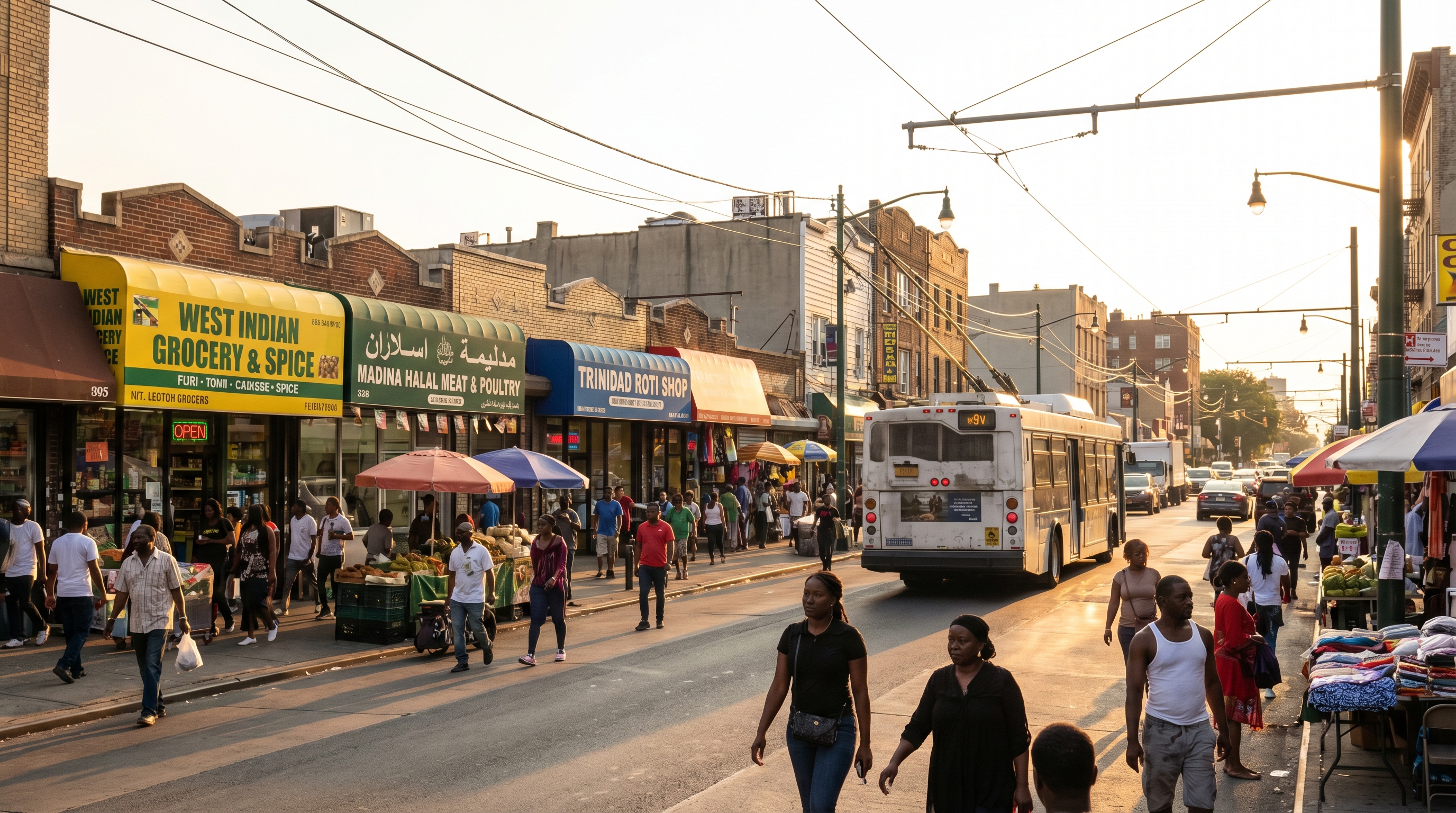
South Ozone Park became the neighborhood it is because of what happened after the Italian-American working-class families who originally populated these row houses began moving to Long Island and New Jersey in the 1960s and 1970s. The Guyanese community, both Afro-Guyanese and Indo-Guyanese, settled here in numbers that made it one of the most concentrated Guyanese communities anywhere in North America. Trinidadian, Jamaican, Barbadian, Bangladeshi, and South Indian families followed. What replaced the original demographic was not a single culture but something more complex: a neighborhood where the mosque and the Hindu temple are on the same block, where the doubles vendor is Indo-Guyanese and the jerk chicken place is Jamaican, and where the commercial strip along Rockaway Boulevard is a running encyclopedia of Caribbean and South Asian immigrant food.
For the people who live in these homes, that complexity is simply daily life. It also means that when a Maid Marines team arrives for a cleaning appointment in South Ozone Park, they are entering a household that takes its domestic space seriously, runs it with real cultural specificity, and expects a service that is reliable and respectful of the things that matter in the home.
Deep cleaning in homes with active households and heavy use kitchens
A deep cleaning in a South Ozone Park row house is a full-day scope. The homes are lived in completely, often by multiple generations in the same household, with kitchens that run every day and bathrooms that support larger families than a studio apartment does. The starting point is the kitchen: range hood, behind the range, oven interior, upper cabinet faces, backsplash from one end to the other. In households where cooking is intensive, the grease on the hood and backsplash is the item that takes the most time and the right chemical to release.
From there: bathroom tile cleaned to the grout level, under the bathroom sink, behind the toilet, the exhaust vent, and the light fixture. Baseboards throughout, which collect the fine dust that regular mopping misses. Window sills inside, where weather-stripped vinyl windows concentrate grime at the track. Closet floors, which are the last place standard cleaning reaches and the first place dust accumulates from stored items.
For pre-holiday deep cleans ahead of family gatherings, which are a major recurring need in this neighborhood given the size of extended-family celebrations at Diwali, Eid, Christmas, and Caribbean cultural events, the focus is on the shared and visible spaces: the living room, the dining area, the kitchen, and the bathrooms. A home that has had a proper deep clean a week before forty people walk through it is a meaningfully different experience from one that has had only its routine weekly maintenance.
Getting to South Ozone Park and getting to your cleaning appointment
The A train is the neighborhood’s subway line, with two stations serving South Ozone Park: Rockaway Boulevard, which sits in the commercial core, and Aqueduct North Conduit Avenue, which anchors the western end near the racetrack. Both are on the same A train branch. From Rockaway Boulevard station, Manhattan is approximately 30 to 35 minutes on the subway, which is a commute many residents make daily and which defines when households are available for cleaning appointments.
The Q7, Q8, Q9, and Q41 bus routes cover the major corridors. For our purposes, the relevant fact is that Rockaway Boulevard and Linden Boulevard are both well-served by surface transit, which means reaching walk-up apartments on those corridors without driving is practical for our teams.
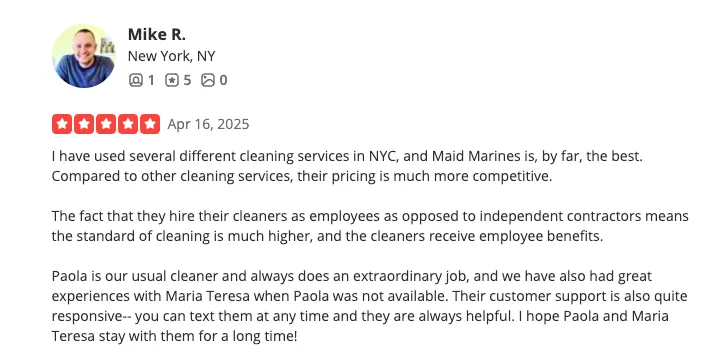
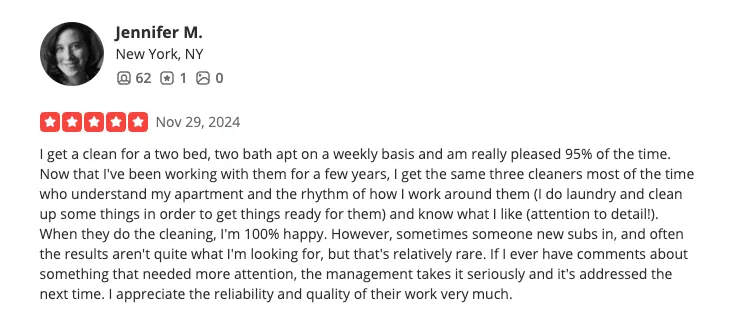
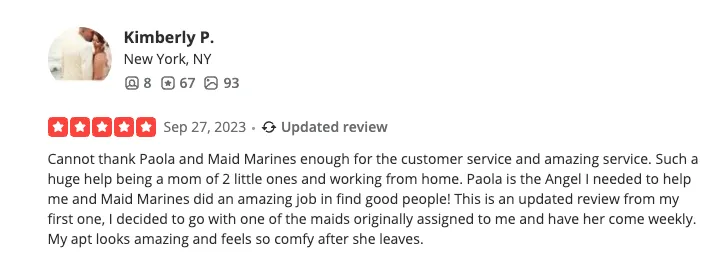
For recurring appointments, we assign the same cleaner or team to your home on every visit. Consistency matters in any household, but it matters especially in a neighborhood where trust is built over time within communities that communicate directly. Your regular team learns the home, learns the access situation, and learns what you care about. If your regular cleaner is unavailable, we let you know in advance.
You pick your date, time, and service type on our booking page. The flat-rate price appears before you confirm anything. No surprises for the stairs, the basement, or the rental unit. We also serve nearby Hollis, St. Albans, Laurelton, and Forest Hills.
Your cleaning runs about three hours. Here is what the neighborhood offers while we work.
Rockaway Boulevard on a Saturday morning is one of the most genuinely alive commercial streets in the outer boroughs. The roti shops are open, the Guyanese bakeries are running, the doubles vendors are set up, and the West Indian grocery stores are pulling their best produce to the front. Walk the stretch between Guy Brewer Boulevard and Sutphin Boulevard slowly. The signage alone, in English, Guyanese Creole, Bengali, Hindi, and Arabic, is a more accurate document of New York immigration history than anything in a museum.
If you want a longer walk, take the Q7 or the bus a few stops to Baisley Pond Park. The 93-acre park with its central pond has quiet walking paths and benches where you can sit with the water and not think about anything that needs cleaning for the duration. It fills a full three-hour window if you walk slowly and find a good spot to sit.
The Aqueduct Racetrack is ten minutes by foot from the northern end of the residential grid and worth seeing at least once. In April, the Wood Memorial Stakes brings serious crowd energy to the grandstand. Year-round, Resorts World NYC operates inside the same complex.
Go outside while we handle the work inside. That is the point of the service.