
The most concentrated collection of pre-Civil War residential architecture in the United States is not in Savannah, Charleston, or any New England town. It is on Cranberry, Pineapple, and Orange Streets in Brooklyn, where over 600 houses from before the Civil War still stand in a living neighborhood where people raise children, work from home, and walk to a subway that reaches Wall Street in three minutes. The buildings on these blocks were constructed in the same decade as Whitman’s “Leaves of Grass” and are still standing because residents fought to preserve them, successfully, at a moment when most of New York was busy demolishing everything inconvenient.
That preservation is also what makes Brooklyn Heights homes unusually demanding to clean well.
The neighborhood that invented American commuter culture
Robert Fulton’s steam-powered ferry began operating between the foot of Brooklyn Heights and Lower Manhattan in 1814, and within a decade wealthy merchants and businessmen were building Greek Revival townhouses on the bluffs above the East River so they could live in pastoral quiet and commute to their counting houses in minutes. Historians call Brooklyn Heights the first commuter suburb in the United States. The phrase is not hyperbole. The concept of living in one place and working somewhere else, now the organizing principle of American metropolitan life, was invented on this blufftop.
The building boom that followed ran from roughly 1820 to 1860, producing row after row of Federal-style, Greek Revival, and Italianate townhouses on newly platted 25-by-100-foot lots. By the time of the Civil War, the neighborhood was essentially complete, its physical form locked in place. The Brooklyn Bridge opened in 1883 and changed everything again, drawing wealthier families outward to newer neighborhoods, and Brooklyn Heights spent the next several decades slowly subdividing its grand single-family homes into rooming houses and apartments. Mid-century it became cheap, and cheap drew writers.
Truman Capote lived at 70 Willow Street from 1955 to 1965, in the basement rooms of a friend’s townhouse, and wrote “Breakfast at Tiffany’s” and “In Cold Blood” there. Norman Mailer lived at 102 Pierrepont Street. Hart Crane composed “The Bridge,” his epic modernist poem about the Brooklyn Bridge, from a Columbia Heights apartment with a direct view of the span. W.H. Auden, Paul Bowles, Benjamin Britten, and Carson McCullers all lived simultaneously at 7 Middagh Street in 1940 and 1941, in what became the most improbable concentration of creative talent in a single rooming house in American literary history. The building was demolished for the Brooklyn-Queens Expressway before anyone thought to preserve it.
When New York City learned what it had, Brooklyn Heights was saved first
On November 23, 1965, Brooklyn Heights became New York City’s first historic district. The designation came the same year the Landmarks Preservation Commission was created, and it came in the direct aftermath of the demolition of Pennsylvania Station in 1963, which galvanized the preservation movement nationally. The residents who organized through the Brooklyn Heights Association, founded in 1910, understood that what they had was irreplaceable and fought to keep it. Every landmarked building in New York City, all five boroughs, exists because Brooklyn Heights advocates went first.
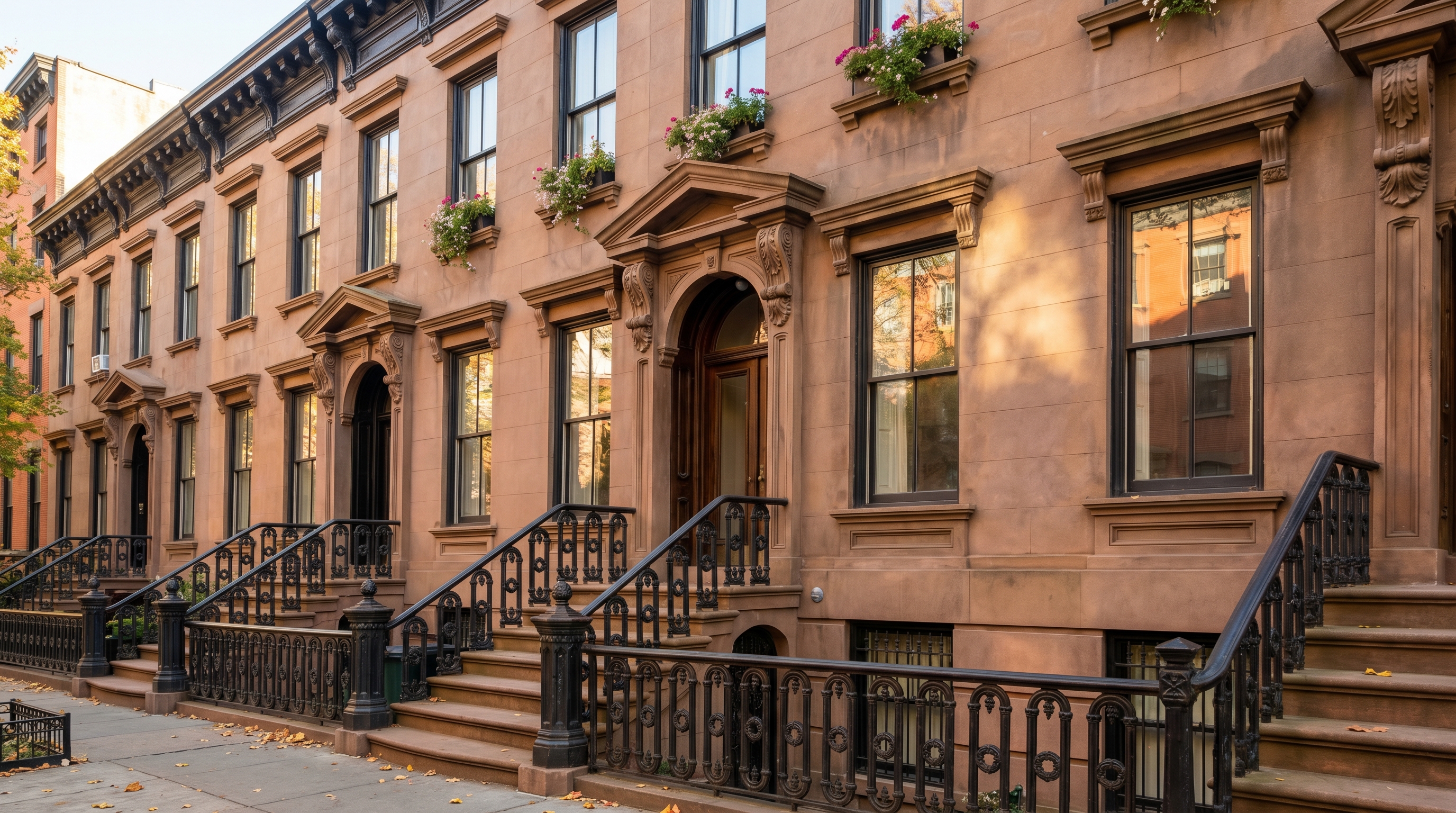
The designation essentially froze the neighborhood’s 19th-century streetscape in place. You cannot demolish these buildings. You cannot significantly alter their exteriors without Landmarks Preservation Commission approval. The interior, however, is unrestricted, which is why the blocks between Remsen Street and Orange Street contain some of the finest renovated pre-Civil War residential interiors in the country alongside some that have not been significantly updated since the Eisenhower administration.
Federal and Greek Revival homes have surfaces that modern cleaning products will damage
The first thing to understand about a Brooklyn Heights townhouse built in 1835 is that virtually nothing on its interior surfaces is what a cleaning product’s label was written for. The wide-plank hardwood floors are old-growth wood, denser and harder than anything milled today, typically finished with wax or linseed oil rather than the polyurethane that coats modern floors. Water and alkaline cleaners will lift the wax finish and dull the wood. They need a barely damp microfiber mop and a product formulated for oil-finished or waxed wood.
The plaster crown moldings and ceiling medallions are original in many of these buildings. They are not the paper-faced drywall crown you find in renovated apartments. They are dimensional lime plaster built up in layers, with fine detail in the profile. A wet cloth pushed into the crevices forces grime deeper and can loosen plaster that has been secure for 180 years. They need a soft brush and a dry wipe.
The marble fireplace mantels, present on parlor floors in almost every significant townhouse on the block, are Carrara or Tennessee marble, depending on the era of construction. No vinegar. No citrus-based cleaners. No acidic products on stone. Marble etches within seconds of contact with acid, and the etch marks are permanent. pH-neutral only, barely damp, and dried immediately.
The cast-iron radiators, present throughout the pre-war heating systems, collect dust between their fins through the entire off-season and release it as fine particulate when the steam heat kicks on in October. They need attention between the fins, not just across the top.
Our house cleaning teams working in Brooklyn Heights carry separate products for each surface type and switch as they move through the floors. They work top-down so dust never resettles on already-cleaned surfaces below. These details survived nearly 200 years. Our job is to keep them that way for the next generation.
Willow Street, Cranberry Street, and the literary geography of the neighborhood
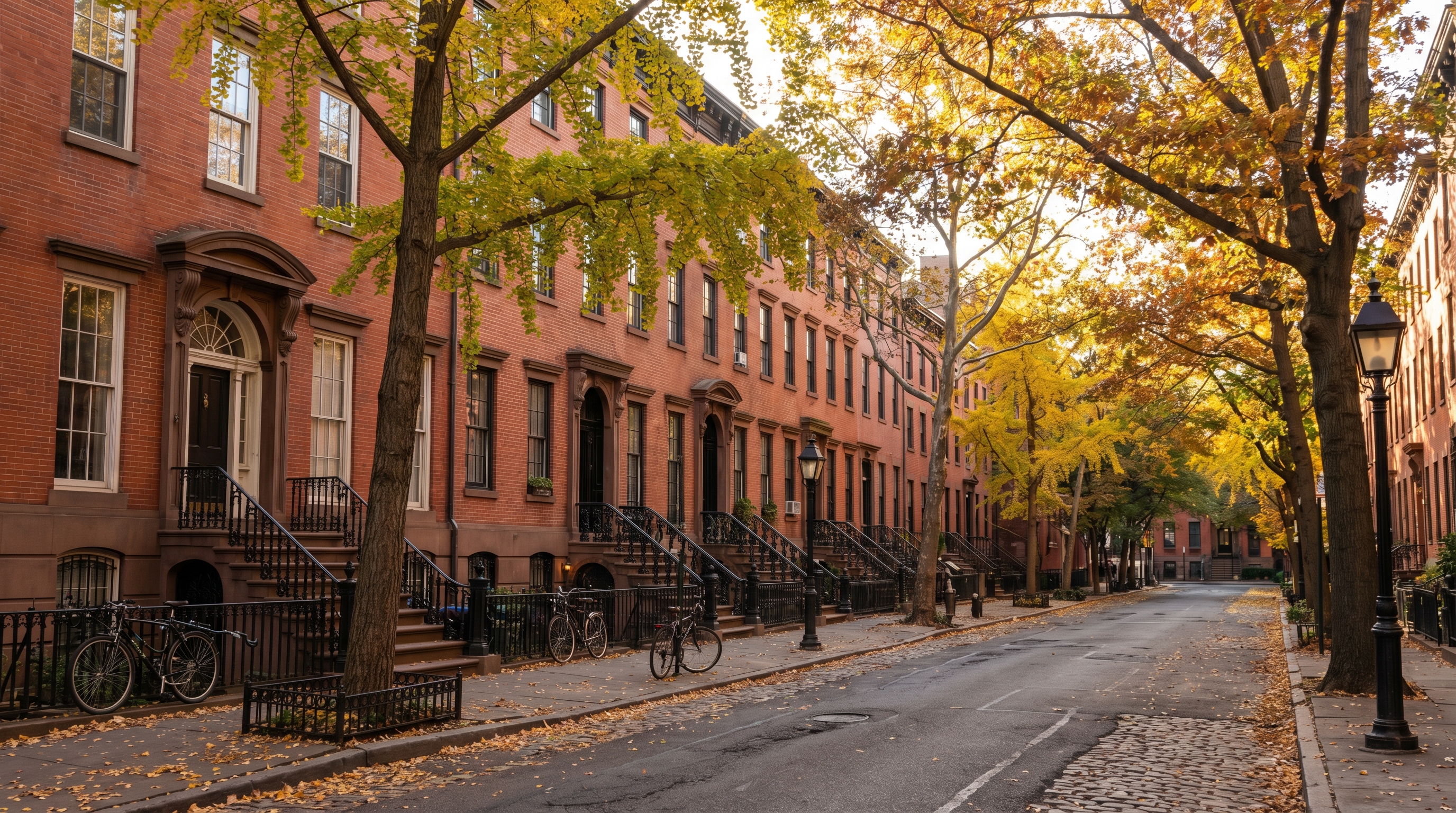
Walking Willow Street from Clark Street to Middagh Street is one of the more quietly extraordinary experiences available in New York City. The sequence of Federal-period and Greek Revival townhouses that line both sides is so intact, so consistent in scale and material, that the street looks essentially the way it looked in the 1840s. No. 70 is where Capote lived. No. 155 is where Arthur Miller lived. The tree roots buckle the bluestone sidewalks. The trees themselves are enormous and old, arching over the street from both sides until they meet overhead.
Cranberry Street and Pineapple Street, the other fruit streets running east-west across the northern residential core, have the same quality. Walt Whitman helped set the type for early pages of “Leaves of Grass” at a print shop at the corner of Cranberry and Fulton Streets. Henry Ward Beecher’s Plymouth Church of the Pilgrims sits at 57 Orange Street, where he held mock slave auctions to raise money to free enslaved people, where Abraham Lincoln attended services in February 1860 just before delivering the Cooper Union speech that launched his presidential campaign, and where a piece of Plymouth Rock is preserved in the cloister garden.
Pierrepont Street carries the grandest residential buildings in the neighborhood. The Center for Brooklyn History at No. 128 occupies an 1878-1880 building by George Browne Post in the Venetian Renaissance Revival style, with a reading room that is one of the most beautiful interiors in Brooklyn. No. 102 is where Mailer lived.
Columbia Heights, which runs along the blufftop edge above the Brooklyn Heights Promenade, is the most prestigious residential block in the borough. The rear gardens and upper floors of the Columbia Heights townhouses have unobstructed views of the Manhattan skyline and the harbor. Washington Roebling, who built the Brooklyn Bridge after being incapacitated by decompression sickness contracted in the underwater caissons of the bridge’s foundation, directed the final years of construction from a Columbia Heights house using a telescope, communicating his instructions through his wife Emily. He could see the bridge from his window. Hart Crane, living on Columbia Heights a generation later, could see it too.
Pre-war co-ops on Montague Street require paperwork before anyone enters
Brooklyn Heights has a significant stock of pre-war co-operative apartment buildings built between roughly 1910 and 1940 along Montague Street and the major residential corridors. These buildings, typically six to ten stories in brick and limestone, offer units ranging from studios to large family apartments and represent the primary housing option for residents who want the neighborhood but cannot acquire a full townhouse. They are not brownstones. They have lobbies, elevators, building managers, and co-op boards.
Most of them have rules about outside vendors. The standard requirement is 48-hour advance notice and a Certificate of Insurance naming the building as additional insured. Some require a signed vendor agreement on file. A few require service elevator scheduling that must be arranged with the super. If you have had a cleaning service turned away at the front desk of a Brooklyn Heights co-op, it was almost certainly a paperwork failure rather than anything else.
We handle this before your first appointment. Tell us your building name when you book your apartment cleaning and our team coordinates with building management. For recurring service, we register once and it stays registered. The same team comes every visit so the doorman recognizes them and the building is not receiving a new vendor request every two weeks.
The Promenade and why the whole neighborhood orbits it
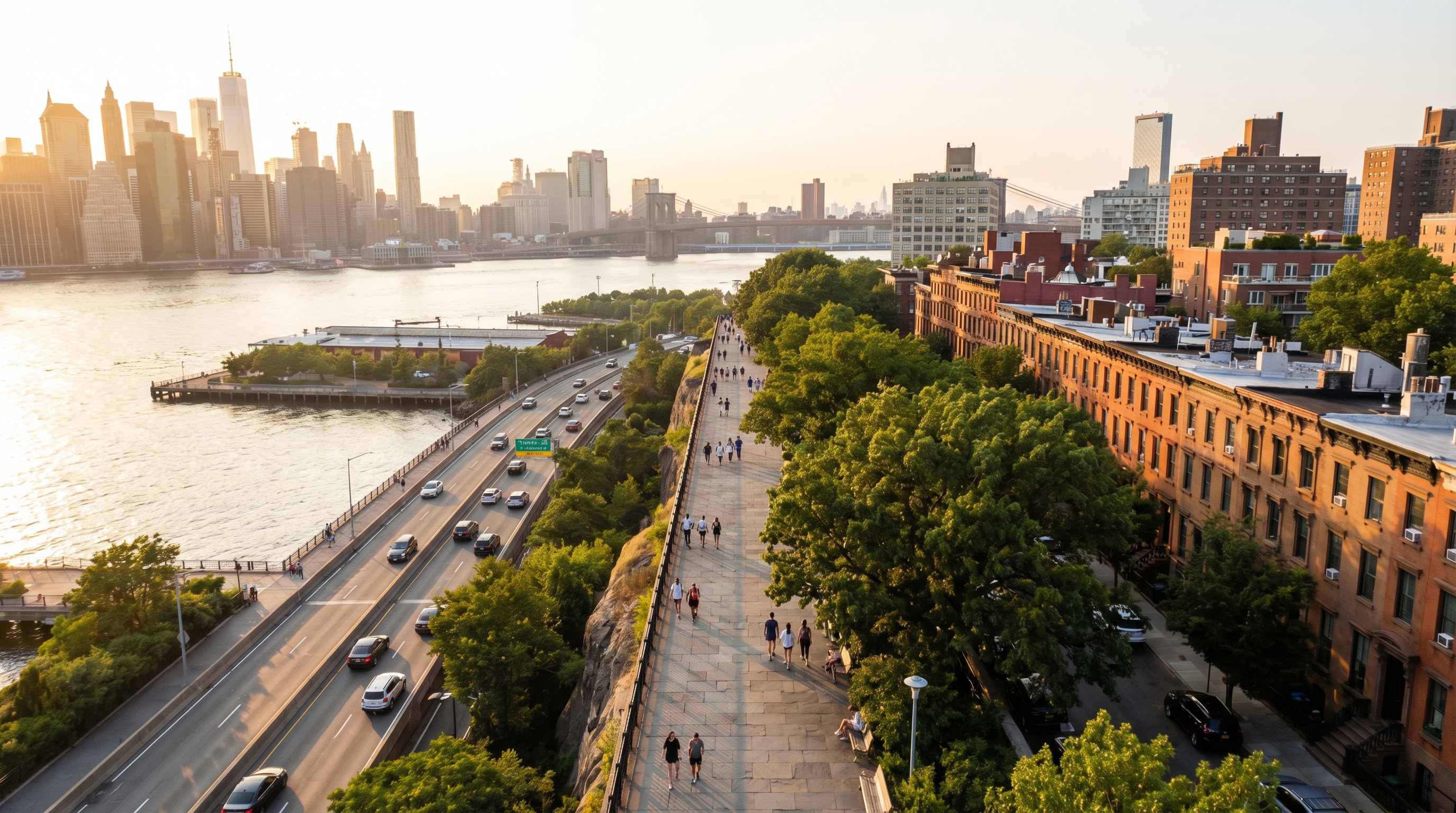
The Brooklyn Heights Promenade is a cantilevered pedestrian walkway suspended above the Brooklyn-Queens Expressway, running from Remsen Street to Orange Street along the blufftop edge of the neighborhood. It was completed in the early 1950s and designated a New York City Scenic Landmark. The views from the Promenade are the most famous urban viewpoint in the city: the full Manhattan skyline, the Brooklyn Bridge, the harbor, the Statue of Liberty, and Ellis Island, all visible from a single elevated walkway in a residential neighborhood.
On fair-weather mornings the Promenade draws joggers, stroller-pushing parents, dog walkers, older residents moving deliberately from one end to the other, and tourists who have come specifically to stand in front of the view. On summer evenings it draws everyone. Residents who have lived on Remsen Street for twenty years still stop at the railing and look.
The neighborhood’s most serious ongoing concern involves the Promenade directly. The Brooklyn-Queens Expressway beneath it requires significant reconstruction, and the debate over how to accomplish this, specifically whether to temporarily route highway traffic through the Promenade deck during repairs, has been one of the most contentious planning battles in recent Brooklyn history. As of 2026, the resolution remains contested. The Brooklyn Heights Association, still active more than a century after its founding, remains at the center of the fight.
A deep clean in a multi-floor townhouse is a full-day undertaking
A deep cleaning in a four or five story Brooklyn Heights townhouse is categorically different from a standard apartment clean. Reaching crown molding at twelve or fourteen feet. Pulling accumulated dust from behind the cast-iron radiator fins on every floor. Scrubbing original hex tile grout in bathrooms that were tiled in the 1910s. Washing window sills and ledges on every floor, and in these buildings there are many floors and many windows. Baseboards throughout. The garden-level entrance, which concentrates the most foot-traffic wear in a multi-story home, gets particular attention. The inside of the kitchen cabinets and the window glass itself are add-ons you check off at booking, priced on the quote before you confirm.
For move-in and move-out cleaning in townhouses that have been rental properties through multiple tenants, the standard is higher still. Every surface needs to be genuinely clean, not just visually acceptable, before a new resident’s belongings arrive. We send a team of two for full townhouse work, and we allocate enough time to do it properly. We have cleaned in over 100,000 homes across New York City. We know what a Brooklyn Heights townhouse requires.
The post-renovation clean is another common request in this neighborhood. Brooklyn Heights owners invest heavily in restoring original details. They strip paint from fireplace mantels, refinish old-growth floors, repoint brownstone facades, and restore original plasterwork. What contractors leave behind, plaster dust, grout haze, paint overspray, sawdust in crevices, requires specialized removal techniques that will not damage freshly refinished surfaces. We have cleaned behind enough renovation crews in these buildings to know what is left and what it takes to remove it safely.
Families in the Heights have a particular relationship with their outdoor neighbors
Brooklyn Bridge Park, the 85-acre waterfront park developed from former industrial piers beginning in the 2000s, is at the foot of the bluff below the Heights. Pier 1 with its great lawn, Pier 2 with athletic facilities, Pier 4’s beach, and Pier 6’s children’s playground and seasonal concessions all draw Brooklyn Heights families throughout the year. The Saturday farmers market at Pier 1 runs spring through fall. The water taxi connects to other borough waterfronts.
The combination of the park, P.S. 8 (the neighborhood’s well-regarded public elementary school, formally named the Robert Fulton School), and the walkable residential streets has made Brooklyn Heights a preferred address for affluent families. The homes these families live in, the pre-Civil War townhouses and the pre-war co-ops, have high-traffic areas that need regular maintenance: the stoops that collect city grime, the entryways that take the brunt of park shoes and wet umbrellas, the kitchen floors that see constant use.
Our W-2 employees, not gig workers, are assigned to the same homes on recurring schedules. A family with a two-year-old and a dog who comes home muddy from the park has different needs than a couple who travels frequently. We learn your home, your schedule, and what matters to you, and we work around it. If your child naps from one to three, we start on the lower floors and move up.
Getting here and getting around
The Clark Street station on the 2 and 3 trains, directly within Brooklyn Heights, provides what many consider the fastest Manhattan commute available from any outer-borough neighborhood. Wall Street is reachable in about three minutes. The World Trade Center in approximately five. This commuting proximity to the Financial District is a primary reason the neighborhood has remained a preferred address for finance professionals since Robert Fulton’s ferry made the same trip in 1814.
The A and C trains at High Street-Brooklyn Bridge station, the 4 and 5 at Borough Hall, and the R at Court Street-Borough Hall all add options. The NYC Ferry stops at Brooklyn Bridge Park Pier 1, a short walk from the residential streets, offering a scenic alternative route across the harbor. The neighborhood is extremely walkable within its compact borders: DUMBO is a ten-minute walk north, Downtown Brooklyn’s retail and services are five minutes east, and the Montague Street commercial strip provides everything from a hardware store to a wine bar within the neighborhood itself.
We also serve nearby DUMBO, Park Slope, Bed-Stuy, Williamsburg, Greenpoint, and the rest of Brooklyn. Book your cleaning and see your flat-rate price in under a minute.