
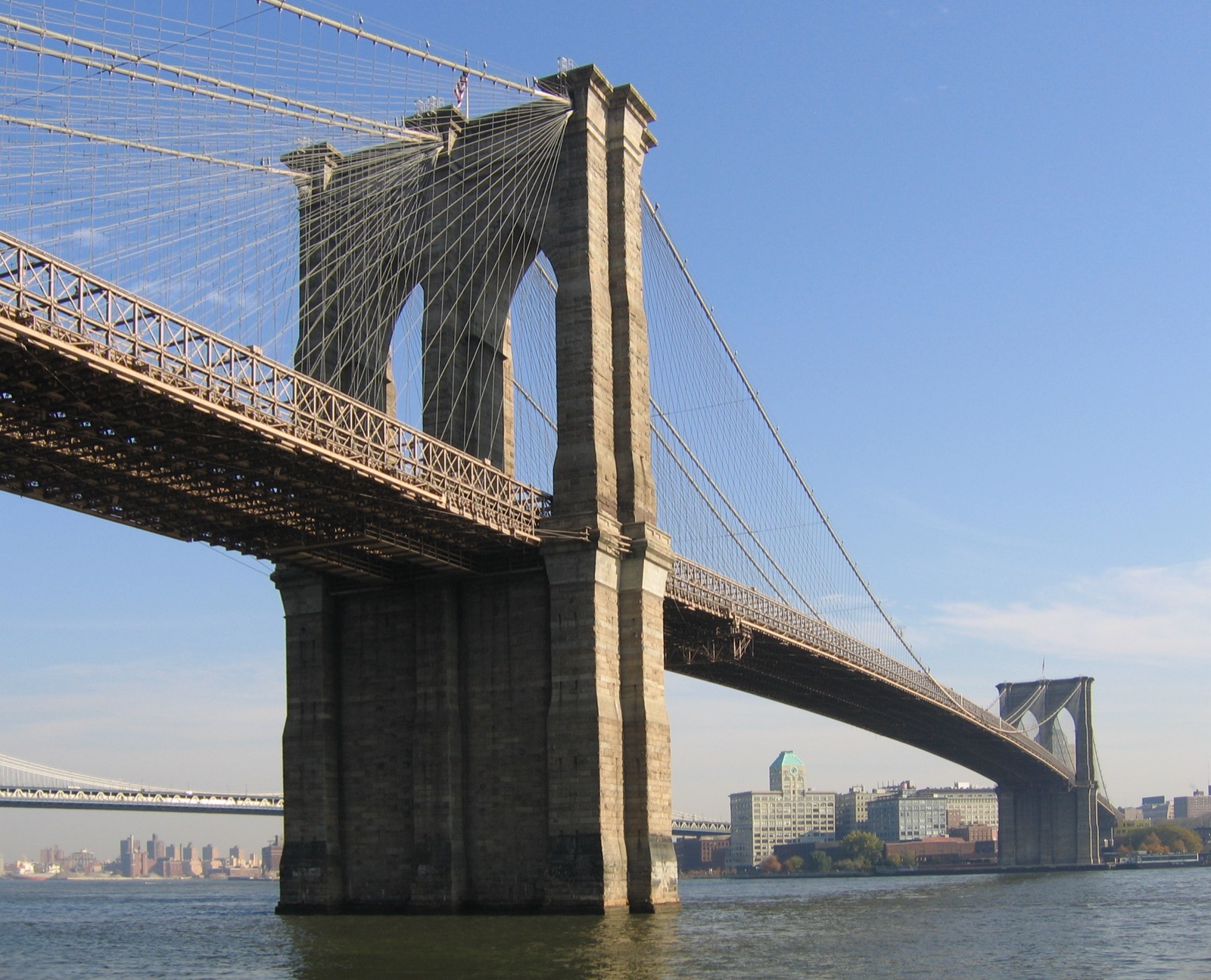
Two Bridges sits between the two most famous bridges in the world, and the neighborhood has absorbed more layers of New York history than almost any other half-mile of Manhattan. The Brooklyn Bridge anchors the western edge. The Manhattan Bridge anchors the east. Between them, packed into a narrow strip along the East River, you find NYCHA towers from the 1940s standing next to an 80-story glass luxury condo completed in 2019, and both of those standing next to Knickerbocker Village, which was one of the first federally subsidized housing developments in the United States when it opened in 1933. The cleaning job changes building by building here, and sometimes floor by floor.
Two Bridges cleaning starts with understanding what kind of building you are actually in
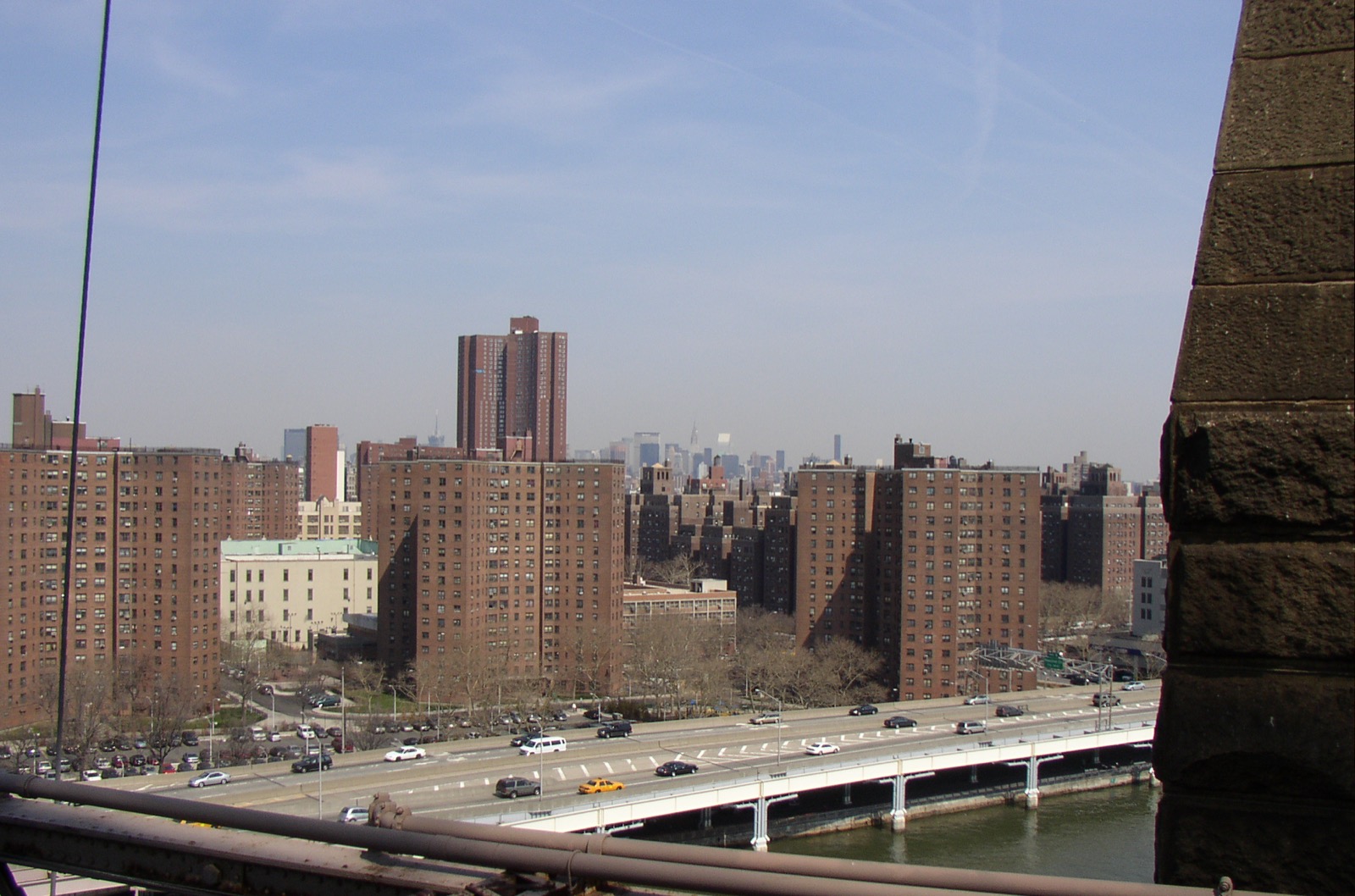
The housing stock in Two Bridges is unlike anything else in Manhattan because it spans nearly a century of construction in roughly twelve square blocks. Knickerbocker Village is a 12-building, 1,590-unit co-op complex with simplified Art Deco interiors, original hardwood floors, and plaster walls that chip if you scrub them. The NYCHA developments, including Alfred E. Smith Houses, Vladeck Houses, Rutgers Houses, and LaGuardia Houses, contain thousands of apartments with cast-iron radiators, linoleum and hardwood floors, and windows that face directly onto the FDR Drive. The tenement walk-ups on Henry and Madison Streets are five and six story brick buildings from the late 1800s with narrow rooms, steep stairs, and no elevator. And One Manhattan Square, the 847-foot glass tower at the south end of the neighborhood, has floor-to-ceiling windows, engineered hardwood, stone countertops, and a concierge who will want to see proof of insurance before your cleaner gets past the lobby.
Each of those buildings needs a different approach. We send the right team with the right products for the specific home. A deep clean in a Knickerbocker Village two-bedroom with 90 years of wax buildup on the hardwood is a different job than a standard clean in a brand-new One Manhattan Square studio, and we price and staff them accordingly.
The neighborhood got its name from two engineering landmarks that you can hear from every block
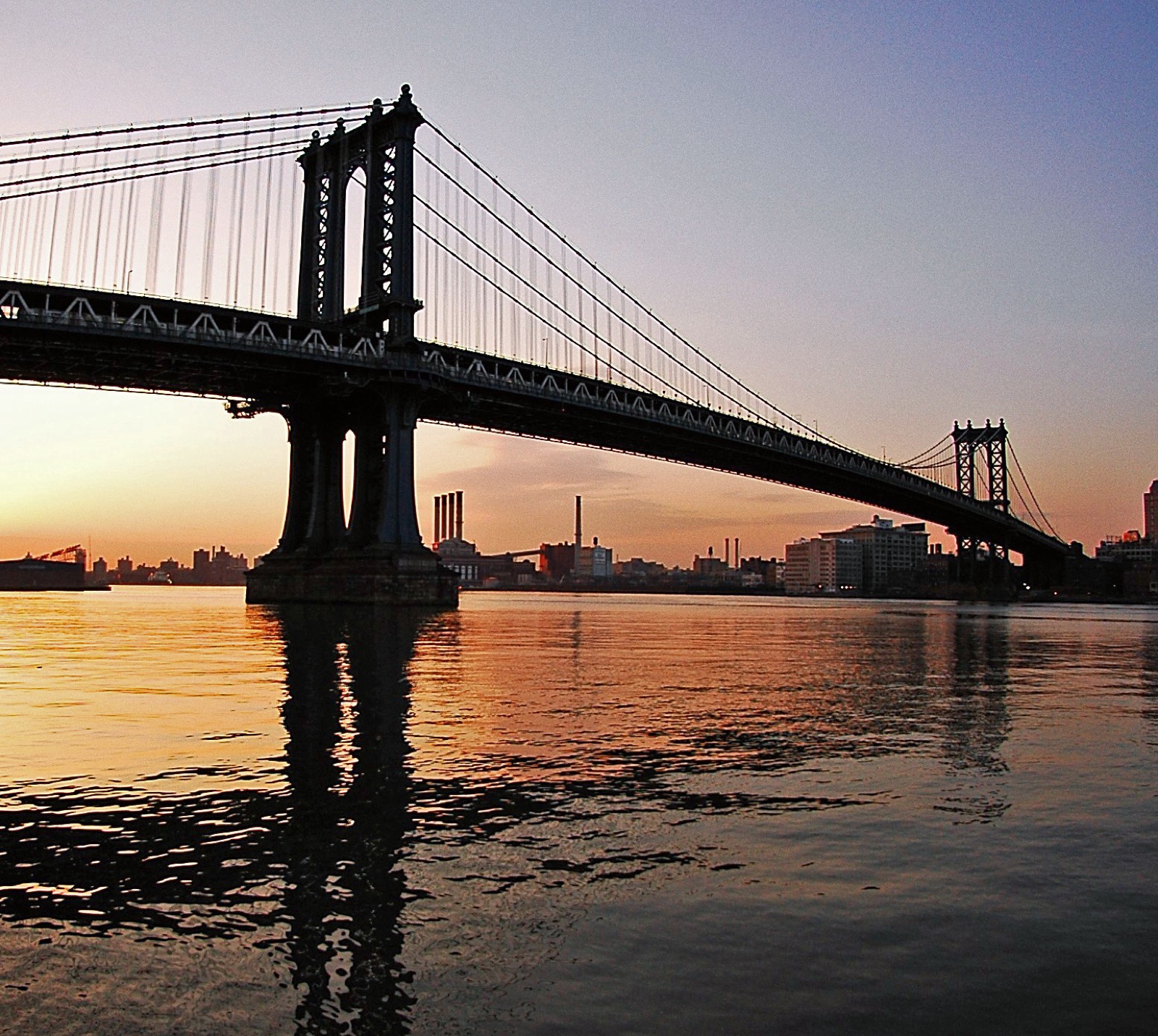
The name is purely geographic and perfectly literal. Two Bridges is the land between the Brooklyn Bridge and the Manhattan Bridge, and those bridges are not background scenery. The Brooklyn Bridge, completed in 1883, was the first steel-wire suspension bridge ever built. Its Gothic Revival towers and web of steel cables sit at the western boundary of the neighborhood, and the massive granite New York anchorage is physically within Two Bridges territory. The cavernous vaulted spaces inside that anchorage have been used for art exhibitions. If you have walked across the Brooklyn Bridge from the Manhattan side, you entered it from Two Bridges.
The Manhattan Bridge, completed in 1909, defines the eastern boundary. It carries the B and D subway trains, car traffic, cyclists, and pedestrians. The sound of trains crossing overhead is the ambient soundtrack of the neighborhood. You hear it from the apartments, from the sidewalks, from inside the restaurants on East Broadway. It is constant and most residents stop noticing it within a few weeks. Visitors never stop noticing it.
The term “Two Bridges” gained currency when the Two Bridges Neighborhood Council was founded in 1955 to address social tensions in what was becoming one of the first significantly racially integrated communities in New York City. At the time, the area had substantial Jewish, Puerto Rican, Italian, and Chinese populations living in close proximity, and gang violence was common. The Neighborhood Council became one of the longest-running community development organizations in the city and co-sponsored nearly 1,500 units of permanently affordable housing between 1972 and 1997.
Before the bridges existed this was shipyard waterfront where the city’s working poor lived
The land that constitutes Two Bridges was, before European colonization, a shoreline of the East River used by the Lenape people for fishing and seasonal encampment. The actual shoreline ran considerably further west than it does today. Dutch colonists pushed northward from the tip of Manhattan starting in 1626, and the Rutgers family, who would later give their name to one of the neighborhood’s public housing complexes, were among the early colonial landholders.
In the 1700s and early 1800s, the waterfront was one of the most commercially active stretches of the East River. Shipyards, ropewalks, warehouses, and maritime suppliers lined the working harbor. Catherine Slip and Rutgers Slip were active landing points for ferries and cargo. The neighborhood was defined by dockworkers, ropemakers, shipwrights, and their families packed into cramped streets behind the waterfront. It was vital, unglamorous, and teeming.
As immigration surged in the second half of the 1800s, Two Bridges became one of the most densely populated immigrant districts in the world. Eastern European Jews settled in the tenements packed between the waterfront and East Broadway. Irish and Italian immigrants occupied adjacent blocks. The Lower East Side as a whole was the most densely populated neighborhood on Earth for a brief period around 1900, and Two Bridges, at its southern end, shared that distinction. The “Lung Block,” a particularly airless stretch of tenements in what is now the Knickerbocker Village footprint, became infamous for tuberculosis rates so extreme that journalist Jacob Riis documented the conditions in “How the Other Half Lives” in 1890, sparking national awareness of immigrant urban poverty.
Knickerbocker Village replaced the worst tenements in the city and housed the most famous spies in American history
The first major intervention in the tenement landscape came in 1933 with the construction of Knickerbocker Village. The 12-building complex covers two full city blocks between Catherine, Monroe, Cherry, and Market Streets. It was built by Fred French on the site of the Lung Block, demolishing the most decrepit tenements and replacing them with 1,590 apartments organized around interior courtyards and gardens. The buildings are simplified Art Deco, 14 stories tall, and were financed through New Deal programs. It was one of the first federally subsidized middle-income housing developments in the United States.
Knickerbocker Village’s most famous residents were Julius and Ethel Rosenberg, who lived in an 11th-floor apartment at 10 Monroe Street. They were arrested, tried, and executed as Soviet spies in 1953 for passing nuclear weapons secrets to the Soviet Union. The case remains one of the most contested judicial decisions in American history, and scholars have since argued that Ethel Rosenberg’s sentence was disproportionate and driven by Cold War hysteria. The espionage that became the most dramatic Cold War case in American history was allegedly conducted from a middle-income housing complex that had been built as a New Deal urban renewal project. That is a Two Bridges kind of irony.
Today Knickerbocker Village is a co-op with rents below market rate. Many residents have lived there for decades. The apartments range from studios to two-bedrooms, and the original hardwood floors, plaster walls, and interior details require cleaning products that will not damage surfaces installed 90 years ago. We use pH-neutral solutions on the floors and dry microfiber on the plaster. No abrasive pads, no silicone-based polish, no ammonia-based sprays near the woodwork.
Al Smith grew up in a two-room apartment on South Street and became the first Catholic to run for president
Alfred E. Smith was born at 174 South Street in 1873, in a two-room apartment in the working-class waterfront that would later become Two Bridges. He grew up in complete poverty. His father died when he was 13 and he dropped out of school to work at the Fulton Fish Market to support his family. From that starting point he became a four-time Governor of New York and the first Roman Catholic to win a major-party presidential nomination, running as the Democratic candidate in 1928. He was a champion of labor rights, women’s suffrage, and social reform. The Alfred E. Smith Houses, the 27-building NYCHA complex that opened in 1953, are named for him.
One block from where Smith grew up, Lillian Wald founded the Henry Street Settlement in 1895 at 265 Henry Street. Wald was a public health nurse who essentially invented public health nursing as a profession in America. She lobbied for child labor laws, helped create the Federal Children’s Bureau, and built one of the most important social service organizations in the country. The Henry Street Settlement is a National Historic Landmark and it is still operating from the same Federal-style row buildings on the same street, running arts, social services, and community advocacy programs 130 years later.
East Broadway is the spine of Little Fuzhou and one of the last authentic immigrant commercial streets in Manhattan
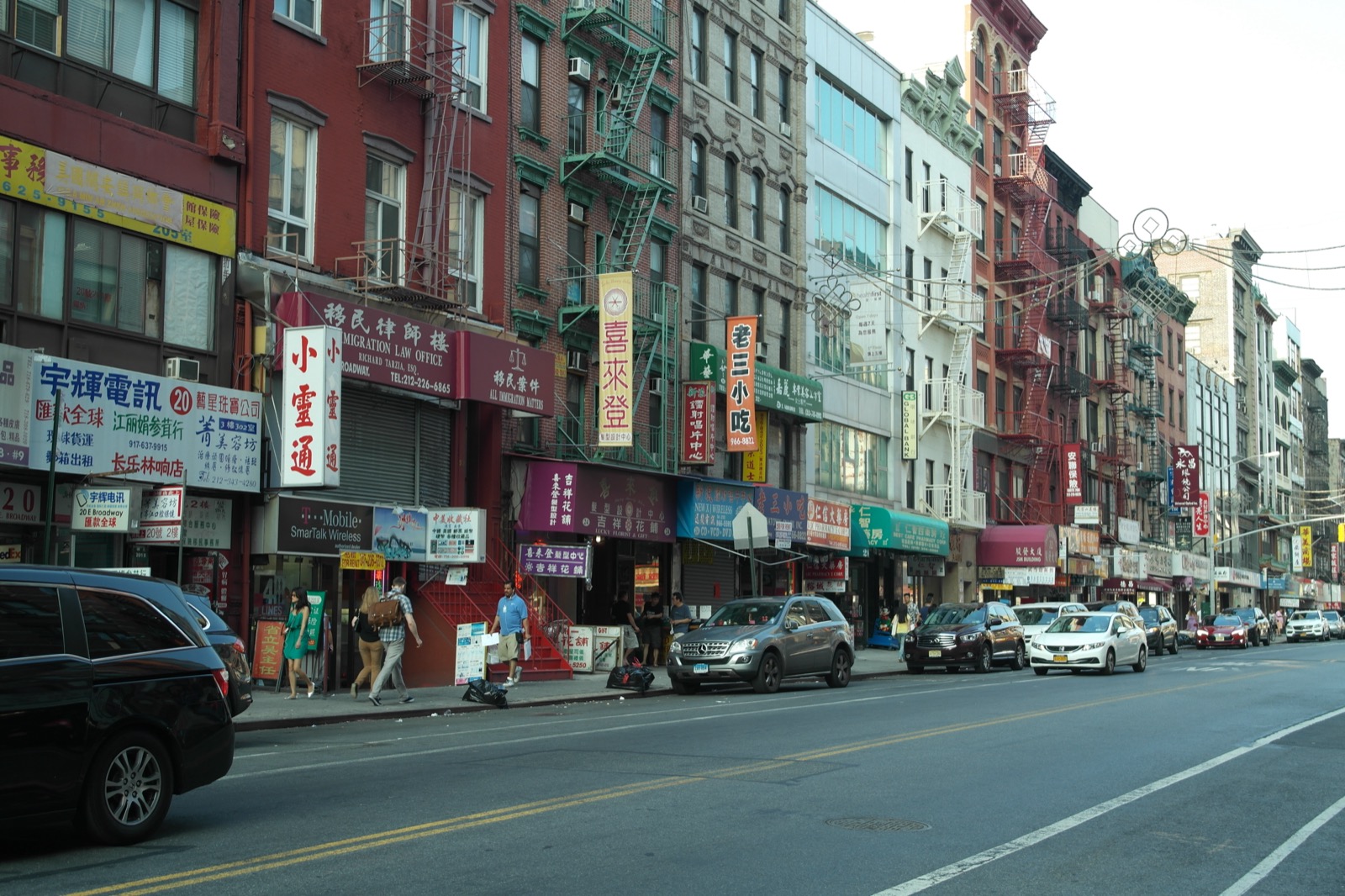
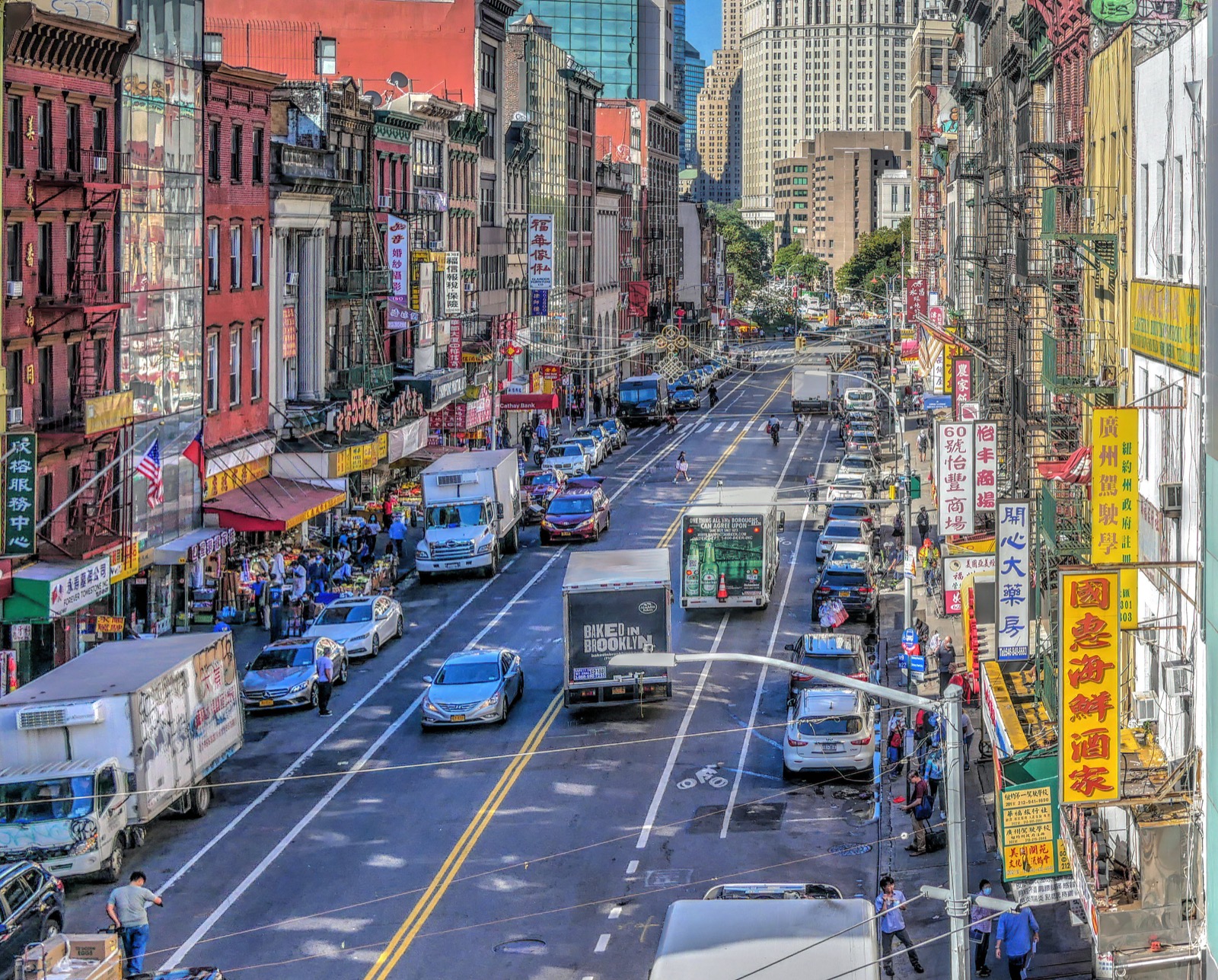
The most significant demographic shift in the neighborhood’s recent history was the arrival of large numbers of immigrants from Fujian Province in southeastern China, beginning in the 1980s and accelerating through the 1990s and 2000s. Unlike earlier Cantonese immigrants who settled in traditional Chinatown to the west, Fujianese immigrants centered on East Broadway and the surrounding blocks, creating a distinct cultural enclave known as Little Fuzhou. The community speaks Fujianese and Hokkien rather than Cantonese, eats different food, and maintains its own network of restaurants, herbal medicine shops, employment agencies, money transfer businesses, and intercity bus lines connecting to Fujianese communities in Philadelphia, Washington D.C., and other East Coast cities.
Walk along East Broadway today and the signage is in Chinese. The restaurants serve hand-pulled noodles, roasted suckling pig, fish ball soup, dan dan mian, and congee. The produce markets sell vegetables that neighborhood grocery stores elsewhere in the city do not carry. Intercity buses load passengers outside the herbal medicine shops. This is not tourist Chinatown. It is a working immigrant community’s commercial corridor, and it functions entirely on its own terms.
Lan Zhou Handmade Noodles at 144 East Broadway is probably the most well-known restaurant in the neighborhood. The hand-pulled noodles in beef broth cost about eight dollars and the line is almost always out the door. If you want to eat on East Broadway while your apartment gets cleaned, you will not spend more than fifteen dollars and the food will be better than most sit-down restaurants charging five times that.
The cooking culture of Two Bridges leaves a mark on the apartments. Wok cooking, deep frying, and high-heat roasting produce grease films on range hoods, cabinet faces, backsplash tiles, and the ceiling above the stove. Herbal medicine preparation leaves residues that standard wiping does not address. We degrease every kitchen surface within six feet of the stove, pull drip trays, and scrub the outside of the range hood. If you want the oven interior done, add a deep clean and we handle it.
The supertall tower controversy made Two Bridges a national story about inequality and neighborhood identity
Beginning around 2015, developers proposed a cluster of luxury supertall towers along the Two Bridges waterfront. One Manhattan Square, the 847-foot, 80-story glass tower developed by Extell, was completed in 2019. It sits surrounded by NYCHA towers on three sides. The juxtaposition of a building with a rooftop pool, a sports complex, and apartments renting for $3,500 to $15,000 a month next to deeply subsidized public housing may be the starkest wealth contrast visible in any single Manhattan viewshed.
Additional proposed towers at 247 Cherry Street (1,013 feet) and 260 South Street (two towers of 62+ stories) drew fierce community opposition. Former City Council Member Margaret Chin, former Manhattan Borough President Gale Brewer, and a coalition of community organizations argued the towers would overwhelm the neighborhood’s low-rise character, block views, increase density without adequate infrastructure, and accelerate displacement. The New York Court of Appeals rejected the legal challenges in May 2021, but community opposition has continued.
The permanently affordable housing built by the Two Bridges Neighborhood Council in the 1970s through 1990s provides a floor that cannot easily be removed. And the Fujianese immigrant community on East Broadway shows no signs of weakening. The density of its institutional infrastructure makes it among the most resilient ethnic enclaves remaining in Manhattan. The question is whether a neighborhood with this much history can maintain its identity when the economics of Manhattan waterfront real estate push against it from every direction.
Apartment cleaning in Two Bridges means adapting to buildings from four different eras
The practical difference between cleaning a 1933 Knickerbocker Village unit, a 1953 NYCHA apartment, an 1890s tenement walk-up, and a 2019 luxury condo is significant. The materials are different. The access is different. The surfaces are different. The amount of time changes.
A standard apartment cleaning in a Two Bridges studio or one-bedroom takes about two hours. A larger Knickerbocker Village two-bedroom or a One Manhattan Square condo takes longer, and a first-visit deep clean in an older apartment that has not been professionally cleaned in years takes the longest. We price flat-rate so you see the number before you commit. Whether you need recurring house cleaning on a weekly schedule or a one-time reset, the price is the same per visit.
For tenants moving in or out, our move-in and move-out cleaning handles inside cabinets, appliance interiors, baseboards, window sills and ledges, bathroom grout, and every surface the next occupant will touch. Walk-ups on Henry, Madison, and Monroe Streets get the same service as lobby buildings. We carry everything up.
Your cleaning takes about two to three hours, which is enough time to walk the Brooklyn Bridge to Brooklyn Heights and back, eat hand-pulled noodles at Lan Zhou on East Broadway, or walk the East River Greenway between the two bridges. You leave your apartment looking one way and come back to it looking different. That is the point.
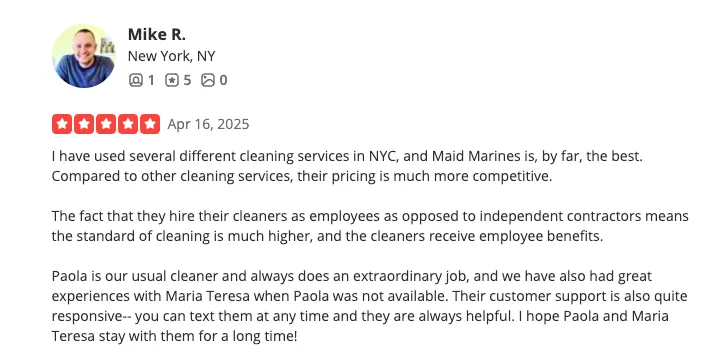
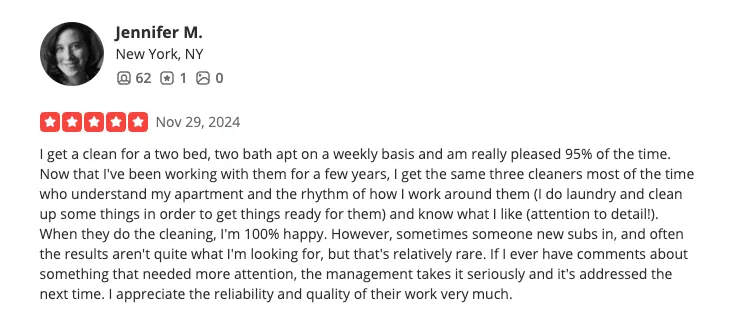
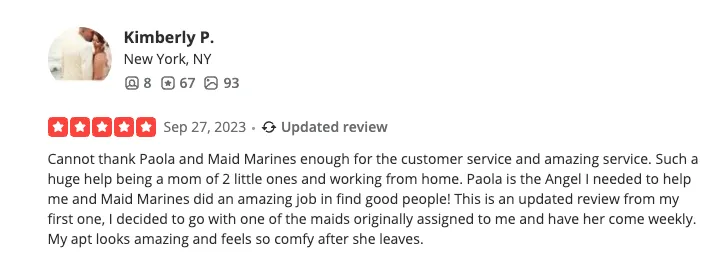
You pick your date and time on our booking page. Our cleaners are W-2 employees, fully insured, and they arrive with all products and equipment. We serve Two Bridges and all of Lower Manhattan, including nearby FiDi, Little Italy, Tribeca, and the East Village. If your building requires a Certificate of Insurance, we can provide one. Our teams use the F, B, D, J, M, and Z trains, all of which stop within walking distance of the neighborhood. We know how to get here and we know how to clean what is here. See all of our cleaning services or check service details and pricing to find the right fit for your home.