
The Lower East Side has more history per square block than almost anywhere in the country, and most of it is still standing. The tenement buildings that went up between the 1870s and 1905 are the same buildings people live in today. Five-story brick walk-ups with fire escapes bolted to the facade, ground-floor storefronts, narrow stairwells, and railroad apartments where the rooms connect end to end with no hallway. The apartments are small. The ceilings are high. The walls are plaster. And the dust, grease, and grime that accumulate in a 150-year-old building operate on different rules than a new construction condo in Midtown.
We clean the Lower East Side every week. Walk-ups on Orchard Street, lofts near the Bowery, towers in Essex Crossing, rent-stabilized apartments on Rivington and Stanton that have not changed tenants in 20 years. The buildings here tell you what kind of cleaning they need if you pay attention to the architecture. And the architecture on the LES tells a story that goes back to the 1860s.
The tenement buildings that shaped the Lower East Side also shaped American housing reform
The word “tenement” carries a weight in this neighborhood that it does not carry anywhere else. The Lower East Side was the epicenter of tenement construction in the late 19th century, and the conditions inside those buildings triggered the first housing reform laws in the country.
The earliest tenements, built before the Tenement House Act of 1879, were dark, narrow buildings with almost no airshafts. Families of six or eight lived in three-room apartments with no running water and no indoor toilets. The 1879 law introduced the “dumbbell” floor plan, which pinched the building in the middle to create small light courts on each side. It was an improvement, but barely. The Tenement House Act of 1901 finally required larger courtyards, fire escapes, and individual toilets in each apartment. Those “New Law” tenements are the ones that dominate the LES streetscape today.
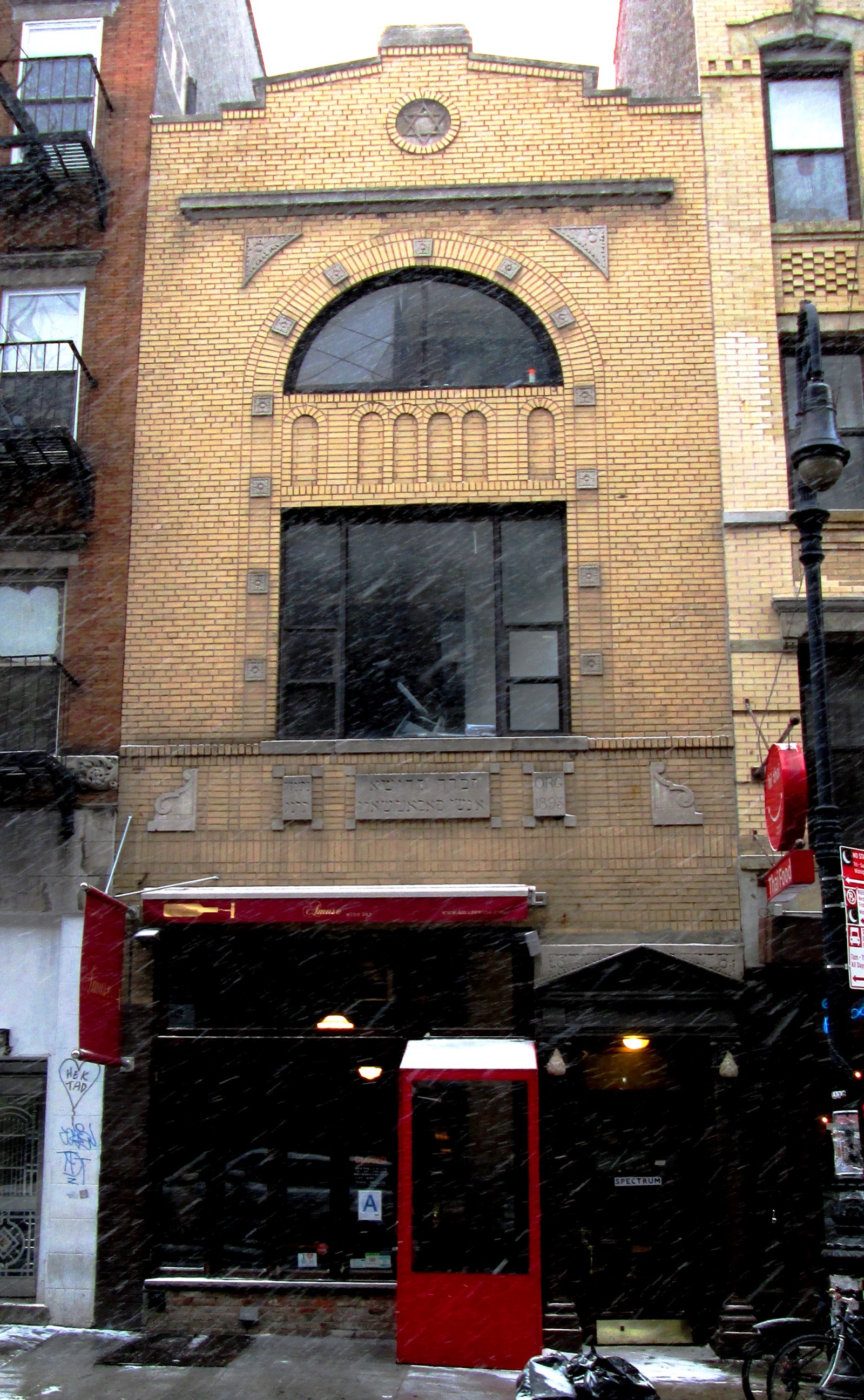
At the peak of the immigration wave around 1910, the Lower East Side held roughly 540,000 people per square mile. That made it the most densely populated place on Earth at that time. The streets smelled of herring, coal smoke, and challah from the bakeries. Peddlers worked 16-hour days on Orchard Street. Hester Street was a wall-to-wall open-air market. Families slept in shifts because there was not enough room for everyone to lie down at the same time.
Jacob Riis photographed these conditions in 1890 and published them in “How the Other Half Lives,” which brought tenement life to a middle-class readership that had never seen it. His photographs of dark rooms, airless hallways, and children sleeping on fire escapes forced political action on housing and sanitation reform. The Lower East Side was not just where immigrants lived. It was where the country was forced to reckon with how immigrants lived.
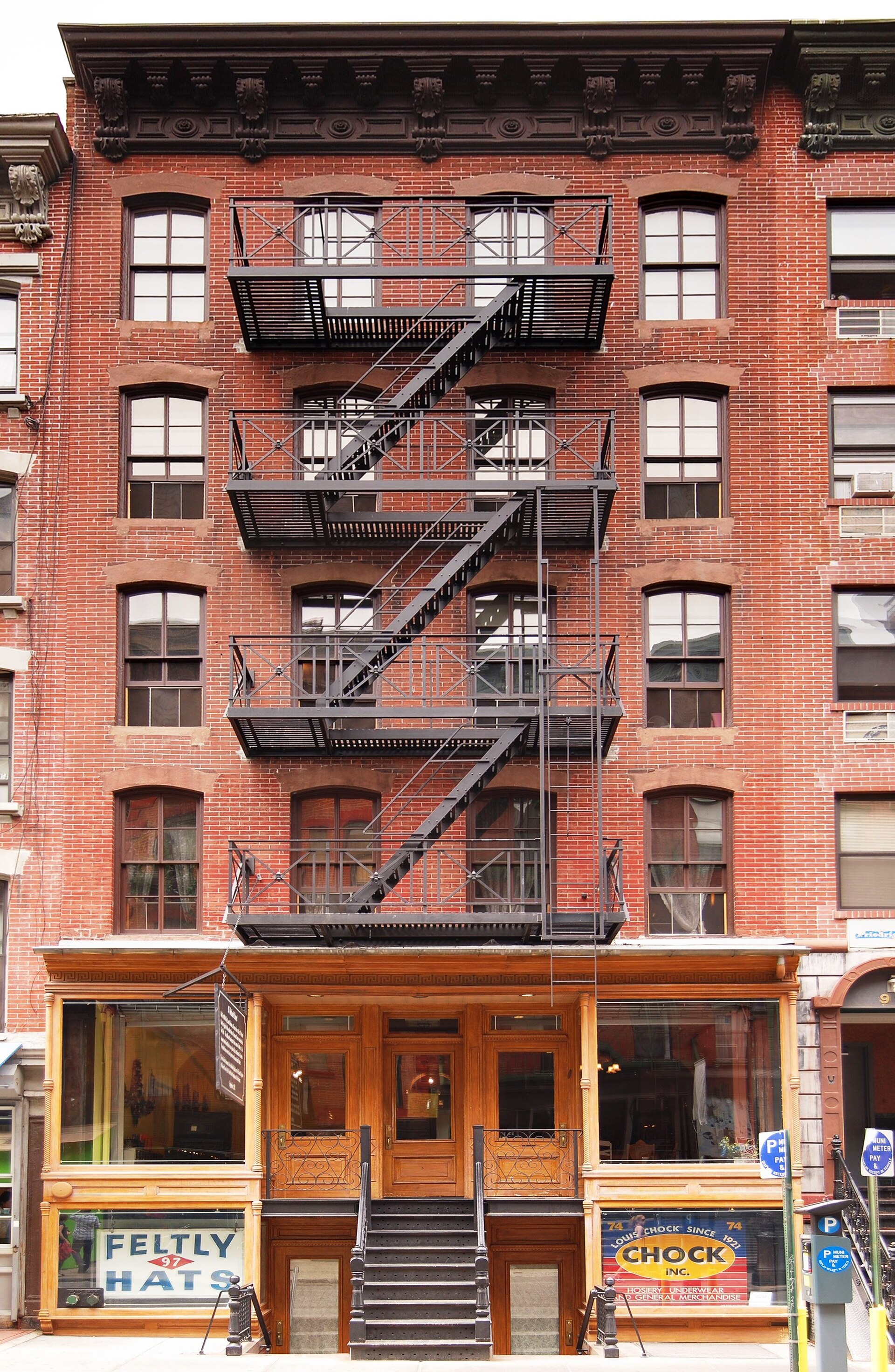
The Tenement Museum at 97 Orchard Street preserves one of these buildings exactly as it was. Built in 1863, the building housed nearly 7,000 people from over 20 nations between its construction and 1935, when the upper floors were sealed shut and left untouched. The restored apartments inside are the most intimate record of working-class immigrant life in America. If you live on the LES and have not visited, it is worth an afternoon.
Orchard Street went from pushcart market to boutique shopping corridor in the span of one century
Orchard Street is probably the most famous shopping street in the history of New York’s immigrant neighborhoods. From the 1880s through the 1980s, it was a Sunday open-air market where Jewish merchants sold textiles, clothing, leather goods, and household items from narrow storefronts and pushcarts lining the curb. The Sabbath meant Saturday was closed, so Sunday became the commercial day. Shoppers came from across the city to buy discount clothing and fabric by the yard.
The merchants are mostly gone now. The storefronts that once sold bolts of wool and dresses at wholesale now house cocktail bars, vintage boutiques, and galleries. Ludlow Street, one block east, became the epicenter of the LES indie rock scene in the 1990s. Mercury Lounge and Piano’s booked bands that went on to fill arenas. The neighborhood exported a specific kind of lo-fi cool that influenced music and nightlife globally for about 15 years.
That era is fading too. Commercial rents have pushed out many of the independent venues. The bar-and-music-venue economy that defined the LES from the mid-1990s through the 2010s has contracted, replaced by restaurants and boutique hotels aimed at higher-spending visitors. The Hotel on Rivington, a 21-story glass tower completed in 2004, was the first luxury high-rise in the historic tenement district. It looked like it had landed from another planet. Now it blends in with the newer development around it.

The Eldridge Street Synagogue sat crumbling for decades before one of the most painstaking restorations in the city
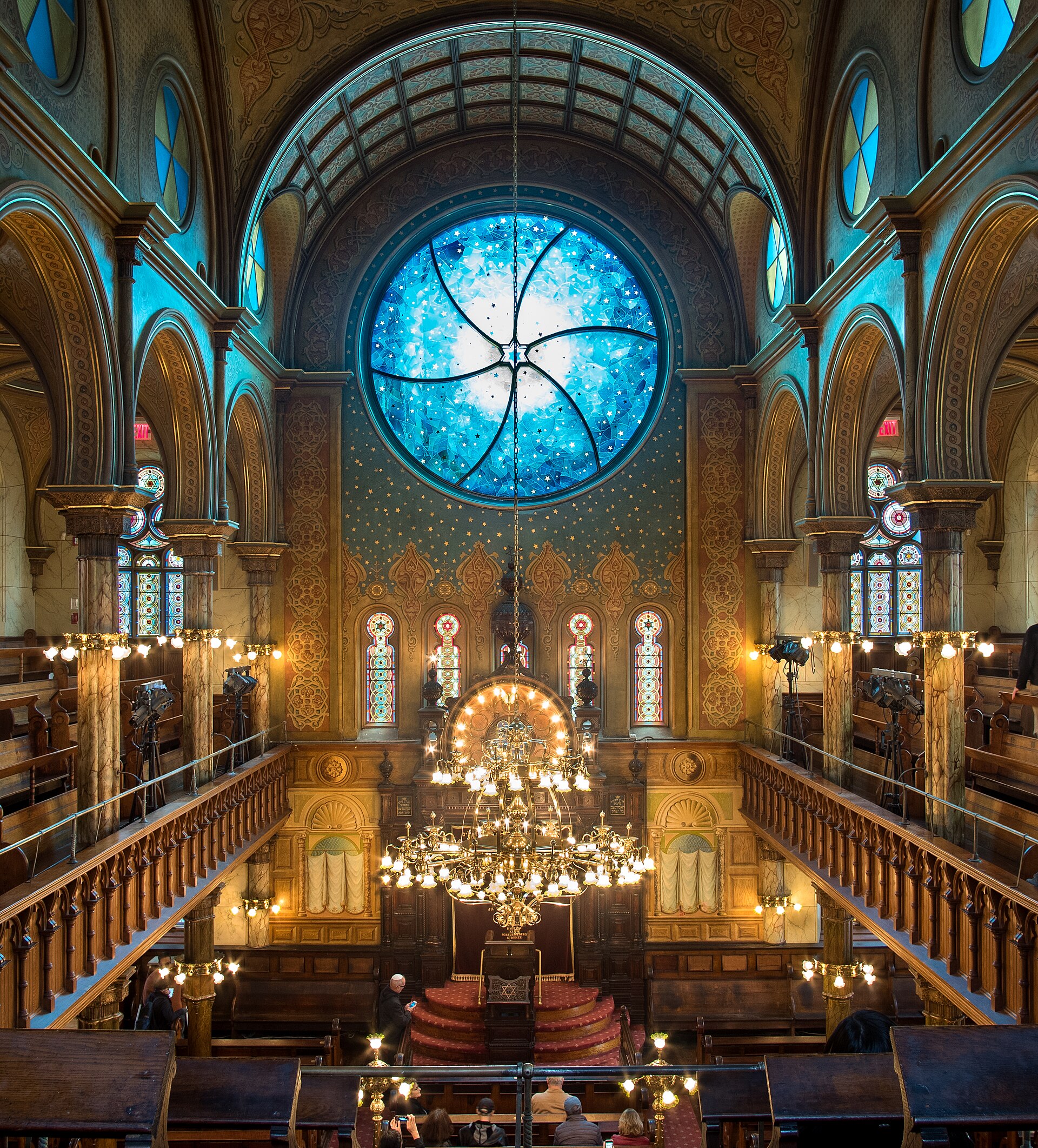
The Museum at Eldridge Street, at 12 Eldridge Street near Canal, is one of the most beautiful interiors in Manhattan and one of the least visited. Built in 1887, it was the first great synagogue constructed in America by Eastern European Jewish immigrants. The design is Moorish-Gothic Revival with a soaring interior, intricate woodwork, painted ceilings, and a rose window that ranks among the finest architectural details in the borough.
By the 1940s, as the Jewish population dispersed to the outer boroughs and suburbs after World War II, the congregation had dwindled to a handful. They bricked up the main sanctuary and held services in the basement. The building sat that way for decades, deteriorating. Rain came through the roof. Plaster fell from the walls. The rose window held but the structure around it did not.
The restoration project, completed in 2007, was painstaking. The building is now a National Historic Landmark and operates as a museum with guided tours. The interior today looks essentially as it did in 1887, which is a minor miracle given how close the building came to being lost entirely.
Two million Eastern European Jews passed through these blocks and left institutions that are still open
The cultural identity of the Lower East Side is inseparable from the Jewish immigrant experience that dominated it from the 1880s through the 1940s. Over two million Ashkenazi Jews from Russia, Poland, Romania, and the Austro-Hungarian Empire passed through or settled here, fleeing pogroms and economic devastation. They built synagogues, Yiddish theaters, labor unions, anarchist newspapers, and food institutions that defined the neighborhood for 80 years.
Some of those institutions are still operating. Katz’s Delicatessen has been slicing pastrami at 205 East Houston since 1888. The ticket system they hand you when you walk in is the same system they introduced during World War II. Russ and Daughters has been selling smoked salmon, sturgeon, whitefish salad, and herring from a narrow shop on Houston Street since 1914. It was the first business in America named after daughters. Joel Russ wanted to honor Hattie, Ida, and Anne, who worked the counter alongside him. Yonah Schimmel Knish Bakery on East Houston has been making handmade knishes since 1910 and is the only traditional knishery still operating in Manhattan.
The Forward Building on East Broadway, built in 1912 as the home of the Jewish Daily Forward, the most influential Yiddish-language newspaper in history, still stands. The faces of Karl Marx and Friedrich Engels are carved into the terra cotta frieze above the entrance. The building is now luxury condominiums. That transition from radical Yiddish journalism to luxury condos captures the LES transformation in a single address.
The LES also incubated the American labor movement. The International Ladies’ Garment Workers’ Union was born here in 1900. The Triangle Shirtwaist Factory fire of 1911, which killed 146 garment workers, most of them young immigrant women, occurred just north of the neighborhood and galvanized tenants and workers from these blocks into organized action. The streets that produced socialist politicians and trade union organizers in 1910 now produce cocktail bars and boutique hotels. The buildings are the same.

Essex Crossing filled a 57-year gap in the neighborhood and changed what the LES looks like going forward
The single biggest change to the Lower East Side in the past decade is Essex Crossing, a 1.65-million-square-foot mixed-use development on the former Seward Park Urban Renewal Area between Essex Street, Delancey Street, and Broome Street. The site was cleared in 1967, displacing roughly 1,800 families, a majority of whom were Black and Puerto Rican. The city promised redevelopment. The lot sat empty for 57 years.
Ground was finally broken in 2015. The development includes over 1,000 residential units, roughly 70 percent market rate and 30 percent affordable. The Essex Street Market, which had been operating from an older building since 1940, relocated into a new ground-floor space inside the complex. The International Center of Photography moved in. Retail, office space, and a bowling alley followed.
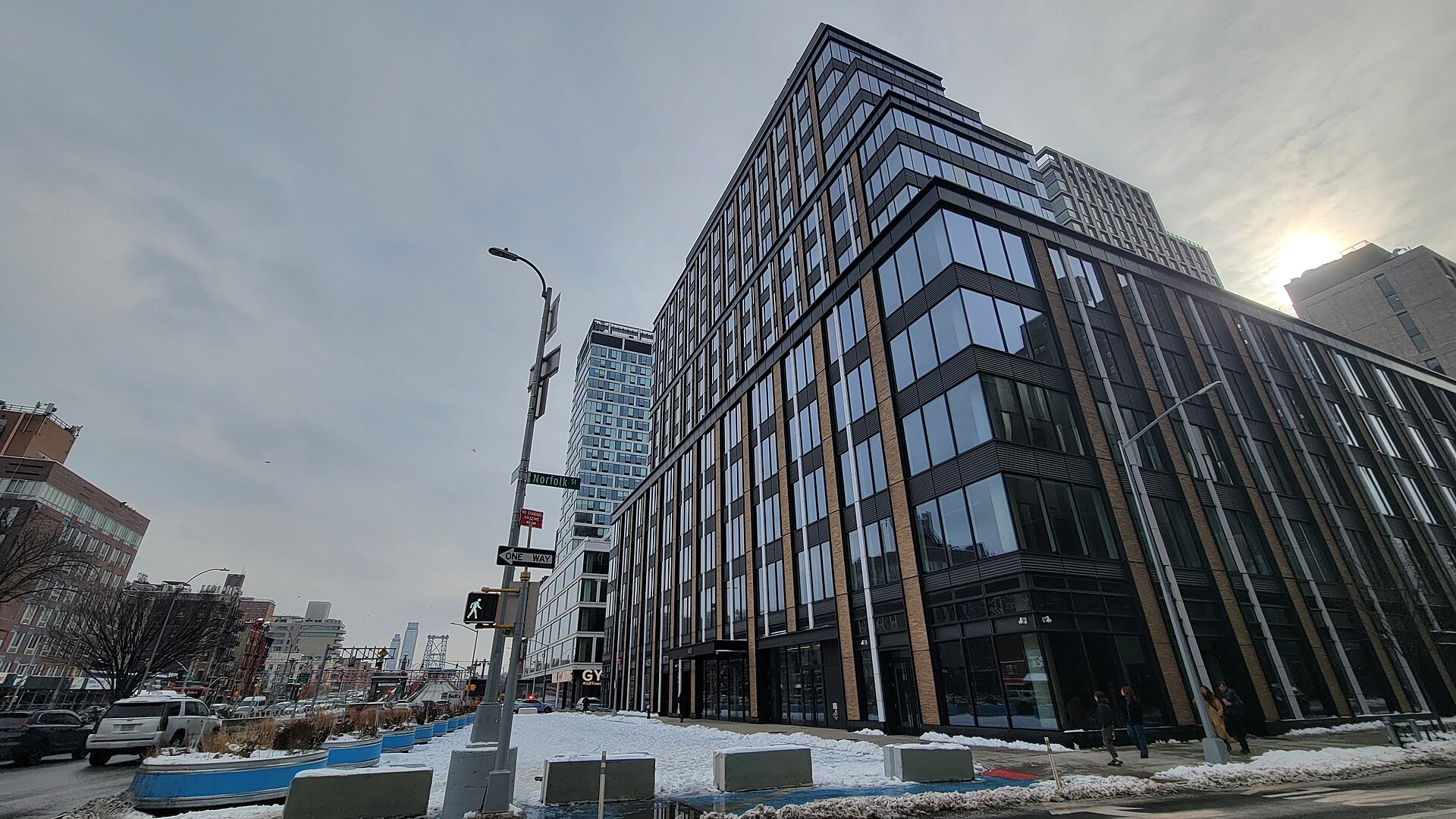
For longtime residents, Essex Crossing is complicated. It finally addressed a decades-old broken promise. It also brought market-rate housing and national retail chains into a neighborhood where median household income is still around $38,000 to $45,000. The tension between old and new on the LES has always been real, and Essex Crossing concentrated it into a few city blocks.
The cleaning needs in Essex Crossing towers are different from the tenement walk-ups around them. Doorman buildings with lobby access, modern ventilation, in-unit laundry, and standard layouts. We handle the Certificate of Insurance paperwork for building management and coordinate with front desk staff on scheduling. For tenants moving in or out of Essex Crossing or any LES building, our move-in and move-out cleaning covers the full reset of every surface, inside cabinets, appliance interiors, baseboards, and window sills and ledges.
Cleaning a 150-year-old tenement walk-up is not the same job as cleaning a new tower
The dominant housing type on the Lower East Side is still the pre-war tenement walk-up. Four to seven stories, no elevator, narrow stairwells, railroad-layout apartments where the rooms connect front to back without a hallway. The kitchens are small. The bathrooms are small. The closets, if they exist, are afterthoughts added decades after the building went up.
These apartments accumulate grime differently than modern construction. The plaster walls hold dust in their texture. The cast-iron radiators have fins packed with decades of lint and dust that burns off every October when the steam heat kicks on, filling the apartment with that scorched smell for a week. The original hardwood floors under layers of polyurethane have gaps between the boards where dirt collects and a flat mop cannot reach. The windows are old enough that the sills and tracks have paint buildup thick enough to resist a standard wipe.
A standard apartment cleaning handles the weekly and biweekly maintenance once the apartment is in good shape. But the first visit in a longtime LES apartment almost always needs to be a deep clean. Our team works top to bottom, room by room. Radiator covers and vent grilles dusted, floors cleared behind them. Baseboards scraped down to the current paint layer. Kitchen cabinet faces degreased, with the interiors available as an add-on. Bathroom tile grout scrubbed where it has yellowed. The difference between the first visit and the second visit is significant, and that is the point of the reset.
The converted lofts near the Bowery and Canal Street are a different job entirely. Open floor plans, exposed brick, sealed concrete floors, industrial windows, and ceiling heights that mean dust collects on surfaces a standard step stool cannot reach. We bring extension tools for the lofts and adjust the product list based on your specific finishes. Brick gets dry microfiber only. Concrete gets pH-neutral cleaner. The approach changes building by building on the LES because the building stock here spans 150 years.
For recurring house cleaning or apartment cleaning, we match the same team to your apartment so they learn the surfaces and layout once and remember them. That matters more in a neighborhood where no two buildings are exactly the same.
The Lower East Side is many neighborhoods layered on top of each other and the food proves it
The LES today is not one community. It is several, stacked on top of each other in the same few square blocks. The southern edge bleeds into Chinatown, where Chinese grandmothers pull wheeled carts toward the fish market on Grand Street at dawn. The western edge along Allen Street and the Bowery holds a mix of Chinatown businesses and newer restaurants that charge $18 for a cocktail. The NYCHA developments along the eastern and southern edges house Puerto Rican and African American families who have been here since the postwar decades. The newer arrivals are young, cosmopolitan, and paying market-rate rent in buildings that were slums 40 years ago.
The food reflects all of it. Katz’s and Russ and Daughters represent the Jewish institutional layer. Cervo’s on Canal Street serves Iberian coastal seafood and is one of the most critically acclaimed restaurants in its era. Ivan Ramen on Clinton Street makes Michelin-recognized rye-noodle ramen. Doughnut Plant on Grand Street invented the square doughnut and kicked off the artisan doughnut movement nationally. And the Chinese bakeries, dim sum houses, and produce markets along the southern blocks serve a community that has been here for over a century.
You can eat your way through four generations of immigration in a 10-minute walk. That layering is what gives the LES its weight. The buildings are old. The institutions are old. The new arrivals keep coming. And every layer leaves something in the walls, the kitchens, and the streets that the next layer inherits.
What booking looks like for Lower East Side residents
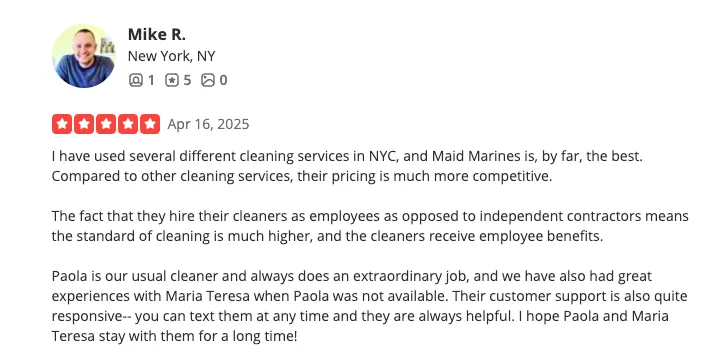
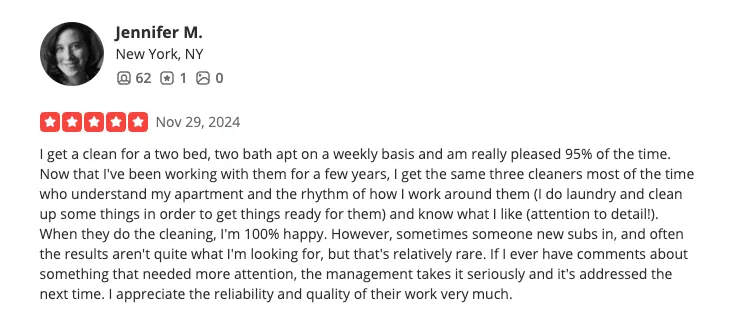
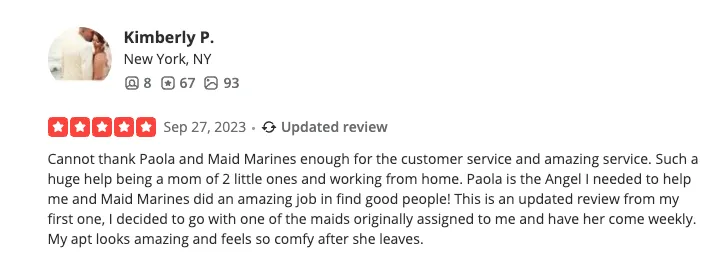
You pick your date and time on our booking page. You see your flat-rate price before you commit. If your walk-up has specific surface concerns or your building needs a COI on file, you tell us once and we note it on your account permanently. Our cleaners are W-2 employees, not gig workers. They are vetted, insured, and they show up with products matched to your building type.
We serve the Lower East Side and all of downtown Manhattan, including nearby East Village, Chinatown, Little Italy, Two Bridges, SoHo, and Alphabet City. Our teams use the F and M trains to Delancey Street/Essex Street or the J, M, Z to Essex Street. Browse all of our cleaning services in NYC or check out our full services page if you want to see everything we offer.