
Bellerose sits at the far eastern edge of Queens, close enough to Nassau County that the neighborhood’s name literally continues across the border. Developer Helen Marsh coined that name in 1906, taking the French words for “beautiful rose” and applying them to a planned commuter community on what had been Long Island farmland. More than a century later, the Cape Cods and Colonial Revivals she imagined filling those lots are still there, well-maintained and fully occupied, and the neighborhood has become something she almost certainly did not anticipate: one of the most established South Asian communities in New York City, layered onto a suburban infrastructure that was built for postwar Irish and Italian families and has absorbed the transition without losing what made it appealing in the first place.
This is a neighborhood that rewards patience. Bellerose does not announce itself. There is no signature landmark, no famous park, no restaurant that draws visitors from other boroughs. What it has instead is a quality of life that holds steady across generations, and a housing stock that represents some of the best-maintained single-family homeownership available anywhere in the five boroughs at these price points.
The housing stock that defines Bellerose was built for a specific kind of life
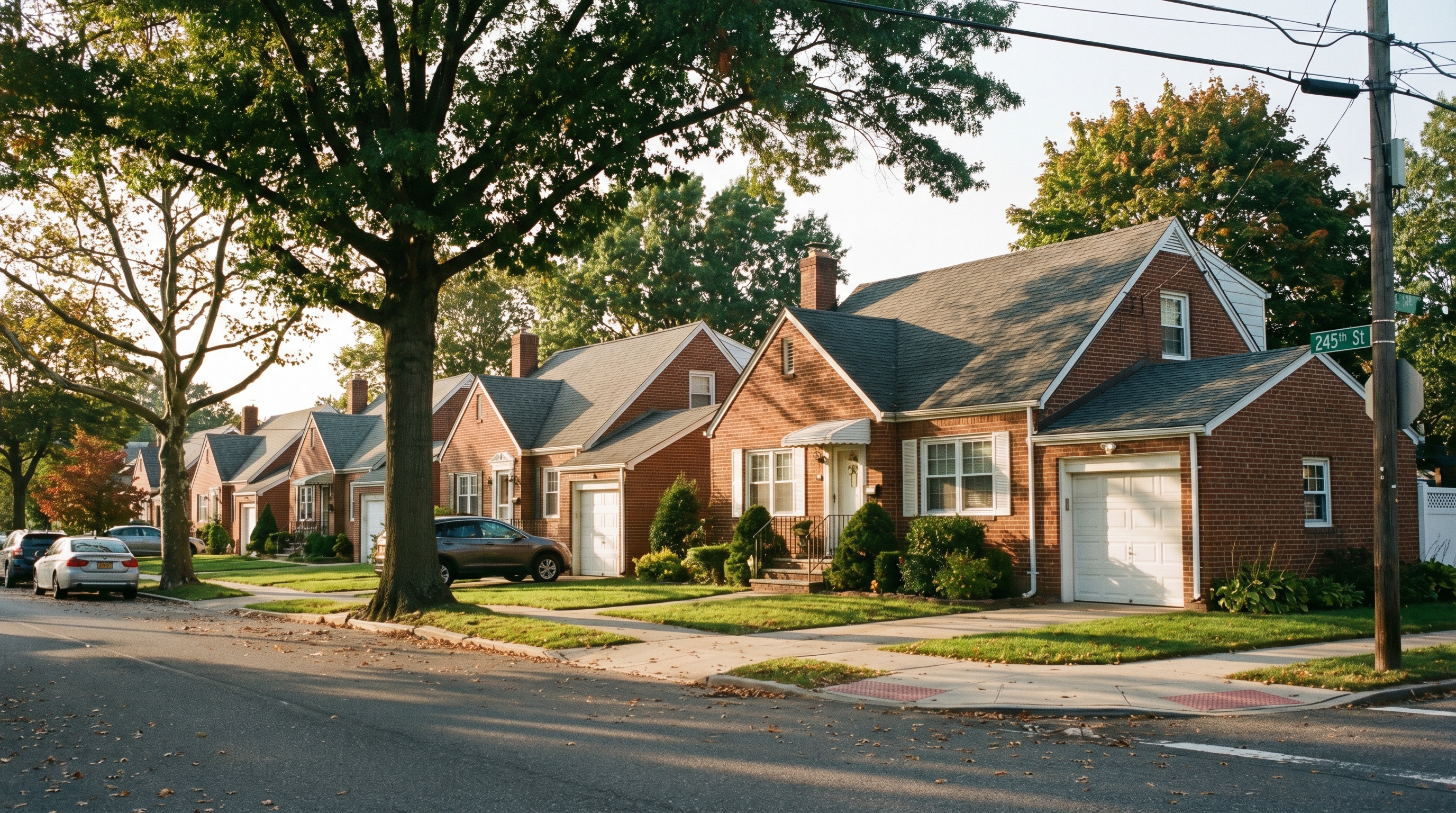
The homes that make up Bellerose were constructed primarily between the 1920s and the 1950s, with the largest wave coming in the postwar decade when returning veterans and their families needed affordable homeownership within commuting distance of Manhattan. What they got were brick Cape Cods, one-and-a-half-story homes with gabled roofs and dormers added over time as families grew, and Colonial Revival two-stories with attached garages and enough square footage to raise a family without feeling crowded.
These are not large homes by suburban standards. A typical Bellerose Cape Cod runs somewhere between 1,100 and 1,600 square feet across its main floors, often with a finished basement that adds meaningful living space below. The two-family homes that occupy many blocks run larger, typically 1,600 to 2,400 square feet split between two units, and represent the outer borough ownership model that has worked for generations: live in one unit, rent the other, let the rental income carry a portion of the mortgage.
What distinguishes the housing stock here is not scale but condition. Bellerose homeowners take property maintenance seriously, and it shows on almost every block. Brick facades that were laid in the 1940s are clean and repointed. Front yards are groomed. Driveways are in good repair. The neighborhood’s civic culture has long treated “taking care of your home” as a community obligation, not a personal choice, and the consistent appearance of the residential streets reflects that attitude directly.
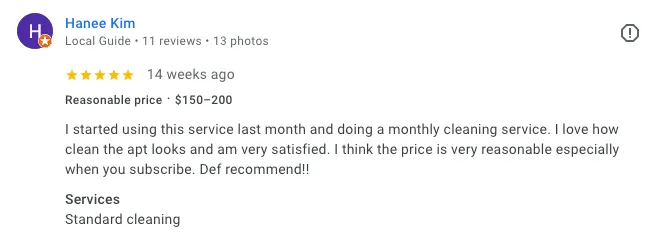
For cleaning purposes, these homes present a specific and consistent set of challenges. Hardwood floors from the 1950s. Kitchen layouts that were designed for a single family but now serve extended households cooking ambitious meals. Finished basements that function as second living rooms, home offices, playrooms, or all three simultaneously. Attic conversions that added bedrooms to homes originally designed without them. The cleaning job at a Bellerose Cape Cod is different from an apartment clean in a number of ways, most of them having to do with the vertical distribution of a home across multiple distinct levels that each need full attention.
What four decades of South Asian settlement have done to the neighborhood
The South Asian transformation of Bellerose began in the 1980s and accelerated through the 1990s and 2000s. Families from India, Pakistan, and Bangladesh, drawn by the stable housing stock, the school quality, and the proximity to South Asian commercial corridors in Floral Park and Jamaica, began purchasing homes from the aging Irish and Italian families who had built the neighborhood in the postwar era. Today South Asian residents constitute a plurality or majority of the population, and the neighborhood’s commercial character on Jamaica Avenue reflects this completely.
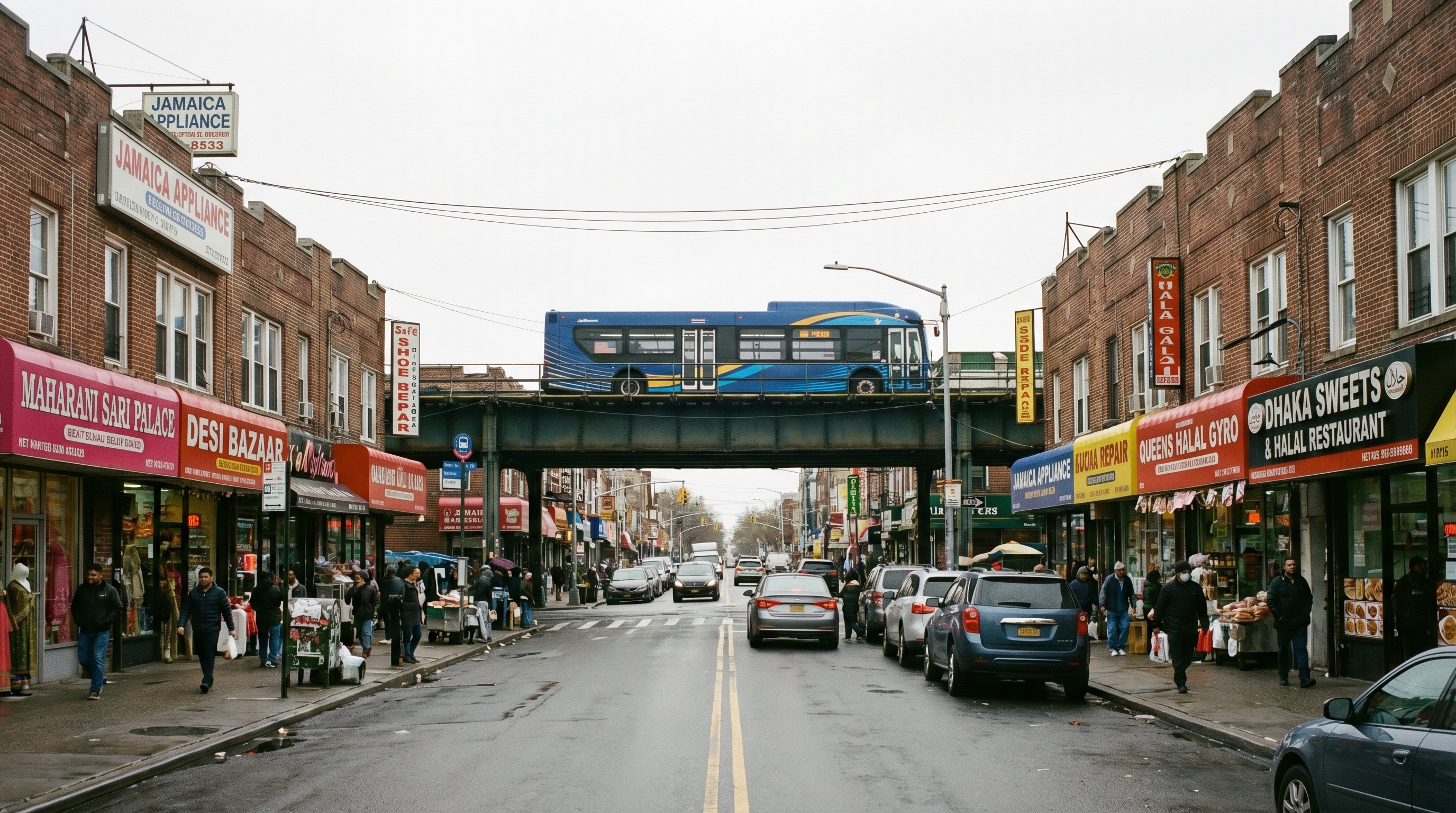
The Jamaica Avenue strip, which runs east-west through the neighborhood toward the Nassau County line, carries a commercial mix that is unlike anything in inner Queens. Sari shops, gold jewelry stores selling 22-karat gold to a community that treats jewelry as savings, halal butchers, mithai shops selling South Asian sweets, and restaurants serving Pakistani biriyani and Bangladeshi karahi occupy storefronts alongside the pizza places and delis that have been on these blocks since the 1960s. The two coexist without drama because the community that moved in found value in the neighborhood exactly as it was and built on top of it rather than displacing what was there.
What this means for household cleaning is worth acknowledging directly. Extended family living arrangements are common in Bellerose’s South Asian households, and a home that houses grandparents, parents, and children across multiple floors has different square footage utilization and different cleaning demands than the same home occupied by a nuclear family of four. Kitchens where cooking involves daily use of spices, oils, and high-heat techniques build up a different kind of residue than kitchens where cooking is lighter and less frequent. Our house cleaning teams approach Bellerose kitchens knowing what to expect and carrying the degreasers necessary to address it.
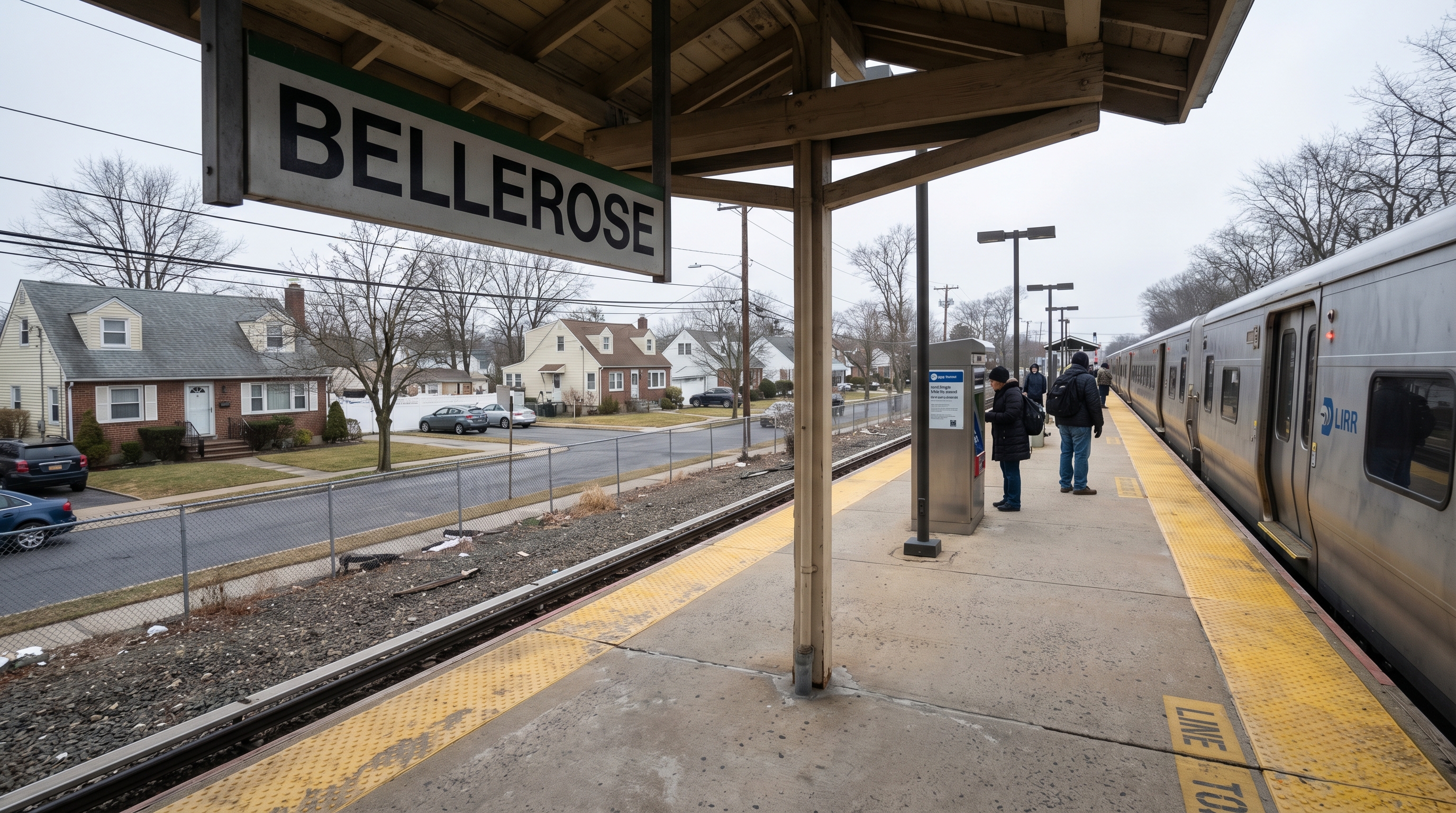
The LIRR station that makes this neighborhood’s commute work
Bellerose has no direct subway service. This fact is fundamental to understanding the neighborhood. The nearest subway requires a bus connection of 30 to 40 minutes to reach Jamaica Center. For most residents, that route is not practical as a daily commute.
What Bellerose has instead is the Long Island Rail Road. The Bellerose station on the Far Rockaway branch provides direct service to Penn Station in approximately 28 to 30 minutes. That commute time is competitive with many neighborhoods that do have subway access, and the LIRR is genuinely more comfortable than the subway for a daily round trip. You board at a low-density suburban station, get a seat, and arrive at Penn Station in half an hour.
This transit reality shapes the character of the neighborhood directly. Bellerose attracts residents who are comfortable driving to shopping, who do not expect to walk to a subway, and who plan their transportation around the LIRR schedule. Car ownership is very high. The neighborhood shuts down early. Social life is organized around family, school, and houses of worship rather than bars and restaurants. These are the features that attract the families who choose Bellerose, and they are also the features that distinguish cleaning work here from work in transit-accessible neighborhoods with more transient residents.
Cleaning single-family homes that have absorbed decades of family life
A Cape Cod or Colonial Revival in Bellerose that has been owned by the same family for 30 or 40 years carries the accumulated evidence of that tenure in specific ways. Radiators that have been painted over multiple times accumulate dust in the fins that burns off every fall when the heat season starts. Basement floors that were finished in the 1980s have tile or carpet that absorbs foot traffic differently from newer installations. Bathrooms that were retiled at different points in the home’s history have grout lines of varying age and porosity. Kitchen cabinets that have been cleaned with the same product for decades have a surface chemistry that does not always respond predictably to a new cleaner.
Our deep cleaning service for Bellerose homes starts at the top of each level and works down, dusting the radiator covers and vent grilles before that dust can migrate to the floors, addressing grout lines in older bathrooms with appropriate products rather than a generic approach, and spending time in the kitchen on the range hood and backsplash surfaces where cooking residue has had the most time to accumulate. For recurring cleaning visits, we assign the same team to the same home so that knowledge about the specific surfaces and the family’s preferences carries forward from one visit to the next.
The most suburban neighborhood in Queens, and what that means for household services
Bellerose is often described as the least like New York City of any neighborhood that is technically part of New York City. The streets are wider than in inner Queens. Driveways are the norm rather than the exception. Front yards are small but present. Neighbors know each other from the block association and the school pickup line. The pace of daily life is slower than anything you find closer to the city’s center, and the community’s values are organized around stability, family, and property maintenance.
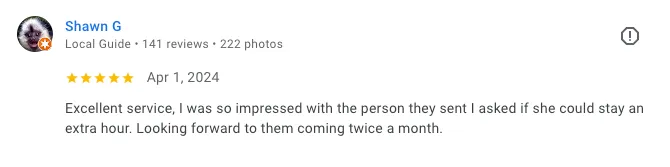
These values are directly relevant to how household services work in the neighborhood. Bellerose homeowners are discerning about who they let into their homes and attentive to quality of work. Word of mouth travels quickly in a community of long-tenured residents who talk to each other. Recommendation from a neighbor carries more weight here than any advertising. When a cleaning service does good work in a Bellerose home, the family is likely to stay with that service for years and refer their neighbors. When the work is careless, that information moves through the block association within a week.
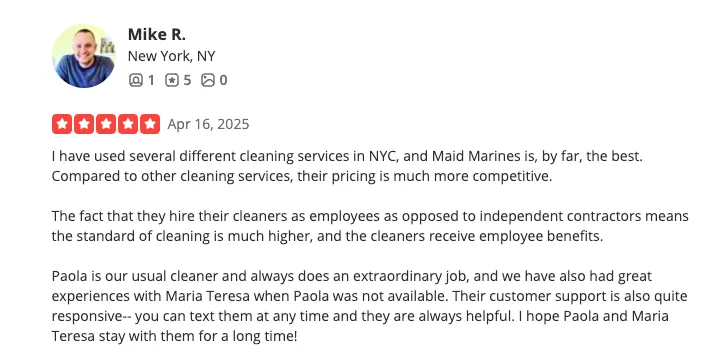
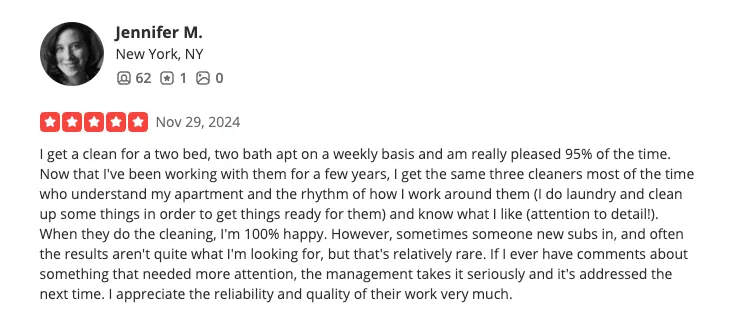
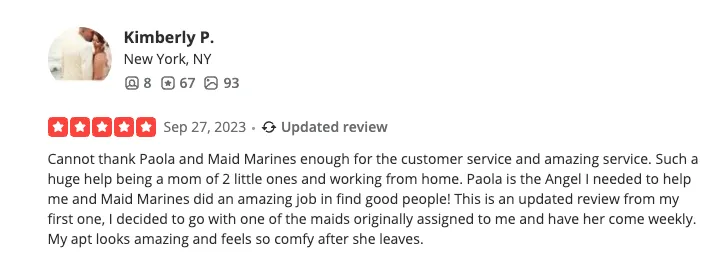
We have cleaned over 100,000 homes across NYC, and the households we serve in neighborhoods like Bellerose are among our most stable, longest-running accounts. Owners who care about their homes as investments and as living spaces respond well to cleaners who take the same view. Our teams are W-2 employees, not gig workers, which means they are trained, vetted, and accountable to us rather than arriving with no context and no stake in the quality of the result.
Booking a cleaning for your Bellerose home
You pick your date and time on our booking page. You see your flat-rate price before you commit. If your Cape Cod has three levels including the basement, the price reflects that honestly. If your kitchen gets heavy use and needs degreaser work on the range hood, tell us when you book and we build it in. Our cleaners arrive with everything they need for your specific home type.
For move-in and move-out cleaning in the two-family resale market, for post-renovation work after a bathroom or kitchen update, and for recurring cleaning on a schedule that fits how your household actually runs, the process starts the same way: book online, see your price, and let us handle the rest.
We also serve nearby Hollis, St. Albans, Laurelton, Forest Hills, and the rest of Queens.