
The name was invented to sell real estate. In 1882, two developers surveying a flat tract of Queens meadowland decided their new community needed something that would attract buyers from the crowded tenements of lower Manhattan. They landed on “Ozone Park” as a reference to the fresh sea air that supposedly blew in from Jamaica Bay, borrowing a term from chemistry to market a grid of unpaved lots on what was still, technically, farmland. The name was a fiction. It has outlasted everything else about those original developers, the racetrack hotel they built, the working-class dream they were selling, and every community that has arrived and taken root on these streets since.
That history is, in a compressed form, the history of Ozone Park: a place built on someone else’s ambition, remade repeatedly by the people who actually moved in, and now one of the most ethnically layered neighborhoods in a borough famous for layering. The two ZIP codes that cover it, 11416 and 11417, do not fully describe what is here. The neighborhood is the Aqueduct Racetrack on one end and the Liberty Avenue elevated train on the other, with thousands of nearly identical brick rowhouses filling the blocks between.
The rowhouses that define Ozone Park were built for a specific kind of city life
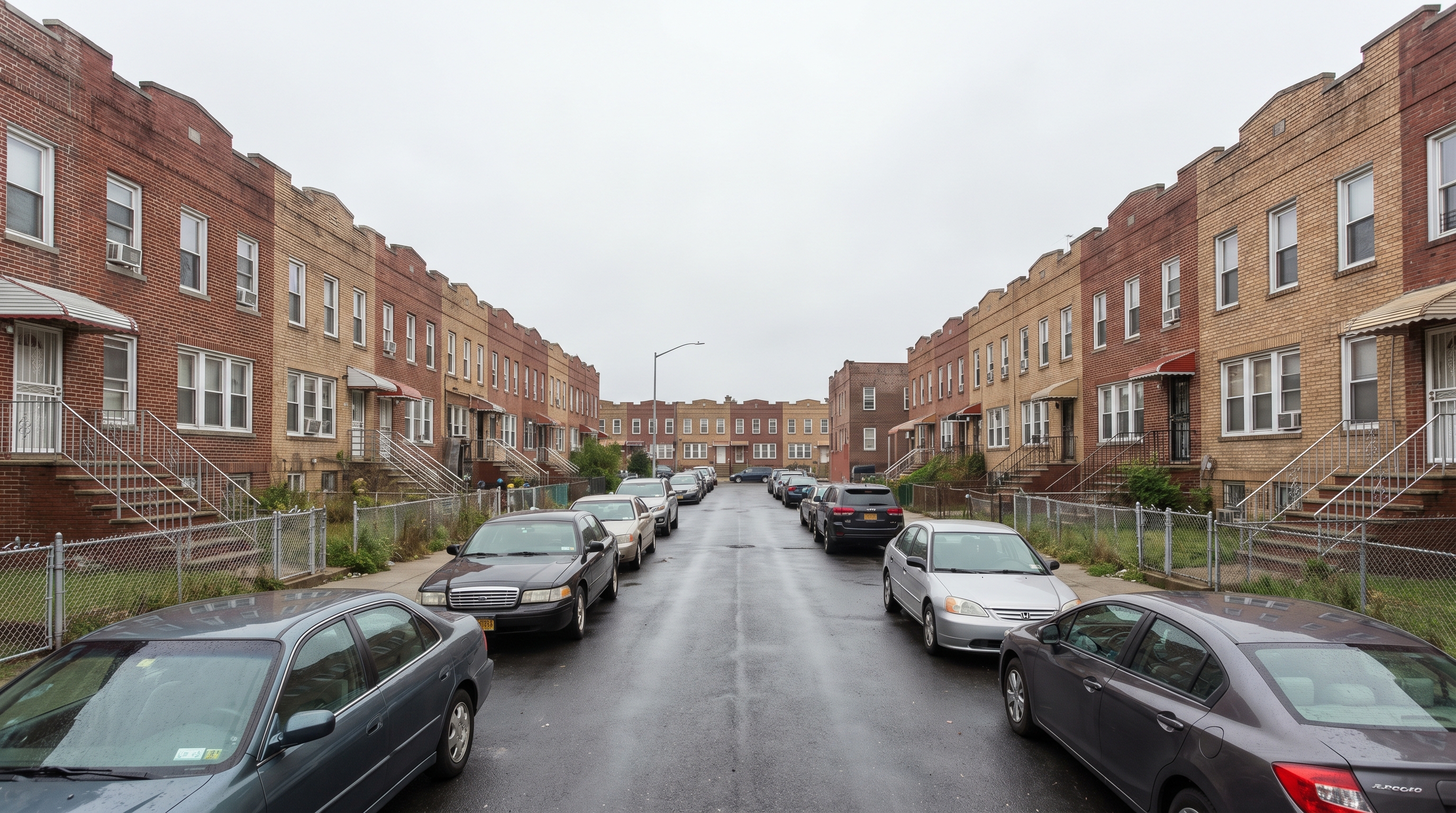
The dominant housing type in Ozone Park is a two-story attached brick rowhouse built between the 1890s and 1930s. There are thousands of them. They line virtually every residential block in a nearly unbroken pattern: shared walls, brick facades with modest decorative detailing at the cornices, front stoops, small yards behind chain-link fences. The buildings were designed to be owner-occupied with a rental unit, typically one floor above and one below. The owner lives on the upper floor, the tenant downstairs, and the rental income offsets the mortgage. This arrangement was the working-class path to property ownership in New York for the better part of a century, and Ozone Park built more of it per block than almost anywhere else in Queens.
The result is a housing stock that is dense, uniform, and exceptionally practical. These are not homes that have been renovated into open-concept spaces with engineered hardwood floors. They are working homes: linoleum in the kitchen, carpet in the bedrooms, tile in the bathrooms, shared walls that carry sound between units. The baseboards have been painted over a dozen times. The windowsills along Liberty Avenue carry a layer of el-train grime that accumulates between every cleaning visit. The kitchens are small and the storage is whatever creative solution the last two families left behind.
Our house cleaning teams work in these buildings constantly. We know the two-family rowhouse format: one booking for the owner’s floor, a separate appointment for the rental unit, access coordinated through whoever controls the building. The cleaning priorities in a 1920s Ozone Park rowhouse are different from a modern apartment. Original hardwood floors, if they are still there, need a barely damp microfiber mop and a pH-neutral cleaner, not the wet mopping that would strip whatever finish is left. Window tracks near the elevated train need dedicated attention. Baseboards that have accumulated decades of paint layers require a careful hand. These are not special requests. They are standard for buildings of this age and this history.
Liberty Avenue under the elevated train is the neighborhood’s main artery and main character
The J train runs above Liberty Avenue on an elevated steel structure that has been there since the early 20th century. It generates noise, vibration, and the particular quality of shadow that gives elevated-train commercial corridors their character throughout Queens and Brooklyn. The storefronts below have turned over in nationality three times in sixty years without the street itself ever pausing to acknowledge the transition.
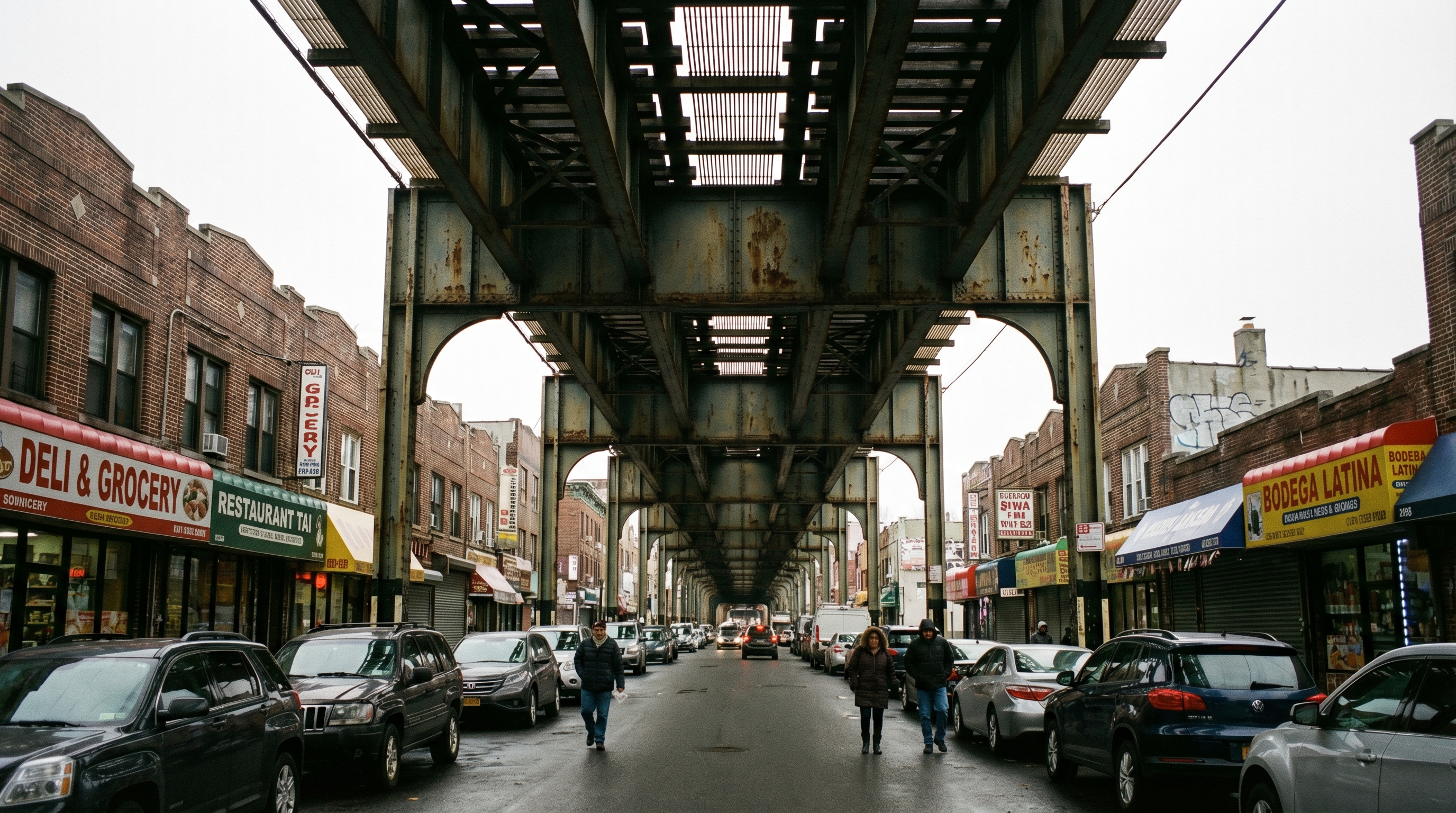
Within a mile of the Liberty Avenue stations you will find Bengali grocery stores, Trinidadian roti shops, Mexican bakeries, Bangladeshi restaurants serving rice and biryani, halal butchers, dollar stores, and a handful of Italian-American social clubs that have been operating since the 1960s and show no particular interest in updating their signage. The community that built the original Liberty Avenue commercial strip is now a minority presence in a neighborhood that has absorbed five waves of immigration after it. What remains is the physical infrastructure they built, the el train overhead, and Don Peppe’s on Lefferts Boulevard, which has been serving enormous portions of Italian-American food since the decade the last Italian families were still the majority demographic force in the neighborhood.
The elevated train is also a cleaning concern in a way that is specific to neighborhoods like this. The steel wheels and brake systems generate fine metal particles that settle on window tracks, windowsills, and any horizontal surface facing the street. Residents near the el accumulate this grime faster than residents even a block away from the corridor. We wipe the sills and ledges on every visit in apartments along Liberty Avenue and the side streets closest to the el, and we pay attention to entry areas and front stoops where street-level grime concentrates. Living under an elevated train in Ozone Park is a trade-off that most residents make consciously: the noise and grime in exchange for a fast subway connection to Downtown Brooklyn and lower Manhattan.
Aqueduct Racetrack anchors the southern edge with 130 years of history
The racetrack was there before the neighborhood. The Aqueduct Racetrack opened in 1894, a decade after the developers first platted the streets, and it shaped the early character of Ozone Park by drawing stable workers, trainers, and race-day visitors to the flat southwestern Queens terrain. The Big A, as it is known, is one of the oldest and most important thoroughbred racing facilities in the United States. Its winter meets run from October through May, and on race days the neighborhood’s southern edge has an energy that the rest of the year does not.
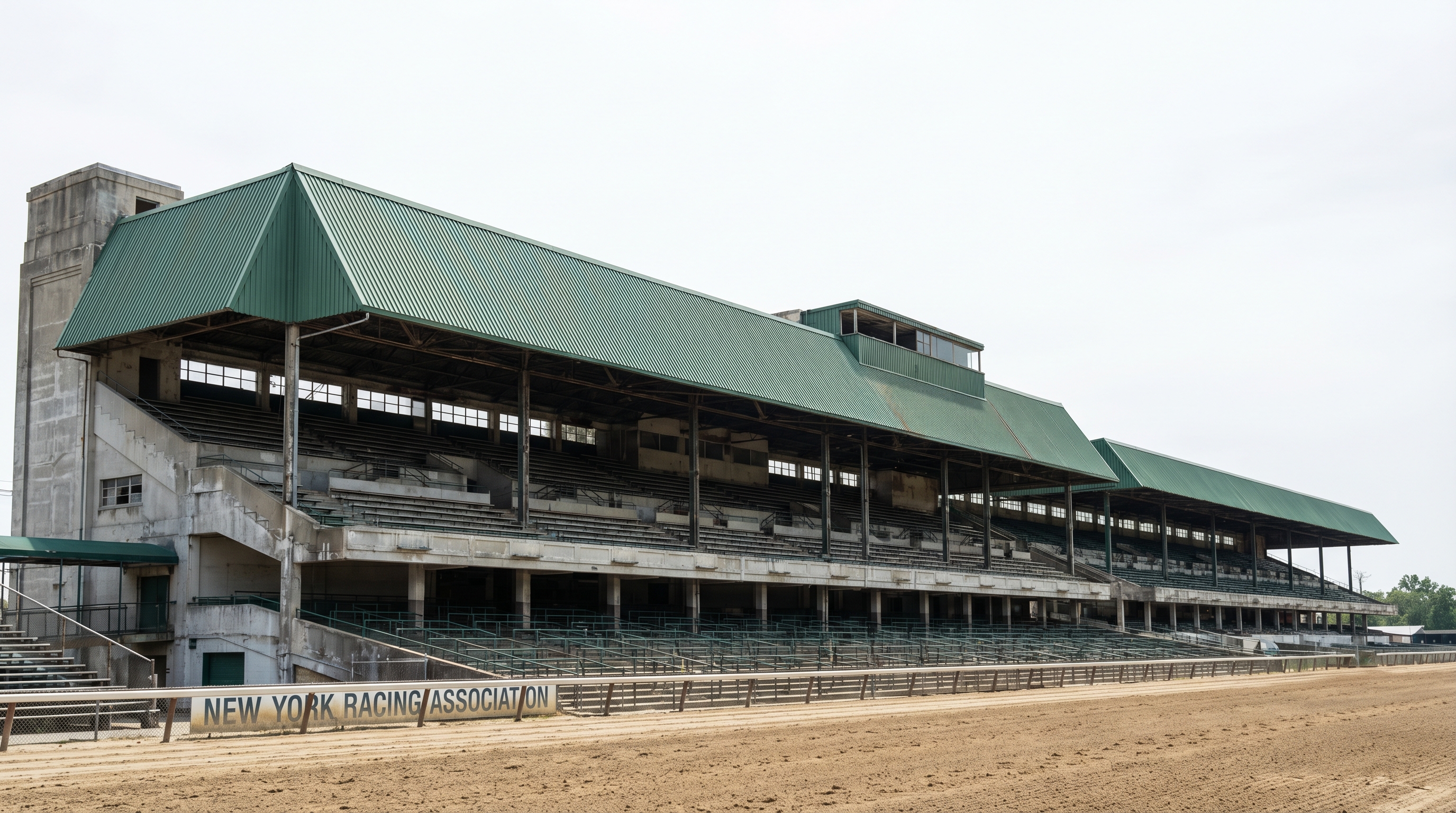
In 2011, Resorts World NYC opened at the Aqueduct facility as the first casino in New York City. It operates the highest-grossing slot machine facility in North America. This is a fact that the neighborhood absorbs without particular drama. The casino brings employment and occasional foot traffic to the surrounding streets. The racetrack remains a significant employer. Neither institution has transformed Ozone Park’s residential character, which continues on its own terms several blocks north of the track.
An Indo-Caribbean community that has few parallels anywhere in the Western Hemisphere
The blocks around Rockaway Boulevard and the southern sections of Ozone Park, extending into South Ozone Park and neighboring Richmond Hill, hold one of the largest concentrations of Indo-Caribbean Hindu community in North America. The Trinidadian and Guyanese families who settled here beginning in the 1980s brought a cultural tradition with no exact equivalent elsewhere in the city: the descendants of South Asian indentured laborers brought to the Caribbean by the British in the 19th century, practicing a form of Hinduism that absorbed Caribbean influences over 150 years before arriving in Queens.
The mandirs along Rockaway Boulevard are active community centers. The food reflects the tradition: Trinidadian doubles, curry goat roti, and roti wraps that have become well-known enough to attract visitors from across the five boroughs. Singh’s Roti Shop, with its roots in the South Ozone Park food culture, draws people who have never otherwise set foot in southwestern Queens. The Phagwah celebrations that fill the streets around the temples in March are among the most visually striking public festivals in Queens.
For cleaning purposes, the Indo-Caribbean community in Ozone Park includes a high proportion of homeowners in the semi-detached two-family houses of the Lindenwood section and the rowhouses south of Liberty Avenue. These homes tend to be well-maintained, frequently host extended family, and generate the kind of regular cleaning demand that comes from homeowners who take maintenance seriously. We serve these blocks on the same schedule as the rest of the neighborhood.
The two-family rowhouse format creates specific cleaning logistics worth knowing
The central organizing fact of cleaning in Ozone Park is the two-family home. The building has an owner and a tenant. Sometimes the owner books cleaning for both units. Sometimes the tenant books independently without the owner involved at all. Sometimes the owner wants a deep clean for the rental unit after a tenant moves out and before a new one moves in.
All three arrangements work fine and we handle all of them regularly. For owner-tenant buildings, the practical details are: separate appointments for each floor, access coordinated through whoever controls the building, and pricing based on the individual unit rather than the whole building. An owner who wants to cover both floors on the same day can book two consecutive appointments. A tenant who wants to cover only their floor books their own appointment without any coordination with the owner required.
Move-in and move-out cleaning is particularly common in Ozone Park because the rental market turns over regularly and owners want each unit professionally cleaned between tenants. A proper move-out clean in a 1920s rowhouse unit means cleaning inside kitchen cabinets, scrubbing bathroom tile and grout that has accumulated grime over a tenancy, cleaning inside the oven and refrigerator, and addressing baseboards, window tracks, and any buildup that a regular maintenance clean would skip. We do this work across the neighborhood constantly.
For apartment cleaning on a recurring basis, we assign the same team to your home for every visit. Consistency matters in a neighborhood of owner-tenant relationships where the cleaner needs to understand the building’s access situation, the owner’s preferences, and the layout of a unit that looks similar to every other unit on the block but has its own particular history.
What booking looks like in Ozone Park
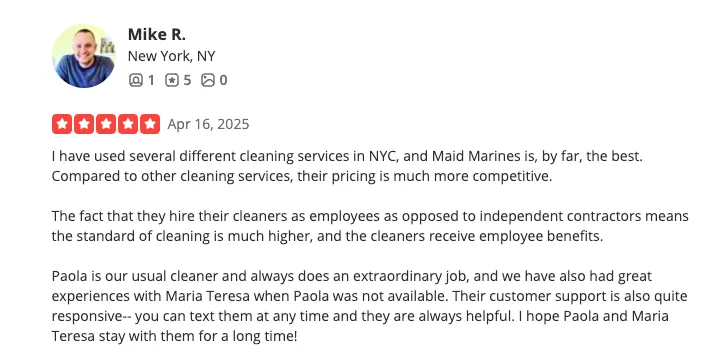
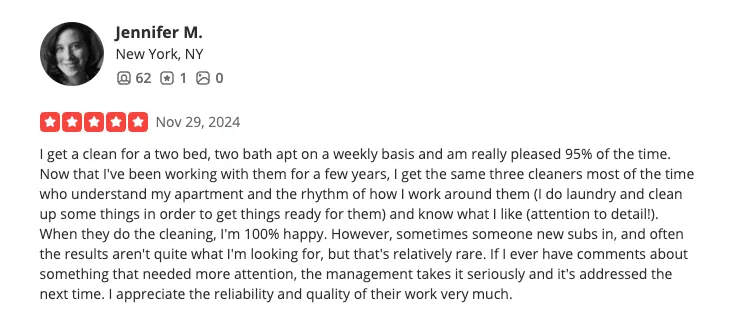
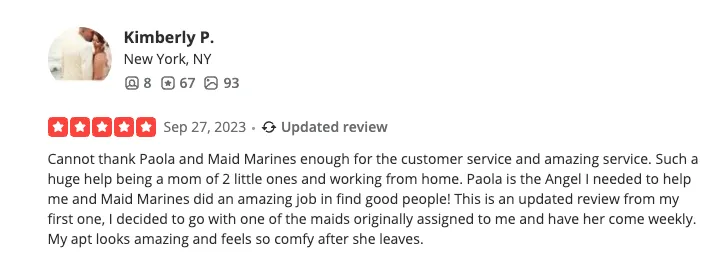
You pick your date and time on our booking page. You see your flat-rate price before you commit. For two-family homes, you book one unit at a time. If you want both floors cleaned, book two appointments. Our cleaners are W-2 employees, not gig workers, and they are vetted, insured, and show up with the right products for the specific surfaces in your home.
We have cleaned over 100,000 homes across New York City, and southwestern Queens is a regular part of our service area. Ozone Park, West Ozone Park, Richmond Hill, Howard Beach, and Woodhaven are all covered. If you are not sure whether your address is in our service zone, put your ZIP code into the booking page and it confirms coverage immediately.
We also serve nearby Forest Hills, Hollis, and Sunnyside, as well as the rest of Queens and the broader New York City area.